
Someone Is Using Your Face Online.
Illinois Impersonation Attorney Who Fights Back.
If someone has stolen your photos, created fake profiles in your name, or is using your likeness to spread lies, you have the right to stop it. We use facial recognition investigations to find every unauthorized use and take action under Illinois law. Assessments start at $500 flat fee.

Online Impersonation Is Illegal in Illinois. Reporting It to Facebook Does Almost Nothing.
If someone is using your photos without permission, you already know how violating it feels. Maybe they created a fake dating profile with your photos. Maybe an ex is running a social media account under your name, posting things you never said. Maybe someone is using your face in deepfake content that makes your stomach turn. You need an online impersonation lawyer who treats this like the emergency it is.
You reported it to the platform. Maybe you got a form email back. Maybe the fake account disappeared for a week and popped right back up. Maybe nothing happened at all. God forbid your employer sees what these awful people posted using your face. Whether you need an identity theft lawyer in Illinois or a deepfake lawyer who understands AI-generated fakes, the platform is not going to solve this for you.
Platform reporting fails because platforms have no legal obligation to act quickly. They often don't correctly identify who is behind the fake account. They will not compensate you for the damage already done. As a facial recognition attorney, I use the same technology that law enforcement uses to find every unauthorized use of your face online. For results that actually stick, you need a lawyer who can do what Facebook, Instagram, and TikTok won't. My name gets results.
The clock is already running. Illinois has a one-year statute of limitations for defamation. It usually starts when the impersonation is first published, not when you discover it. There is a narrow discovery rule for publications that were hidden, inherently undiscoverable, or inherently unknowable, but it is an exception, not a plan. Every day you spend filing useless platform reports is a day closer to losing your right to sue. Quit wasting your time and take real action.
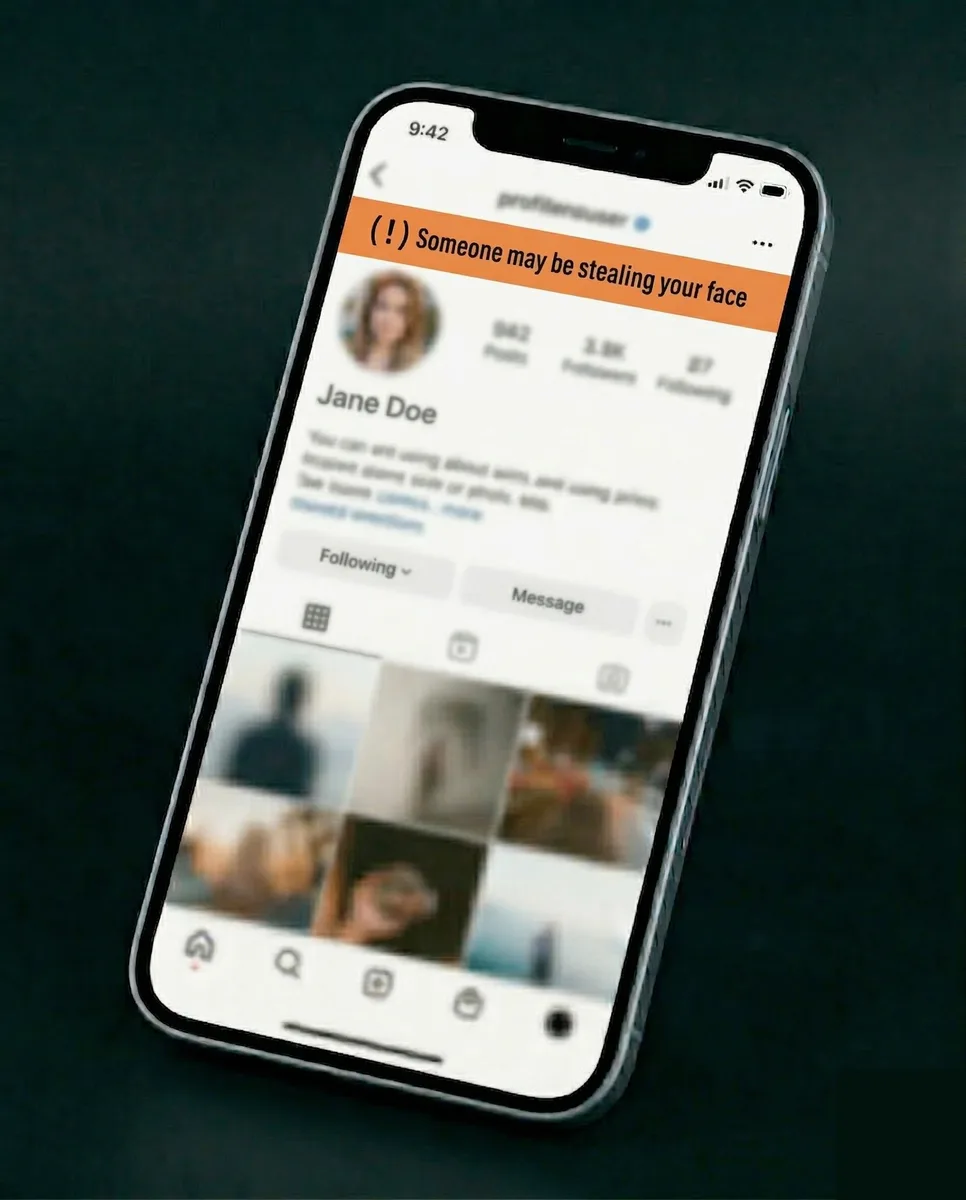
What to Do Right Now If Someone Is Using Your Photos
If you just found a fake profile or unauthorized use of your face, do these five things before anything else.
- Screenshot everything. The fake profile, all posts, the follower list, any messages. Do it now. Accounts get deleted without warning.
- Note the URL of every fake account or page where your photos appear.
- Do not contact the impersonator. Anything you say can complicate your legal options.
- Do not delete any of your own posts or messages about the situation.
- Call an attorney. A free case review takes 30 minutes and costs you nothing. We will tell you honestly whether you have a case. or call (630) 839-9195.
Not Sure Where Your Face Is Showing Up?
We'll tell you. Our Identity Threat Assessment scans the internet using vectorized facial recognition technology and delivers a full report of every instance we find.
How an Illinois Impersonation Attorney Finds and Stops Fake Profiles
Most attorneys wait for you to bring the evidence. We go find it ourselves.
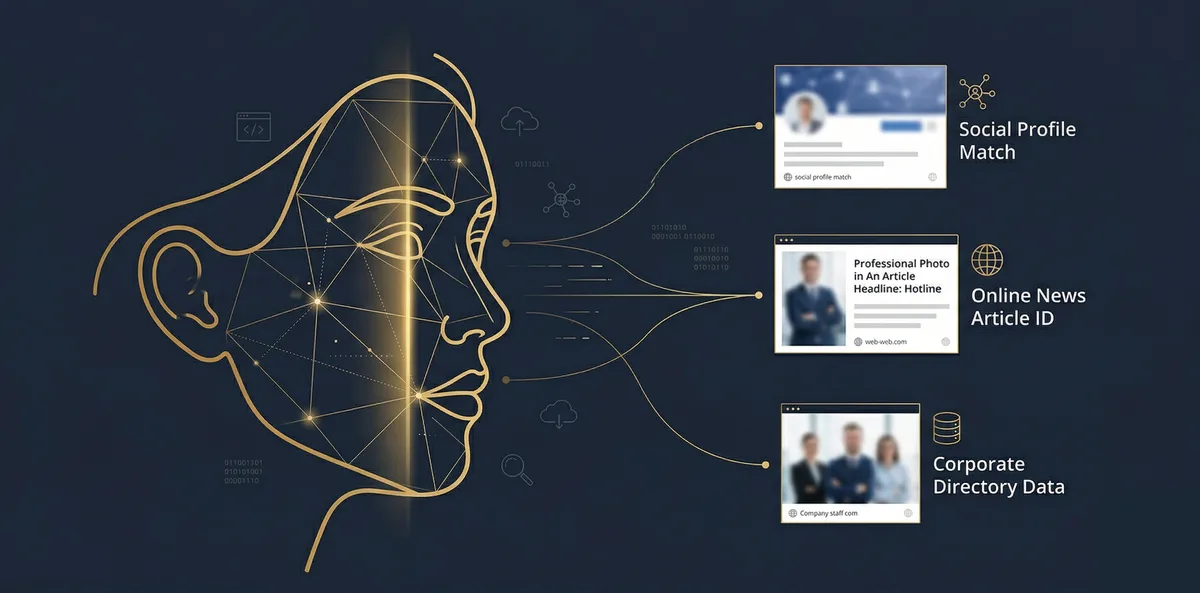
We scan the internet for your face
Using professional facial recognition search tools, we run a comprehensive scan of publicly indexed websites to locate every place your likeness appears without your permission. This goes far beyond a Google reverse image search. I chose my provider by shaving my head, growing a mustache and then searching my own face. I found a photo of myself from 20 years ago still being used on a professional website. I would never use a service I did not test myself.

We preserve the evidence
Screenshots disappear. Fake accounts get deleted and recreated. We capture legally admissible evidence with timestamps, metadata, and certified documentation so nothing can be denied later. You will receive a report naming each publicly accessible (surface-web) site where your photo is used. We can, optionally, do a social media investigation with a private investigator referral.
We analyze your legal options
Illinois gives impersonation victims real legal tools: defamation claims, the Right of Publicity Act, identity theft statutes, deepfake protections, and more. We tell you exactly which claims apply to your situation and what the realistic outcomes look like.
We take action
Depending on your case, that means DMCA takedown notices, platform impersonation reports backed by legal authority, cease and desist letters, subpoenas to platforms for account holder information, or litigation. I work each of those avenues to get your name and your face off the accounts using them.
Results depend on the facts of each matter. Past results do not guarantee a similar outcome.
Flat-Fee Online Impersonation Legal Services
You will never get a surprise bill from us. Every service has a clear price before we start.
Identity Threat Assessment
Find out exactly where your face and identity are being used without your permission. Learn more about the assessment.
- Facial recognition scan across public web
- Reverse image search on all major platforms
- Certified evidence preservation
- Legal analysis memo with viable claims
- 30-minute consultation to review findings
- Delivered in 5 to 7 business days
- Optional Social Media Search package for additional $500.00
Legal Enforcement Package
Remove the impersonation and put the person behind it on notice.
- Up to 10 DMCA takedown notices
- Platform impersonation reports with legal backing
- Cease and desist letter(s)
- Evidence preservation updates
- 60-day follow-up monitoring
- Ongoing attorney communication
Litigation
When the impersonator won't stop, we take them to court.
- Rule 224 petitions and John Doe lawsuits to unmask anonymous impersonators (Hadley v. Subscriber Doe, 2015 IL 118000)
- Subpoenas to Meta, Google, and other platforms
- Defamation and Right of Publicity claims
- Injunctive relief to force content removal
- Damages recovery
- Coordination with licensed private investigator
Why flat fees? Most defamation attorneys bill hourly, and the national average for an online defamation case runs $14,000 to $16,000. Our Phase 1 assessment gives you a complete picture of your situation for a fraction of that, so you can make an informed decision before committing to enforcement or litigation.
We Spent 28 Hours Writing a Guide on Protecting Your Identity Online. It's Free.
I sent 650 data broker deletion requests, called three banks to test their security questions, revoked OAuth grants from my own accounts, and tested every tool in the guide personally. Then I published the whole thing for free.
I don't want to get paid for doing anything you can do yourself. If you can follow instructions and spend a weekend on it, you can remove yourself from most data broker sites, freeze your credit, lock down your accounts, and cut off the tracking that makes you findable in the first place. The guide walks you through all of it.
If you hit a wall (a data broker ignoring your statutory deletion request, non-consensual intimate images, someone you need to identify through a platform subpoena), that's when you call me.
Read the Full GuideFree Case Review From an Illinois Impersonation Lawyer
Fill out the form below and we will respond within one business day. Or skip the form and . Everything you share is confidential. No obligation.
Illinois Laws That Protect You From Online Impersonation
Illinois has some of the strongest identity and privacy protections in the country.
- Defamation
- False statements of fact that damage your reputation. For statements in the recognized per se categories, including words imputing a criminal offense or a lack of ability in your trade, profession, or business, Illinois presumes injury to reputation, so you do not have to prove a specific dollar loss. Bryson v. News America Publications, Inc., 174 Ill. 2d 77, 87 to 88 (1996). You still have to prove the statement was false, that it was published to a third party, and that no innocent construction of it is reasonable.
- Right of Publicity Act
- 765 ILCS 1075/1 et seq. prohibits use of your identity for a commercial purpose, meaning sale, advertising, promotion, or fundraising. It provides actual damages and the profits from the unauthorized use, or $1,000, whichever is greater, punitive damages for willful violations, injunctive relief, and attorney fees that the court may award to the prevailing party, either side. BIPA is a separate statute: the Biometric Information Privacy Act, 740 ILCS 14/1 et seq., which governs the collection of biometric identifiers such as facial geometry. See how these claims work in our online impersonation guide.
- False Light Invasion of Privacy
- Reaches a false impression created without any single false statement, but it is not the easier claim. Illinois requires publicity placing you before the public in a false light, a false light that would be highly offensive to a reasonable person, and knowledge of or reckless disregard for the falsity, which is actual malice for every plaintiff, not just public figures. Lovgren v. Citizens First National Bank of Princeton, 126 Ill. 2d 411 (1989).
- False Personation 720 ILCS 5/17-2(a)(2.5)
- The Illinois online impersonation crime, and usually the right one. Falsely representing yourself to be another actual person, and acting in that character with intent to intimidate, threaten, injure, defraud, or obtain a benefit, is a Class A misdemeanor. Section 17-2(g) confirms the offense can be committed through an Internet website.
- Identity Theft 720 ILCS 5/16-30
- Criminal statute that applies where the impersonator uses your personal identifying information to fraudulently obtain money, credit, goods, services, or account access. A photograph alone is not on the statutory list of personal identifying information. Supports referrals to law enforcement and adds serious pressure in negotiations with impersonators.
- Intentional Infliction of Emotional Distress
- Available in egregious cases where the impersonator's conduct is truly outrageous.
- Consumer Fraud Act 815 ILCS 505
- Applies when impersonation involves commercial activity, such as selling products or services under your identity.
Every Day You Wait, the Evidence Gets Harder to Preserve
Fake accounts get deleted and recreated. Posts disappear. While you might be tracking them down, the one-year clock keeps running. Talk to an attorney now.
Who We Help: Victims of Fake Profiles, Catfishing, and Identity Theft
Online impersonation doesn't just happen to celebrities. These are the types of cases we handle every day.

Individuals
Someone created a fake dating profile with your photos. An ex is running a social media account in your name. A stranger is using your face in AI-generated content. You discovered fake accounts when a friend sent you a screenshot. Someone phished your mom pretending to be you.

Business Owners
A competitor is impersonating your brand. Fake social media accounts are confusing your customers. Someone is posing as your company to collect payments or spread false information. Getting hit with fake Google reviews that are destroying your rating.

Professionals and Content Creators
Your content is being stolen and reposted. Someone is using your credentials or likeness to solicit clients. Defamatory content attached to your name is affecting your career and your revenue. If someone is using your photos on dating apps or creating deepfakes of you, see our guide: Is Catfishing Illegal? Your Rights as the Identity Theft Victim.

Justin Abdilla
I've built my practice on flat fees and straight answers. We've filed 7 figure defamation cases and forced bad guys to drop 35,000 files because they were obtained with fraudulent representation. If someone is using your face, your name, or your content without your permission, I'll tell you exactly what we can do about it and what it will cost before we start. I don't bill for my consultations.
Common Questions About Online Impersonation in Illinois
Yes. The on-point crime is false personation under 720 ILCS 5/17-2(a)(2.5): knowingly and falsely representing yourself to be another actual person and doing an act in that assumed character with intent to intimidate, threaten, injure, defraud, or obtain a benefit. It is a Class A misdemeanor, and section 17-2(g) expressly reaches conduct carried out through an Internet website. Illinois also treats identity theft as a criminal offense under 720 ILCS 5/16-30, which applies where the impersonator uses your personal identifying information to fraudulently obtain money, credit, goods, services, or account access. Beyond the criminal statutes, victims can pursue civil claims for defamation, invasion of privacy, Right of Publicity violations, and intentional infliction of emotional distress. The specific claims available depend on what the impersonator is doing with your identity. Personally, I wouldn't rely on the cops to clear my own name, I would do it myself.
At Abdilla and Associates, our Identity Threat Assessment starts at $500 flat fee. Legal enforcement packages (takedowns, cease and desist letters) run $1,500. The social media packages for each of these raises the costs, because those companies are taking steps to make it harder to sue them. Nationally, the average online defamation lawsuit costs $14,000 to $16,000. Our flat-fee model gives you clarity on costs before you commit.
We can do this for you easily, but we need to bring in a third party to help. We've partnered with a private investigator to do social media queries. We take all the images off major social media platforms (manually!) and create a database, then run the facial recognition software against the local database. This takes a lot of time, so it's quite expensive.
Facial recognition search tools scan publicly indexed websites for photos matching your face. Unlike a reverse image search (which only finds exact copies of a specific photo), facial recognition identifies your face in any photo, in any context. This means we can find instances of impersonation you didn't even know existed. I found a photo of myself from 20 years ago with my own technology.
Platform reporting is slow, unreliable, and limited. Platforms cannot identify who is behind a fake account. They cannot compensate you for damages. They cannot issue a court order preventing the impersonator from creating new accounts. An attorney can subpoena the platform for account holder information, pursue legal claims for damages, and obtain injunctions that carry the force of law.
For defamation claims, Illinois has a one-year statute of limitations that generally runs from the date the defamatory content was first published, not the date you found it. Illinois recognizes a narrow discovery rule where the publication was hidden, inherently undiscoverable, or inherently unknowable (see Ciolino v. Simon, 2021 IL 126024), but do not plan around it. Other claims (Right of Publicity, IIED, identity theft) may have different timelines. Do not wait. Evidence disappears, accounts get deleted, and your window for legal action shrinks every day.
In most cases, yes. If the fake profile damages your reputation, you may have a defamation claim. If it uses your identity for a commercial purpose, such as selling something or promoting an account, the Illinois Right of Publicity Act applies. If the conduct is extreme enough, IIED may be available. The first step is identifying the person behind the account, which often requires subpoenas to the platform. That is something we do regularly.
Illinois does not have a standalone 'catfishing' statute, but catfishing can absolutely violate existing Illinois law. If someone uses your photos or identity to create a fake profile, that is false personation under 720 ILCS 5/17-2(a)(2.5), a Class A misdemeanor that section 17-2(g) extends to conduct carried out on an Internet website. If the catfisher is soliciting money, it can also be identity theft under 720 ILCS 5/16-30. If your identity is being used for a commercial purpose, meaning sale, advertising, promotion, or fundraising, the Illinois Right of Publicity Act (765 ILCS 1075/1 et seq.) applies, and false statements can support defamation. I have pursued each of these claims on behalf of catfishing victims. The specific legal theory depends on what the catfisher is doing with your identity.
Yes, and this is one of the things I do most often. Illinois has a defined procedure for it: a petition under Illinois Supreme Court Rule 224. In Hadley v. Subscriber Doe, 2015 IL 118000, the Illinois Supreme Court held that a court will order a provider to identify an anonymous poster only where the petitioner pleads a defamation claim that will withstand a section 2-615 motion to dismiss. Platforms will not voluntarily reveal account holder information to individuals, but they will comply with a court-ordered subpoena. I file John Doe lawsuits to unmask anonymous impersonators, then subpoena Meta, Google, or whatever platform is hosting the fake account for IP addresses, email addresses, and phone numbers tied to the account. From there, we identify the person and pursue legal action.
You have several strong legal options under Illinois law. The Right of Publicity Act (765 ILCS 1075/1 et seq.) prohibits use of your identity for a commercial purpose, meaning sale, advertising, promotion, or fundraising, and provides actual damages and the profits from the unauthorized use, or $1,000, whichever is greater, plus injunctive relief. If the unauthorized use damages your reputation, you have a defamation claim. If it involves biometric data like facial geometry, BIPA (740 ILCS 14) may apply. The first step is documenting every instance of unauthorized use. Our Identity Threat Assessment does exactly that, using facial recognition technology to find every place your photos appear online.
Screenshot everything immediately: the fake profile, all posts, the follower or friend list, and any messages. Note the URL of each fake account. Do not contact the impersonator directly, and do not delete any of your own posts or messages about the situation. Evidence disappears fast, and what you preserve in the next 24 hours may be the difference in your case. Then call us or book a free case review so we can start preserving evidence with legal-grade documentation.
It's a 30-minute phone call. You tell me what's happening, I ask a few questions, and I tell you honestly whether you have a viable legal claim. I'll explain which Illinois laws apply, what the realistic outcomes are, and what it would cost to take the next step. There is no obligation. No pressure. If I can't help you, I'll tell you that too.
If you are an Illinois resident, Illinois law protects you regardless of where the impersonator is located. We regularly handle cases where the impersonator is in another state or even unknown. If the impersonator is anonymous, we file John Doe lawsuits in Illinois and subpoena the platform for their identifying information. Once we know who they are, we determine the best jurisdiction and legal strategy.
Illinois Impersonation and Privacy Rights Resources
Illinois Online Impersonation Lawyer
Your legal options when someone is impersonating you online in Illinois.
Stolen Photos, Catfishing & Deepfakes
Your rights as the identity theft victim when someone uses your photos for fake profiles or deepfakes.
Illinois Deepfake Laws
The laws that protect you from AI-generated impersonation in Illinois.
Fake Google Review Lawyer Chicago
Someone posted lies about your business? We get fake reviews taken down. Most cases resolve for $750-$1,500.
How to Delete Yourself from the Internet (2026)
Attorney guide to removing your personal information from data brokers, with statutory deletion templates and real deletion request data.
Your Identity Belongs to You. The Clock Is Running. Act Now.
Illinois gives you just one year to file a defamation claim. Free case review. Flat-fee pricing. An attorney who actually picks up the phone.
What Chicago Landlords Say
Real reviews from property owners we've helped
"Justin was very helpful and guided me on steps I have to do prior to having a potential eviction case. His tone and responses were very kind and knowledgeable."
"I can't recommend Abdilla & Associates enough! Their professionalism, expertise, and dedication made all the difference in resolving my case. From start to finish, they communicated clearly, kept me informed, and truly advocated for my best interests!"
"Very humane and landlord empathetic eviction lawyer! His answers are clear and concise. Thank you so much :)"
"Justin evicted a tenant of mine in record time. It's unheard of and I just did not think it was possible to get this tenant out so fast. Only eight weeks."
Resolved through negotiated settlement
"Justin was highly recommended to us and we're very pleased with his services. He's an amazing attorney, very knowledgeable of landlords rights, and will start working immediately to protect your investment. He's a very honest individual who discounted $1K because my tenant moved out after receiving his notice."