Chicago Construction Defect Attorney: Homeowner Claims & Contractor Defense
Construction defects cost Illinois property owners and contractors millions every year. Whether you're a homeowner whose contractor delivered substandard work or a contractor facing an unfounded claim, you need an attorney who understands the construction process from the inside. I consult on over a hundred construction matters a year for contractors and homeowners across Chicagoland. I see how these disputes develop before they become lawsuits.
Justin Abdilla has worked on over 700 files across twelve years of practice, handling closings, evictions, construction disputes, zoning applications, and creative investor transactions across Cook, DuPage, Kane, and Lake counties. Super Lawyers Rising Stars 2021-2026. Published in SSRN. Quoted in the Chicago Tribune.
Last updated: April 2026.
What Is a Construction Defect?
A construction defect is a failure in the design, materials, workmanship, or site preparation of a building or improvement that reduces the property's value, creates an unsafe condition, or makes the property unfit for its intended use. That definition sounds clinical, but in practice it means water pouring through your basement wall, a roof that fails three years after installation, a foundation that cracks because nobody compacted the soil properly, or an HVAC system that was designed for a building half the size of yours.
Defects can be patent (visible on inspection, like a crack in a wall) or latent (hidden until damage compounds, like a leak inside a wall cavity that causes mold behind the drywall for years before you see the stain on the ceiling). The distinction matters because it controls when the statute of limitations clock starts running.
Every construction defect dispute has two sides. The homeowner or property owner who hired the contractor and received substandard work. And the contractor, subcontractor, architect, or supplier who is being accused of causing it. We represent both sides, and the perspective we bring from consulting on over a hundred construction matters a year means we understand how projects actually run, not just how the textbooks say they should.
Homeowners
Your contractor's work is defective. You need documentation, expert analysis, and an attorney who can pursue the claim through negotiation or litigation. We handle that.
Contractors
You're facing a defect allegation that doesn't reflect what actually happened on the job. You need someone who understands construction, not just law. We handle that too.
Four Types of Construction Defects
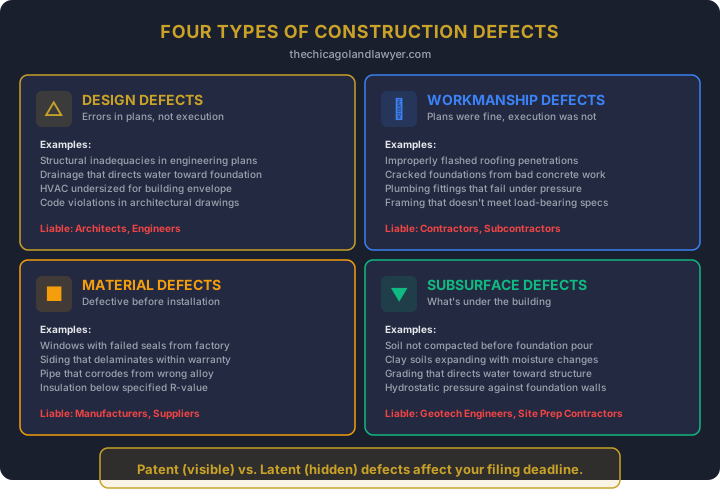
Construction defects fall into four categories. Most disputes involve more than one, and the type of defect determines who is liable and what legal theories apply.
Type
What It Is
Who's Liable
Design
Errors in architectural or engineering plans: structural inadequacies, code violations, drainage that sends water toward the foundation
Architects, engineers
Workmanship
Substandard construction: improperly installed roofing, bad concrete work, framing that doesn't meet load-bearing specs, plumbing that leaks inside walls
Contractors, subcontractors
Material
Defective or inferior building materials: windows that fail prematurely, siding that delaminates, insulation below spec
Manufacturers, suppliers, sometimes contractors
Subsurface
Ground conditions: soil instability, inadequate compaction, poor drainage design causing foundation settlement or water intrusion
Geotechnical engineers, site prep contractors
Design Defects
Design defects originate in the plans, not on the job site. The architect or engineer drew something that doesn't work: a structural system that can't carry the loads, a drainage plan that creates ponding, mechanical specifications that undersized the HVAC for the actual building envelope. The building was constructed exactly as designed. The design was just wrong.
These claims target the design professionals. They're pursued under professional negligence (deviation from the standard of care for a licensed architect or engineer) or breach of the design contract. Expert testimony from another design professional is almost always required to establish what the standard of care was and how the defendant deviated from it.
Workmanship Defects
Workmanship defects are the most common type I see. The plans were fine, the materials were fine, but the execution was not. A roofer who doesn't flash penetrations correctly. A mason who doesn't tool mortar joints. A plumber who doesn't properly secure fittings. A framer who doesn't follow the load path shown in the structural drawings. These are failures of execution, and they're the bread and butter of construction defect litigation.
The tricky part is that workmanship defects often don't manifest immediately. A roof that was improperly flashed might not leak for two years. Plumbing fittings that weren't properly secured might hold for a year before pressure changes cause a failure. By the time the homeowner sees the damage, the defective work has been covered up by drywall, siding, or landscaping.
Material Defects
Material defects involve products that were defective before they were installed. Windows with failed seals from the factory. Composite decking that delaminates within its warranty period. Pipe that corrodes prematurely because the alloy wasn't to spec. Insulation with a lower R-value than what was specified and paid for.
These claims can reach all the way back through the supply chain to the manufacturer under product liability theories, breach of warranty, or both. They get complicated when the contractor selected the materials versus when the materials were specified by the architect or selected by the homeowner.
Subsurface Defects
Subsurface defects come from what's under the building. Soil that wasn't properly compacted before the foundation was poured. Clay soils that expand and contract with moisture changes. Inadequate drainage that allows hydrostatic pressure to build against foundation walls. Poor grading that directs surface water toward the structure instead of away from it.
Foundation settlement and water intrusion are the classic symptoms. These claims typically target the geotechnical engineer who analyzed the soil conditions, the site preparation contractor who performed the earthwork, or both. They require complex geotechnical analysis and expert testimony on soil mechanics, which makes them some of the most expensive construction defect cases to litigate.
"I should have called sooner."
Are You Thinking That? Free Construction Defect Consultation.
Whether you're a homeowner with defective work or a contractor facing a claim, tell me what's going on and I'll walk you through your options. No charge for the conversation. When you schedule, tell me who your contractor is so I can research before the call.
Construction defect claims in Illinois are governed by a combination of statutes and case law that every homeowner and contractor should understand before they do anything else.
Statute of Limitations and Repose: 735 ILCS 5/13-214
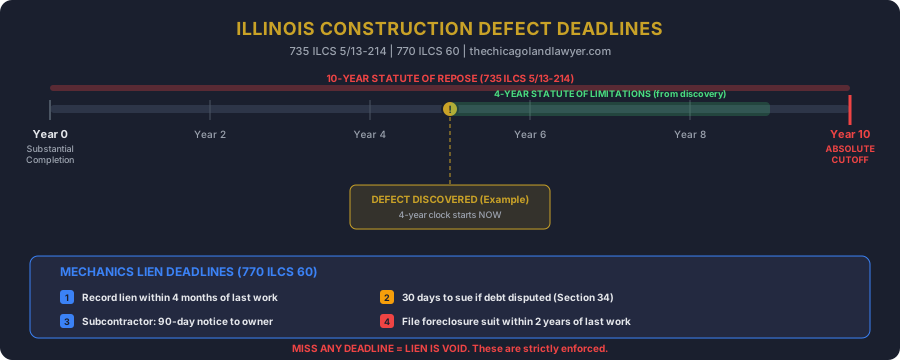
This is the most important statute in Illinois construction law. It creates two deadlines:
4-year statute of limitations from the date you discovered the defect, or reasonably should have discovered it (the "discovery rule")
10-year statute of repose from the date of substantial completion of the improvement, regardless of when the defect was discovered
The discovery rule helps homeowners with latent defects. If a leak inside a wall cavity doesn't cause visible damage until year six, the 4-year clock starts at year six, not at the date of construction. But the 10-year statute of repose is an absolute outer boundary. If substantial completion was in 2016, the claim is dead in 2026 no matter what. You cannot extend, toll, or waive the statute of repose.
For contractors and design professionals, this means that after 10 years, you're in the clear. For homeowners, it means the clock is always running and waiting to "see if it gets worse" is a gamble.
Attorney tip: "Substantial completion" is not always the same date as the final payment or the certificate of occupancy. It's the date the improvement is sufficiently complete for its intended use. This date is frequently disputed, and the difference can determine whether a claim is alive or dead.
Implied Warranty of Habitability
The Illinois Supreme Court recognized the implied warranty of habitability for new residential construction in Petersen v. Hubschman Construction Co., 76 Ill.2d 31 (1979). The holding: a builder-vendor warrants that a new home is constructed in a reasonably workmanlike manner and is suitable for habitation. This warranty exists even if the contract says nothing about it.
Three years later, in Redarowicz v. Ohlendorf, 92 Ill.2d 171 (1982), the court extended this warranty to subsequent purchasers. If you bought a home from someone who bought it from the builder, you can still bring an implied warranty claim against the original builder. That's significant because construction defects often don't surface until the second or third owner.
The implied warranty is not unlimited. It covers defects that make the property unsuitable for habitation or that result from workmanship that falls below what a reasonably prudent builder would deliver. Cosmetic issues alone typically don't qualify.
Include specific terms: start date, description of work, total price, payment schedule
Maintain insurance
Not misrepresent qualifications or licensing status
Violations of this Act give homeowners additional remedies beyond breach of contract. If your contractor didn't provide a written contract for a $50,000 kitchen remodel, that's a separate legal claim on top of whatever workmanship issues you're pursuing.
Construction Contract Indemnification Act: 740 ILCS 35
This statute voids any provision in a construction contract that requires one party to indemnify another for the other party's own negligence. In plain English: a general contractor cannot force a subcontractor to sign a contract that says "if we're both negligent, you pay for everything." The indemnification obligation is limited to the subcontractor's own proportionate share of fault. Contractors and subcontractors should review every indemnification clause in light of this statute.
Homeowner Claims: Offense
If you hired a contractor and the work is defective, Illinois law gives you several legal theories to pursue. The right theory depends on the type of defect, the parties involved, and what documentation exists.
Breach of Contract
The most straightforward claim. The contractor agreed to perform work meeting certain specifications, and didn't. The elements are simple: (1) a valid contract existed, (2) you performed your obligations (usually payment), (3) the contractor breached the contract, and (4) you suffered damages as a result.
The contract, change orders, and scope of work documents define what was promised. This is why written contracts matter so much, and why the Home Repair and Remodeling Act requires them. If your contractor agreed to install a specific brand and grade of roofing material and substituted something cheaper, that's a textbook breach.
Negligence
A negligence claim requires showing the contractor owed a duty of care, breached that duty by performing below the standard of a reasonably competent contractor, and that breach caused your damages. The standard is what an ordinary contractor exercising ordinary care would have done under the same circumstances.
Expert testimony on industry standards is almost always necessary. Your construction defect attorney needs to retain an expert, usually a licensed contractor, engineer, or architect, who can testify about what the standard of care requires and how the defendant's work fell below it. I've worked with enough construction professionals through the years that I know who to call for every trade.
Breach of Warranty
Express warranties are promises made in the contract: "10-year structural warranty," "materials will meet XYZ specification," "work will comply with all applicable building codes." If those promises weren't kept, that's a breach of express warranty.
Implied warranties exist under Illinois law even without express contractual language. The implied warranty of habitability from Petersen v. Hubschman applies to new residential construction. The implied warranty of fitness for a particular purpose may apply when a contractor selects materials or methods for a specific application.
Home Repair and Remodeling Act Violations
If the work was residential remodeling over $1,000 and the contractor failed to comply with 815 ILCS 513, that failure is itself an independent cause of action. No written contract, no insurance, misrepresented qualifications: each one is a separate violation with its own remedies.
What Makes These Claims Succeed
I've seen construction defect claims succeed and fail for the same reason: documentation. The homeowners who win are the ones who documented the defect from day one with photographs, hired an independent inspector to identify and analyze the problem, preserved all written communications with the contractor, got repair estimates from independent contractors, and filed within the statute of limitations.
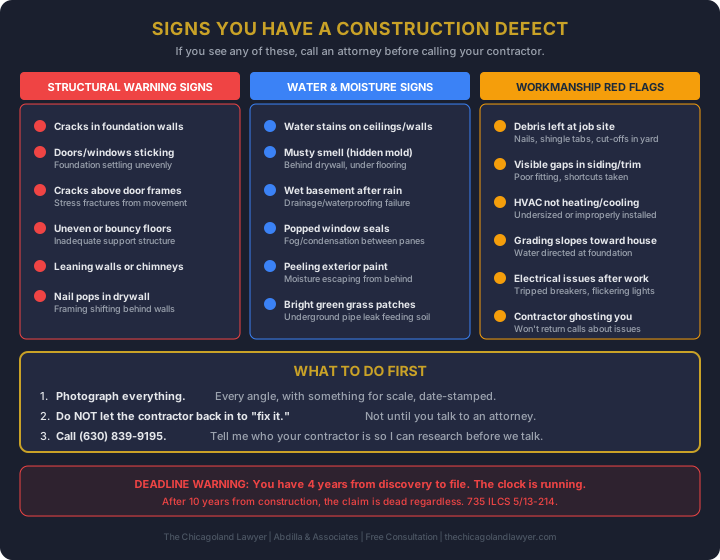
One thing I tell every potential client: do not let the original contractor back in to "fix it" without consulting an attorney first. If that repair attempt fails, it can complicate your evidence. If the contractor makes things worse, the causation analysis gets muddier. And if the contractor uses the repair attempt to argue that you accepted the work, you've handed them a defense. Talk to me first.
Warning: The 4-year statute of limitations starts running when you discover the defect, not when you decide to do something about it. Every month you spend "thinking about it" is a month you're burning. If you suspect a construction defect, call now.
Contractor Defense
If you're a contractor or subcontractor facing a construction defect claim, you have real defenses available. Most of them depend on what you did during the project, not what your lawyer does after the lawsuit is filed. The earlier you involve an attorney, the more options you preserve.
Spearin Doctrine
The most powerful defense for contractors who followed the plans. The Spearin Doctrine, from the U.S. Supreme Court's 1918 decision in United States v. Spearin, holds that a contractor who builds in accordance with the owner's design specifications is not liable for defects caused by those specifications. If the architect drew it wrong and you built it as drawn, the architect bears the liability, not you.
This defense requires documentation showing compliance with the plans throughout the project. Photographs, RFIs (requests for information), change orders, daily logs, and written communications about scope. If you submitted an RFI questioning a design detail and the architect told you to build it as drawn, that paper trail is your defense.
The Spearin Doctrine does not apply to design-build contracts or performance specifications where the contractor accepted design responsibility. It protects builders who followed someone else's design, not builders who created their own.
Statute of Repose
Under 735 ILCS 5/13-214, construction defect claims must be brought within 10 years of substantial completion. This is an absolute bar. It doesn't matter that the homeowner just discovered the defect in year 11. It doesn't matter that the defect was latent and impossible to detect earlier. After 10 years, the claim is dead.
If you're a contractor facing a claim on a project completed more than a decade ago, this may be the only defense you need.
Notice and Opportunity to Cure
Most construction contracts include a provision requiring the owner to notify the contractor about defects and provide an opportunity to repair the work before filing suit. Many Illinois municipalities have similar pre-suit notice requirements. If the homeowner skipped this step, never sent notice, or never gave you access to inspect and cure, that's a defense. In some cases, it bars the claim entirely. In others, it reduces damages to what the repair would have cost if you'd been given the chance to do it.
Acceptance
If the owner inspected the work at each milestone, signed off on it, issued final payment, and occupied the property, that pattern of acceptance can constitute a waiver of known defect claims. This doesn't protect you from latent defects the owner couldn't have discovered at inspection, but it protects you from patent defects that were visible when the owner accepted the work.
This is why sign-off documentation matters. Progress inspections, punch list walk-throughs, and final acceptance letters create a record that the owner had the opportunity to inspect, did inspect, and approved the work.
Betterment
The owner is entitled to what was promised in the contract. Not an upgrade. If the owner contracted for builder-grade finishes and the repair specifications call for premium materials, the owner is profiting from the defect claim. The damages should be limited to the cost of restoring the property to the condition the contract promised, not the condition the owner wishes they'd paid for originally.
Failure to Mitigate
Property owners have a duty to take reasonable steps to minimize their damages. If the owner knew about a roof leak in January and didn't address it until the following November, the water damage that accumulated over those 10 months is arguably the owner's fault, not the contractor's. Similarly, if the owner hired a repair contractor at inflated rates without getting competitive bids, the damages should be reduced to what a reasonable repair would have cost.
Fault of Others
When multiple parties contribute to a defect, liability should be proportionally allocated. If the architect's design was partially at fault, if the owner made unauthorized changes, if another subcontractor's work contributed to the problem, the damages should reflect each party's proportionate share. Illinois follows a modified comparative fault system, which means liability can be divided among multiple defendants based on their relative culpability.
Consumer Protection Defense
Homeowner attorneys increasingly bring claims under the Illinois Consumer Fraud and Deceptive Business Practices Act (815 ILCS 505/2Z), which incorporates violations of the Home Repair and Remodeling Act. These claims can be aggressive because the ICFA allows for attorney's fees. But they're also defensible.
If the homeowner accepted the work, paid for it, and benefited from it, the affirmative defense of ratification applies. The Illinois Supreme Court in K. Miller Const. Co. v. McGinnis, 238 Ill.2d 284 (2010), held that oral modifications to construction contracts are enforceable when the homeowner accepts the work. If your homeowner agreed to an upgrade, accepted the installation, and is now disputing the bill, that acceptance is your defense.
Additionally, the ICFA and the HRRA don't contain statutory minimum penalties. Under Oliveira v. Amoco Oil, 201 Ill.2d 134 (2002), the homeowner must prove actual damages. If the homeowner received work that was worth more than what they were charged, there's no injury at law to sustain the claim, regardless of any procedural violations in the paperwork. I've seen many consumer protection claims where the homeowner got a good bargain and is simply trying to avoid paying for it.
Pleading Deficiencies
Construction defect complaints are frequently vulnerable on procedural grounds. Under 735 ILCS 5/2-403, assignees and subrogees must verify the complaint and establish standing. If an insurance company is pursuing a subrogation claim against a contractor, the complaint must state how the insurer became the bona fide owner of the claim. Failure to do so is grounds for a 2-619.1 motion to dismiss.
Similarly, fraud claims in construction cases must be pled with specificity under Connick v. Suzuki Motor Co., 174 Ill.2d 482 (1996). A complaint that alleges "the contractor damaged the property" without specifying what the contractor did, what specific damage resulted, and how the contractor's conduct caused that specific damage is notice pleading at best and may not survive a motion to dismiss.
Attorney tip: Your best defense is the documentation you create during the project, not the arguments your lawyer makes after the lawsuit is filed. Daily logs, progress photos, signed change orders, written RFIs, and email correspondence about scope changes. The contractors who document well almost never lose these cases.
Evidence and Documentation
Construction defect cases are won or lost on documentation. Both sides should understand what evidence matters and how to preserve it.
For Homeowners
Photographs and video: Document the defect from every angle, with something for scale. Date-stamped if possible. Document before, during, and after any interim repairs.
Professional inspection reports: Hire an independent inspector or engineer to examine the defect, identify the cause, and document the findings in a written report. This is your foundation for expert testimony at trial.
The contract and all change orders: These define what was promised. Every deviation from the contract is potential evidence of breach.
All written communications: Emails, texts, and letters between you and the contractor about the defect, requests for repair, and the contractor's responses.
Financial records: Repair estimates from independent contractors, invoices for interim repairs, evidence of diminished property value, temporary housing costs, and lost rental income.
For Contractors
Daily logs: Job-site conditions, work performed, personnel present, weather, delays, and any interactions with the owner or inspectors.
Progress photographs: Taken at regular intervals showing work in progress, especially before it gets covered up by the next trade. Photograph rough-in plumbing before drywall. Photograph waterproofing before backfill. Photograph framing before insulation.
RFIs and submittals: Every request for information you sent to the architect or owner, and every response you received. These document compliance with the design.
Change orders: Every scope change, properly documented and signed. If the owner asked you to deviate from the plans, the signed change order is your evidence that the deviation was authorized.
Inspection records: Municipal building inspections, owner walk-through sign-offs, punch list completion records, and final acceptance documentation.
Spoliation of Evidence
If you're a homeowner, do not demolish or repair the defective work before the contractor and their attorney have had an opportunity to inspect and document the existing conditions. If you do, you risk spoliation sanctions, which means the court may instruct the jury to presume that the destroyed evidence was unfavorable to your case. Call your attorney before you call a repair contractor.
If you're a contractor who has been terminated and excluded from the job site, immediately request in writing that the owner preserve all conditions and allow inspection before any repair work begins.
Mechanics Liens in Illinois
Construction defect disputes and mechanics lien claims frequently overlap. The contractor says the homeowner owes money for work performed. The homeowner says the work was defective and refuses to pay. Both sides need to understand how the Illinois Mechanics Lien Act (770 ILCS 60) works.
For Contractors: Filing a Mechanics Lien
A mechanics lien is one of the most powerful collection tools in Illinois construction law. It attaches a security interest to the property itself, not just the person who owes the money. If the property owner sells or refinances, the lien must be satisfied. Deadlines are strict:
Record the lien within 4 months of the last date you performed work or delivered materials
File suit to foreclose within 2 years of the last date of work or material delivery
Subcontractors must serve a 90-day notice on the owner if they don't have a direct contract with the owner
Miss any of these deadlines and the lien is void. The mechanics lien statute is strictly construed, meaning courts will enforce the deadlines to the day.
The 30-Day Enforcement Trigger
Here's a provision that catches many contractors off guard. Under 770 ILCS 60/34, if the homeowner sends a written demand disputing the debt, the lien claimant must commence proceedings to enforce the lien within 30 days, or the lien is released by operation of law. This means if a homeowner's attorney sends you a letter disputing the amount owed, you have 30 days to file suit or lose the lien entirely.
This provision creates a strategic tension. If you're a contractor, you may want to negotiate before filing suit. But if the homeowner's attorney triggers Section 34, negotiation time is over. I've seen contractors lose valid liens because they didn't understand this provision or thought they had more time.
Warning for contractors: If you receive a letter from a homeowner or their attorney disputing the debt underlying your mechanics lien, call your attorney immediately. You may have only 30 days to file suit before the lien is released.
What We Analyze in Every Mechanics Lien Case
We handle enough mechanics lien disputes that we've systematized the analysis. For every lien case, whether we're enforcing or defending, we establish:
Contract terms: Fixed-price or contingent? If contingent on insurance approval, did the insurer actually approve the scope?
Payment history: What was the contract amount, what's been paid, who paid it (homeowner or insurance carrier), and what's the remaining balance?
Scope of work: Did the contractor build to the original scope, or were there change orders? Were the change orders documented and signed?
Lien timing: Date of last furnishing of services, date lien was recorded, whether the 4-month window was met
Consumer protection compliance: Was the consumer protection disclosure provided? Was the written contract in place? Were the HRRA requirements satisfied?
Every one of these factors can determine whether a lien is enforceable or vulnerable.
For Homeowners: Defending Against a Mechanics Lien
If your contractor filed a mechanics lien on your property, it clouds your title and prevents you from selling or refinancing until it's resolved. You have several options:
Challenge the lien's validity: Was it filed within 4 months? Does it contain the required statutory language? Was the work actually performed? Did the contractor comply with the HRRA?
Trigger Section 34: Send a written demand disputing the debt. This forces the contractor to commence enforcement proceedings within 30 days or lose the lien.
File a counterclaim: If the work was defective, your construction defect claims offset the contractor's lien claim. If your damages exceed the lien amount, you may eliminate the lien and recover additional damages.
Post a substitute bond: Under 770 ILCS 60/38, you can substitute a surety bond for the lien, releasing the property while the dispute is litigated.
Consumer protection counterclaims: If the contractor violated the HRRA or the ICFA in connection with the work, those claims can be asserted as counterclaims in the lien enforcement action, potentially recovering attorney's fees.
If a subcontractor you never hired filed a lien on your property because your general contractor failed to pay them, you may have defenses under the "owner's defense" provisions of the Act, especially if you've already paid the general contractor in full.
Mechanics Lien Quick Reference (Download & Print)
We put together a one-page mechanics lien reference sheet with every deadline and a pre-filing checklist. Print it out and keep it at your front desk.
Mechanics Lien Quick Reference. Right-click to save, or print directly from your browser.
"I did the work. I deserve to get paid."
Need an Attorney Who Gets You Paid for the Work You Did?
Mechanics lien enforcement, consumer protection defense, insurance coverage disputes. I consult on over a hundred construction matters a year and I know how to protect contractors from bad-faith claims. When you call, bring your contract and payment records.
Insurance is the elephant in the room in most construction defect cases. Who's covered, what's covered, and whether the carrier will actually pay are questions that can determine whether a claim gets resolved or becomes a protracted coverage battle on top of the underlying defect dispute.
Commercial General Liability (CGL) Policies
Most contractors carry CGL insurance, which covers property damage and bodily injury caused by the insured's operations. The key coverage questions in construction defect cases:
"Occurrence" vs. intentional act: CGL policies cover "occurrences," typically defined as accidents. Is a construction defect an "accident"? Illinois courts have generally held that defective workmanship itself is not an occurrence, but the resulting property damage (water damage from a defective roof, mold from a plumbing failure) may be. This distinction generates enormous coverage litigation.
Products-completed operations: This coverage applies to claims arising from work the contractor has already completed and turned over to the owner. It's the coverage trigger for most post-construction defect claims.
"Your work" exclusion: Many CGL policies exclude damage to "your work," meaning the defective work itself. The contractor may have coverage for consequential damage (water damage to floors from a defective plumbing installation) but not for the cost of redoing the plumbing itself. However, the "subcontractor exception" to this exclusion may restore coverage if the defective work was performed by a subcontractor.
Professional Liability Insurance
Architects and engineers carry professional liability (errors and omissions) insurance covering design errors. These policies are claims-made, meaning the claim must be reported during the policy period. If the architect's firm changed carriers or went out of business, coverage gaps can arise.
Builder's Risk Insurance
Builder's risk policies cover physical loss during construction: fire, storm, vandalism, theft. They do not typically cover construction defects, but they may cover damage caused by a defect during the construction period.
Homeowner's Insurance and Storm Damage Claims
Standard homeowner's policies typically exclude construction defects and faulty workmanship from coverage. They may cover sudden and accidental resulting damage (a pipe burst, not a slow leak), but the underlying defect is not covered. Homeowners should not rely on their own insurance to resolve construction defect claims.
However, when construction work is triggered by an insurance claim (storm damage, hail, fire), the insurance coverage issues become central to the construction dispute. The insurer approves a scope of work and an estimate. The contractor builds to that scope. If the insurer underpays, the homeowner is caught in the middle, and the contractor has a valid lien for work performed.
Assignment of Benefits and Insurance Litigation
In many storm-damage cases, the contractor takes an assignment of benefits from the homeowner, giving the contractor the right to pursue the insurance claim directly. This is common in the roofing industry and it's legal, but it creates a complex three-way relationship between the homeowner, the contractor, and the insurer.
If the insurer denies or underpays the claim, the contractor (as assignee) can sue the insurer in the homeowner's name. The Illinois Appellate Court in Xiang Zhao v. State Farm Fire & Cas. Co., 2025 IL App (2d) 240723, confirmed that insurers cannot manufacture procedural objections to dodge the appraisal process when the real dispute is valuation. The insurer must engage the process in good faith or risk a vexatious denial claim under 215 ILCS 5/155.
These cases are expensive and slow. From pre-suit demand through trial, an Illinois coverage lawsuit often spans 18 to 36 months. The homeowner may face premium increases, CLUE database reporting, or even nonrenewal. The discovery is intrusive: depositions, bank statements, property inspections, drone surveys. We handle these cases on both sides: advising homeowners on the real risks before they sign an assignment, and prosecuting or defending the insurance claims when they move forward.
Appraisal Disputes
Most Illinois homeowner's policies include an appraisal provision for resolving valuation disputes. Each side appoints an appraiser, the two appraisers select an umpire, and the panel determines the loss amount. Insurers sometimes try to disqualify the policyholder's chosen appraiser based on alleged conflicts of interest, but the law doesn't support blanket disqualifications. In Briarwood Office Center II v. West Bend Mut. Ins. Co., No. 24-CV-50177 (N.D. Ill. 2025), the court rejected conclusory objections to an appraiser's neutrality absent specific substantive factual assertions. You cannot reject an appraiser on suspicion alone.
Attorney tip: Before hiring any contractor, verify their insurance coverage. Ask for a certificate of insurance naming you as an additional insured. If the contractor doesn't carry adequate insurance, you're chasing an individual or an LLC with limited assets, not an insurance policy with coverage limits. And if a contractor asks you to sign an assignment of benefits, understand the risks before you sign. Call me first.
The Process: From Discovery to Resolution
Construction defect claims follow a predictable sequence, whether they settle early or go to trial. Knowing the process upfront helps you make better decisions at each stage.
Step 1: Discovery and Documentation
You've identified a defect. The first step is documenting it thoroughly: photographs, professional inspection reports, and preserving all communications. Do not perform any repairs yet. Do not let the original contractor perform repairs without legal guidance.
Step 2: Notice to the Contractor
Review your contract for notice provisions. Most contracts require written notice to the contractor identifying the defect and providing an opportunity to inspect and cure. Even if the contract doesn't require it, sending formal notice is good practice. It starts the conversation, creates a paper trail, and satisfies any statutory pre-suit requirements.
Step 3: Independent Expert Analysis
Retain an independent expert (engineer, architect, or specialized inspector) to analyze the defect, determine its cause, and estimate the cost of repair. This expert's report is the backbone of your claim and will inform every settlement negotiation and, if necessary, their testimony at trial.
Step 4: Demand and Negotiation
With expert analysis in hand, we send a formal demand to the responsible parties. Many construction defect disputes resolve at this stage through negotiation, especially when the evidence is strong and the contractor carries adequate insurance. Insurance carriers are rational actors. If the claim is well-documented and the liability is clear, they'll negotiate.
Step 5: Mediation
If direct negotiation doesn't resolve the claim, mediation is the next step. Many construction contracts require mediation before litigation. Even when they don't, mediation is usually worth trying. A skilled mediator can help both sides evaluate the strengths and weaknesses of their positions and reach a resolution that avoids the cost and delay of trial.
Step 6: Litigation
If negotiation and mediation fail, we file suit. Construction defect litigation is document-intensive. Discovery involves exchanging project files, deposing witnesses (the contractor, the architect, the inspectors, the experts), and conducting site inspections. The timeline from filing to trial is typically 12-24 months, depending on the complexity and the court's docket.
Step 7: Trial or Settlement
The vast majority of construction defect cases settle before trial. The question is when. Cases with clear liability and well-documented damages tend to settle early. Cases with disputed causation, multiple defendants, or insurance coverage fights can take longer. Our job is to position every case for the best possible outcome at whatever stage the resolution happens.
How Construction Defect Cases Are Billed
Let me be upfront about fees because this is a question everyone has and most attorneys dodge it.
Homeowner Claims
Consultation is free. I'll review your situation, tell you whether you have a case, and explain what the process looks like. No charge for that conversation.
HRRA and consumer fraud cases are the exception to hourly billing. Under the Illinois Consumer Fraud and Deceptive Business Practices Act (815 ILCS 505), the prevailing party can recover attorney's fees. If your contractor violated the Home Repair and Remodeling Act, failed to provide required disclosures, misrepresented qualifications, or engaged in deceptive practices, the fee-shifting provision means we may be able to take the case on terms that reflect the risk. These cases can produce significant recoveries. We have an active HRRA case right now in six-figure territory.
Standard construction defect claims (breach of contract, negligence, breach of warranty without a fee-shifting statute) are billed hourly. Construction defect litigation is document-intensive, expert-driven, and unpredictable in duration. Hourly billing is the only honest way to price it. I'll give you a realistic estimate of total cost before we start, and I'll tell you if the expected recovery doesn't justify the litigation expense.
Contractor Defense
Defense work is hourly. There's no way around it. Defending a construction defect claim requires responsive pleadings, discovery, depositions, expert retention, and potentially trial. I bill at a rate that reflects the complexity of the work, and I'll give you a budget projection at the outset so you can plan.
Mechanics lien enforcement for smaller amounts can sometimes be handled at a reduced cost because the procedure is more straightforward. For liens under $10,000, we try to resolve them without full-blown litigation whenever possible.
When you call: Tell me who your contractor is (or who your client is, if you're the contractor) so I can do my homework before our conversation. Bring any contracts, change orders, invoices, photos, and correspondence you have. The more I know going in, the better advice I can give you on the first call.
Damages in Construction Defect Cases
Illinois courts generally use one of two measures for construction defect damages, depending on the facts:
Cost of Repair
The most common measure. What will it cost to fix the defective work and restore the property to the condition it should have been in? This includes the cost of the repair itself, plus any related work required to access the defect (removing drywall to reach a plumbing defect, for example) and restoring the affected area after the repair.
Diminished Value
Used when repair would be economically wasteful, meaning the cost of repair substantially exceeds the resulting increase in property value. In these cases, damages are measured by the difference between the property's value as built and its value as it should have been built.
Consequential Damages
Beyond the direct cost of repair, homeowners may recover:
Temporary housing costs if the property is uninhabitable during repairs
Lost rental income if the property is an investment property that can't be rented
Personal property damage caused by the defect (furniture ruined by water intrusion, for example)
Mold remediation costs resulting from moisture intrusion defects
Contractors should note that many well-drafted construction contracts include a mutual waiver of consequential damages. If your contract has this clause, the homeowner's recovery may be limited to the direct cost of repair. This is one of the most valuable protective clauses a contractor can include in a contract.
Frequently Asked Questions
How long do I have to file a construction defect claim in Illinois?
Under 735 ILCS 5/13-214, you have 4 years from the date you discovered (or should have discovered) the defect to file a claim. Illinois also imposes a 10-year statute of repose from the date of substantial completion. After 10 years, the claim is barred regardless of when the defect was discovered. Latent defects hidden inside walls or underground can take years to surface, so if you suspect a problem, don't wait.
What is the implied warranty of habitability in Illinois?
The Illinois Supreme Court recognized the implied warranty of habitability for new residential construction in Petersen v. Hubschman Construction Co. (1979). It means a builder warrants that a new home is constructed in a reasonably workmanlike manner and is suitable for habitation, even if the contract says nothing about it. In Redarowicz v. Ohlendorf (1982), the court extended this warranty to subsequent purchasers, meaning you can pursue a claim against the original builder even if you weren't the one who hired them.
Can I sue my contractor for bad work in Illinois?
Yes. Available legal theories include breach of contract, negligence, breach of express and implied warranties, and violations of the Illinois Home Repair and Remodeling Act (815 ILCS 513). For residential remodeling work over $1,000, the Act requires contractors to provide written contracts, maintain insurance, and not misrepresent qualifications. Document defects with photos and professional inspection reports before allowing any repair attempts.
What is the Spearin Doctrine?
The Spearin Doctrine holds that a contractor who builds in accordance with the owner's design specifications is not liable for defects caused by those specifications. If the architect's plans were flawed and you built exactly to plan, the design professional bears the liability, not you. This defense requires thorough project documentation showing compliance with the plans as drawn.
What is a mechanics lien in Illinois?
A mechanics lien under 770 ILCS 60 is a security interest that attaches to real property for the value of labor or materials furnished for improvements. Contractors, subcontractors, and material suppliers can file a mechanics lien if they are not paid. The lien must be recorded within 4 months of the last date of work or material delivery. It is one of the most powerful collection tools in Illinois construction law because it encumbers the property itself, not just the debtor.
Does my contractor's insurance cover construction defects?
It depends on the policy. A contractor's commercial general liability policy typically covers property damage from completed operations, but coverage disputes frequently arise over whether a defect constitutes an "occurrence" under the policy. Products-completed operations coverage, professional liability insurance for design professionals, and builder's risk insurance all may apply depending on the parties and the nature of the defect. Always verify your contractor's insurance before work begins.
I'm a contractor being sued for a defect I didn't cause. What do I do?
Get an attorney involved immediately. Key defenses include the Spearin Doctrine (you built to the owner's plans), statute of repose (the claim is time-barred), notice and opportunity to cure (the owner didn't let you fix it), acceptance (the owner signed off on the work), betterment (the owner is seeking an upgrade, not a repair), and failure to mitigate (the owner let the damage worsen). Your project documentation, daily logs, progress photos, change orders, and RFIs, is your best evidence. Contact us for a free consultation.
What types of damages can I recover in a construction defect case?
Recoverable damages typically include cost of repair or replacement, diminished property value if the defect cannot be fully repaired, temporary housing costs during repairs, lost rental income, and consequential damages like mold remediation or personal property damage. Illinois courts generally use the cost-of-repair measure unless repair would be economically wasteful, in which case diminished value applies.
How much does a construction defect attorney cost in Illinois?
Consultation is free. Most construction defect cases are billed hourly because they are document-intensive and require expert analysis. However, cases involving violations of the Illinois Home Repair and Remodeling Act (815 ILCS 513) or the Consumer Fraud Act (815 ILCS 505) may qualify for fee-shifting, meaning the contractor pays the homeowner's attorney fees if the homeowner prevails. Contractor defense work is billed hourly with an upfront budget projection.
Why Choose Us for Construction Defect Cases
Most construction defect attorneys only see these cases from one side of the table. They represent homeowners, or they represent contractors, but they don't understand how the other side thinks. I represent both. I personally consult on over a hundred construction matters a year, including mechanics lien enforcement actions, consumer protection defenses, insurance coverage disputes, subrogation claims, and defect litigation across every trade. That means when I'm representing a homeowner, I know exactly what documentation the contractor should have produced and didn't, what the insurance scope should have covered, and where the workmanship fell below standard. When I'm representing a contractor, I know what a reasonable construction process looks like and can defend against claims that don't reflect reality.
Construction defect cases are won on evidence, not on argument. The side with better documentation, better expert analysis, and a better understanding of how buildings actually get built is the side that wins. That's what we bring to these cases. We've seen thousands of jobs from the inside, and that perspective informs every case we take.
If you're dealing with a construction defect, whether you're the homeowner or the contractor, contact our office for a free consultation. We handle cases across Cook, DuPage, Kane, Will, Lake, Kendall, and McHenry counties.
Justin Abdilla has worked on over 700 files across twelve years of practice, handling closings, evictions, construction disputes, zoning applications, and creative investor transactions across Cook, DuPage, Kane, and Lake counties. Super Lawyers Rising Stars 2021-2026. Published in SSRN. Quoted in the Chicago Tribune.
Last updated: April 2026.
"My contractor won't return my calls."
Wondering Why? I Can Find Out.
When you schedule, tell me who your contractor is so I can research before the call. Free consultation for homeowners. Contractors, bring your contract and payment records and I'll tell you where you stand.