

I Don't Have a Lease. How Can I Evict My Tenant?
Published · Updated
Part of the guide: Illinois Eviction Process, Step by Step.
Easier than you think. Illinois built a one-page affidavit for exactly this situation. Serve the right notice, check one box, and your case proceeds like any other eviction.
In landlord-tenant matters I represent property owners only. I do not represent tenants. Tenants who need help can call Cook County Legal Aid for Housing and Debt at (855) 956-5763.

The Short Version
No written lease does not mean no eviction. It means one extra page of paperwork.

You Still Have a Tenancy
They pay monthly, they live there. Illinois calls that a month-to-month tenancy.

Serve the Right Notice
They paid rent? 5-day notice. Family arrangement? 30-day notice. Stranger who never paid? Immediate demand.
Chicago Counts Differently
Ending a long-term Chicago tenancy takes 60 or 120 days. A 5-day rent demand stays 5 days.

File With One Extra Page
The Rule 139 affidavit tells the court why no lease is attached. Official statewide form.

Check One Box
"I did not have a written lease with Defendants." Sign it. That is the whole trick.

Prove the Tenancy
Your Zelle history, bank deposits, and texts do the job a lease would have done.

Or We Handle It
Flat fee, notice through lockout. Call (630) 839-9195 and stop reading.
Yes, You Can Evict a Tenant Without a Written Lease
This is one of the most common calls my office gets, and the caller is always braced for bad news. A handshake deal from years ago. A tenant inherited with the building. A family friend who was "just staying for a few months" in 2022. No signed lease anywhere.
Here's the part nobody told you: Illinois eviction law barely cares. The eviction statute doesn't require you to attach a lease to your complaint, and the Illinois Supreme Court publishes a standardized one-page affidavit, required in every circuit court in the state, that you file in place of the lease you don't have.
The process looks like this: serve the correct notice or demand, wait out the notice period if there is one, file the standard eviction complaint, and attach the affidavit with one box checked. From there your case moves exactly like an eviction with a forty-page lease behind it.
The rest of this guide walks through each step, including the two places where no-lease landlords actually do get tripped up. Neither of them is the missing lease.
No Lease Doesn't Mean No Tenancy. That Cuts Both Ways.
When someone lives in your property and pays you rent by the month with nothing in writing, Illinois treats that as an oral month-to-month tenancy. The law implies the deal you never wrote down: they pay rent, they get possession, and either side can end it with proper notice.
That works against you in one way. You can't just change the locks, shut off the water, or set their things on the curb, no matter how informal the arrangement was. Self-help eviction is illegal in Illinois. Possession may only be recovered through the eviction action in 735 ILCS 5/9-101 et seq., and a locked-out tenant can sue you for damages plus attorney fees. Cutting off utilities is separately barred by the Rental Property Utility Service Act, 765 ILCS 735/1.4.
But it works for you in a bigger way. An oral tenancy is the easiest tenancy in Illinois to end. You don't need to prove a lease violation, and you're not locked into anyone's renewal term. You serve the right notice, wait out a short clock, and file.
Which notice is "the right notice" depends on who the occupant is and whether money ever changed hands, and that's where most DIY no-lease evictions go wrong. So let's get it right.
Which Notice to Serve When There's No Lease
Forget the lease for a second. In a no-lease eviction, the right notice turns on two questions: who is this person, and did money ever change hands? Three fact patterns cover nearly every call my office gets, and each one has its own Illinois Supreme Court standardized form. (And if the answer to "who is this person" turns out to be "not who they said they were," the eviction still works; that playbook is in my guide to tenants who use fake identities.)
They pay you rent, or used to
5-Day Notice
Rent collected periodically, nothing in writing, and now they're behind. The most common no-lease eviction by far. Demand the rent; the tenancy terminates if they don't pay in full.
They're family, or you never charged them
30-Day Non-Renewal Notice
The relative or family friend who moved in with your permission. There's no rent to demand and they're not trespassing, so you end the tenancy itself with a termination notice.
A stranger who never paid a dime
Demand for Immediate Possession
No permission, no payments, no relationship. This is a squatter, and the demand tells them to leave immediately. No waiting period before you can file.
Rent Was Collected: The 5-Day Notice Is Usually Your Fastest Route
Here's the practical truth about no-lease evictions: by the time a landlord wants a rent-paying occupant out, that occupant has almost always stopped paying. That's good news procedurally. An oral agreement is still an enforceable agreement, and unpaid rent under it supports a standard 5-Day Notice under 735 ILCS 5/9-209 (the official Notice of Termination for Non-Payment of Rent), exactly as a written lease would.
The 5-day route is also the fast lane. Chicago's tiered notice periods for ending a tenancy don't stretch a nonpayment demand: five days is five days, whether the tenant has been there six months or sixteen years. Demand rent only, not late fees or damages, and get the amount right. Your payment history establishes what the monthly rent is.
Everything in my 5-Day Notice guide about drafting and serving applies here: hand it to the tenant, leave it with a resident age 13 or older, or send certified mail with return receipt. Certified mail counts from the day they receive it, not the day you send it. And don't tape it to an occupied unit's door. Posting is only valid when nobody is living there.
Family Arrangements: The 30-Day Non-Renewal Notice
The adult child who never moved out. The cousin who came for a month in 2023. The ex who stayed after the relationship ended. Nobody signed anything and nobody paid anything, so there's no rent to demand, and you can't treat them as squatters because they had your permission to be there. Illinois law treats that permission as a tenancy.
The answer is the official Notice of Non-Renewal of Lease or Termination of Tenancy, the "30-Day Notice," under 735 ILCS 5/9-207. It ends the tenancy without accusing anyone of anything, which matters when you'll be seeing the defendant at Thanksgiving. Time it so the 30 days expire at the end of a rental period, and remember this is the route where Chicago and suburban Cook County stretch the clock for long-standing occupants, which I cover two sections down.
True Squatters: The Demand for Immediate Possession
If someone is in your property with no permission and no history of payment, they're not a tenant, and you don't owe them a notice period. I walk through that path in detail in my guide to evicting squatters in Illinois. The official Demand for Immediate Possession tells them they have no right to be in the property and must leave now. Once it's served, you can file the eviction case without waiting 5 or 30 days.
One warning: this demand is only for genuine squatters and trespassers. Serve it on someone who ever paid you rent or ever had your permission to live there, and you've used the wrong instrument. The case gets dismissed and you start over with the right notice, weeks later. When the history is murky, the humble 30-day notice is often the safer opening move.
The Rule 139 Affidavit: One Page That Replaces the Lease
Here's where no-lease landlords expect the process to fall apart, and where it actually gets easy.
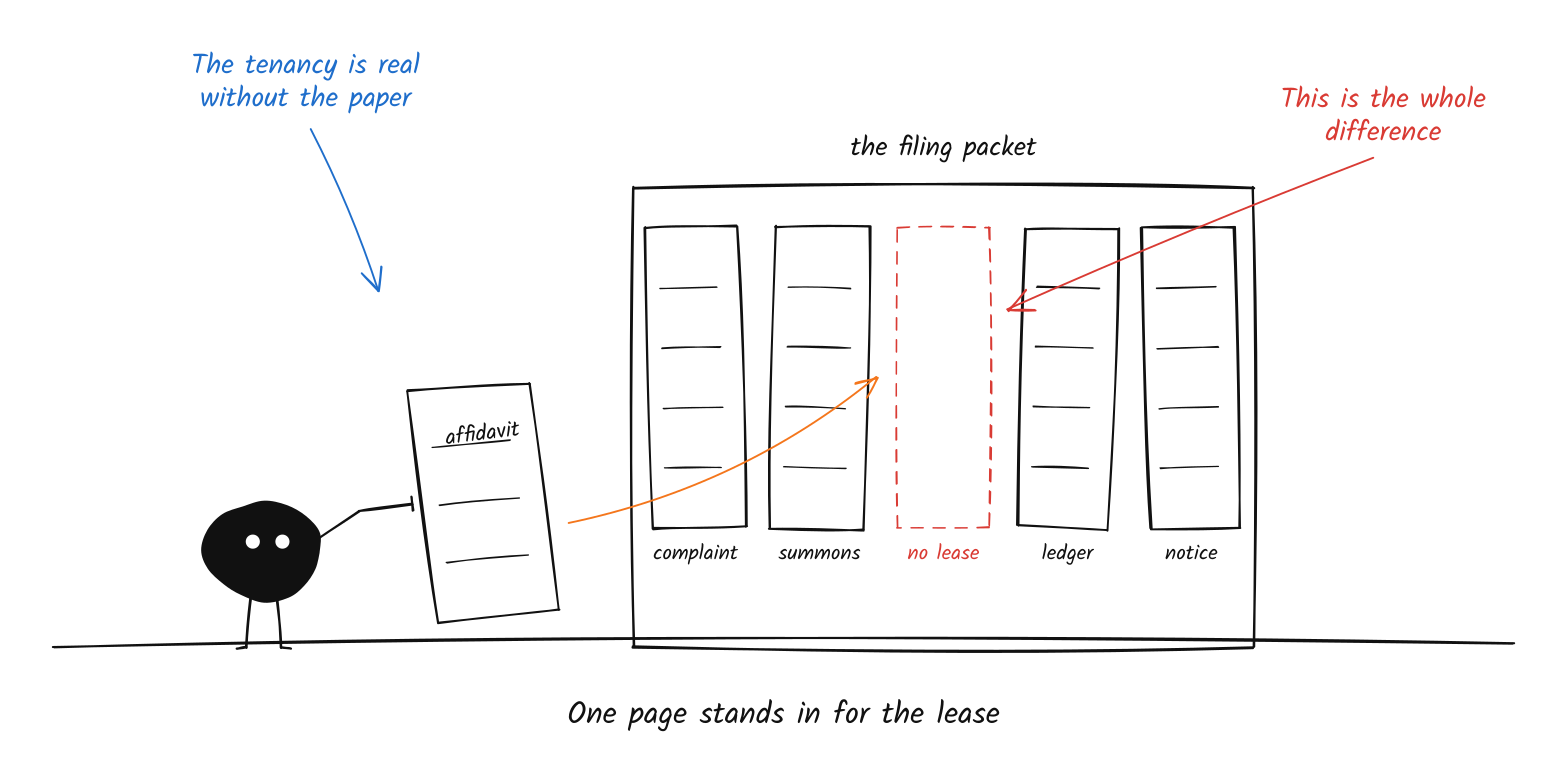
The Illinois standardized eviction complaint contemplates attaching your notice, your proof of service, and the lease. Since July 2020, Illinois Supreme Court Rule 139(b)(2) has answered the obvious question: what if there is no lease? The rule says the plaintiff "may attach an affidavit instead, using the standardized form approved for use by the Supreme Court."
That form is the Affidavit - Supporting Documents Not Attached to Eviction Complaint (form E-SD 3515.2). It's one page. It's free. It's required to be accepted in every Illinois circuit court. You can download it below with the rest of the no-lease packet.
Filling It Out Takes About Five Minutes
The form has three numbered sections, one for each document that might be missing: the notice, the proof of service, and the lease. You only touch the sections for documents you're actually not attaching. If you served your 30-day notice and kept your affidavit of service (do both), you skip sections 1 and 2 entirely and check one box in section 3:
You never had a written lease
"I did not have a written lease with Defendants."
The handshake deal, the family arrangement, the tenant you inherited when you bought the building. This is the box for a genuinely oral tenancy.
You had one but lost it
"I cannot find or did not save a copy of the written lease."
There was a signed lease years ago and nobody kept it. Different box, different sworn statement. Check the one that matches reality.
You're not required to attach one
"I am not required to attach a written lease."
Rare for residential landlords. Used in postures where the claim is not founded on a lease at all.
Then you sign. The certification is under 735 ILCS 5/1-109, which makes a knowingly false statement perjury, a Class 3 felony. That's why the box you check matters: "I never had a written lease" and "I can't find my copy" are different sworn statements. Check the true one.
Two details that trip people up. First, the plaintiff signs, meaning you, the landlord, even if a lawyer files the case for you. Second, if you checked "Unknown Occupants" on the complaint and summons, check it on the affidavit too. The sheriff only removes unknown occupants when that box is checked consistently across the paperwork.
What Happens When the Tenant's Lawyer Attacks It
Some tenant attorneys move to dismiss no-lease complaints, arguing Illinois pleading rules require the "instrument the claim is founded on" to be attached. The affidavit is the answer the Supreme Court wrote for that motion. The committee comments to Rule 139 explain that the attachment rule has generally never applied to evictions, because the eviction statute's pleading section doesn't require any documents to be attached at all. Rule 139(b) was adopted to standardize exactly this situation.
My office has litigated this. In a recent Cook County case, the tenant moved to dismiss because no lease was attached to the complaint. We pointed to the filed Rule 139 affidavit, and the court denied the motion in its entirety. The affidavit isn't a workaround. It's compliance.
Chicago and Suburban Cook County Change the Notice Math
The affidavit works statewide. The notice period doesn't. These local rules apply when you're ending the tenancy itself, the 30-day route, which is why family-arrangement evictions in Chicago take patience. A 5-day nonpayment demand stays five days everywhere in Illinois, and the immediate-possession demand for squatters has no waiting period at all.
So before you serve a termination notice, know which ordinance layer your property sits under, because this is the single biggest source of dismissed no-lease evictions.
Chicago: The Fair Notice Ordinance
In Chicago, the 30-day state notice period stretches based on how long the tenant has been there: 30 days for tenancies under six months, 60 days for six months to three years, and 120 days for tenancies over three years. No-lease tenancies are often the oldest ones, the handshake deals running a decade, which puts many of them squarely in the 120-day tier.
Serve 30 days on a five-year Chicago tenant and the case gets dismissed, and the tenant holds over on the existing terms until the proper period runs. See my RLTO guide for the rest of the ordinance's traps.
Suburban Cook County: The RTLO
Most of suburban Cook County falls under the county's Residential Tenant Landlord Ordinance, which requires a flat 60 days' notice to terminate a tenancy regardless of length. A tenant who doesn't get it can lawfully remain up to 120 days on the same terms.
DuPage, Kane, Will, and the Rest
Outside Cook County, the state rule stands alone: 30 days for month-to-month, timed to the end of a rental period. This is one reason the same eviction can run months faster in Wheaton than in Chicago.
One more screen before you serve: if the property has federally backed financing or a tenant on a federal program, the CARES Act's 30-day notice requirement may still apply to non-payment cases. It has no expiration date in the statute, and courts are split on it. On a covered property, the cheap insurance is serving the 30-day notice and waiting.
Filing the Eviction: What Goes in the Packet
Once the notice period expires and the tenant hasn't moved (or paid, on a 5-day), you file in the circuit court for the county where the property sits. The complaint packet for a no-lease eviction:
- The standardized Illinois eviction complaint
- The notice or demand you served (5-day, 30-day, or immediate-possession demand), attached as an exhibit
- Your affidavit of service proving it was delivered
- The Rule 139 affidavit with the section 3 box checked, in place of the lease
- The filing fee, roughly $389 in Cook County, less in the collar counties
Attach the affidavit at filing. Courts have accepted it filed later, but every week it's missing from the file is a free motion for the defense to draft. It costs you nothing to do it on day one.
After filing, the sheriff or a special process server serves the tenant with a summons, and the case gets a return date. From there the timeline runs like any Illinois eviction, which I walk through step by step in the full eviction process guide.
Proving Your Case Without a Lease
The affidavit gets you past the pleading stage. At trial or prove-up, you still have to establish the tenancy and, in a non-payment case, the rent. Without a lease, that proof comes from the paper trail the tenancy generated:
- Payment records. Bank deposits, Zelle and Venmo history, money orders, receipts. Twelve months of identical monthly transfers from the tenant proves the rent amount better than most leases do.
- Messages. Texts and emails about rent, repairs, and move-in dates establish the relationship and its terms.
- Your testimony. You can testify to the oral agreement: when it started, what the rent was, what was included.
- Utility and mail records. Corroboration that the tenant lived there during the period claimed.
Assemble this before you file. In an uncontested case you may barely need it. In a contested one, the landlord who shows up with a clean Zelle printout and a text thread wins the credibility fight against a tenant claiming the rent was "whatever I could afford."
One warning worth repeating: the affidavit swears to why documents aren't attached. It doesn't prove your notice was served or your rent was owed. Keep your affidavit of service and your payment records, because those still carry the case.
The Mistakes That Actually Sink No-Lease Evictions
The missing lease is almost never what kills these cases. These are the errors that do:
Changing the locks instead
No lease does not mean no tenant. Self-help evictions, including lockouts, utility shutoffs, and removing belongings, are illegal under 765 ILCS 735/1. The tenant can sue you for damages plus attorney fees.
Calling a rent-paying occupant a squatter
The Demand for Immediate Possession is for people who never had permission and never paid. Serve it on someone with a rent history or a standing invitation and the case gets dismissed on the wrong instrument, weeks later. Match the notice to the relationship.
Serving a 30-day notice mid-month
A month-to-month termination notice should line up with the end of a rental period. Serve on the 20th with the tenancy ending the 19th of next month, and you have handed the defense an argument. End it on the last day of a rental period.
Using 30 days on a long-term Chicago tenant
Chicago's Fair Notice Ordinance requires 60 days for tenancies between six months and three years, and 120 days over three years. A bare 30-day notice on an eight-year tenant gets the case dismissed, four months gone.
Checking the wrong affidavit box
"I never had a written lease" and "I lost my copy" are different sworn statements, and a knowingly false one is perjury, a Class 3 felony under 735 ILCS 5/1-109. If a signed lease surfaces later, the wrong checkbox becomes an impeachment gift.
Calling the police to remove them
The police will tell you it is a civil matter, because it is. Someone who has lived in the unit and paid you rent is a tenant, not a trespasser, even with nothing in writing. Eviction court is the only path.
Name drift across the paperwork
The complaint says "Jonathan," the summons says "John," the affidavit says "Jon." The clerk and the sheriff match strings, not people. Keep every defendant name letter-identical across all three documents.
Showing up with no payment records
Without a lease, your rent history is your lease. Pull the Zelle transfers, bank deposits, and text messages before you file, not the night before trial.
Filing without the affidavit attached
Courts have allowed it to be filed late, but every week without it on file is a free motion-to-dismiss theory for the defense. Attach it to the complaint on day one.
Download the Complete No-Lease Eviction Packet (Free)
These are the actual Illinois Supreme Court standardized forms, the same ones we file for our own clients: the Rule 139 affidavit (E-SD 3515.2), the Demand for Immediate Possession (E-P 3501.2), and the 5-day and 30-day notices from the decision tree above. Use the official versions. The Supreme Court requires the standardized forms in every circuit court, so don't retype them or improvise your own.
I handle Chicago evictions for a $1,600 flat fee, notice through judgment. DuPage cases are $895, and Kane cases are $995.
Free Download
Get the Complete No-Lease Eviction Packet, Free
All four Illinois Supreme Court standardized forms for a no-lease eviction, the same ones we file for our own clients. Enter your email and they download instantly.
- ✓ Rule 139 Affidavit: Replaces the Lease at Filing
- ✓ Demand for Immediate Possession: For Squatters
- ✓ 5-Day Notice: Non-Payment of Rent
- ✓ 30-Day Notice: Termination of Tenancy
Your forms are ready:
Serve the wrong notice, or serve it the wrong way, and the case restarts from day one. If you'd rather have it done right, call (630) 839-9195.
Frequently Asked Questions
Yes. The notice depends on the situation: an occupant who pays you rent and has fallen behind gets a 5-Day Notice for non-payment, a family member or someone you never charged gets a 30-day termination notice under 735 ILCS 5/9-207 (longer in Chicago and suburban Cook County), and a true squatter who never had permission gets a Demand for Immediate Possession. When you file the eviction case, a one-page court-approved affidavit takes the place of the lease you don't have.
It shouldn't be, if you file the standardized affidavit. Illinois Supreme Court Rule 139(b)(2) says that when the plaintiff doesn't have the lease or there is no written lease, the plaintiff may attach the standardized affidavit instead. Tenant attorneys still file motions to dismiss on this theory, and courts have denied them where the affidavit was on file, because the eviction statute doesn't actually require any documents to be attached to the complaint. The affidavit is the exact instrument the Supreme Court created for this situation.
The same affidavit covers you, but you check a different box: "I cannot find or did not save a copy of the written lease" instead of "I did not have a written lease with Defendants." These are separate sworn statements under penalty of perjury, so check the one that is actually true. If the lease might turn up in your email or your old property manager's files, look before you swear it cannot be found.
The standard 5-Day Notice for non-payment under 735 ILCS 5/9-209. An oral rental agreement is still an enforceable tenancy, and unpaid rent under it supports a 5-day demand just like a written lease would. You'll prove the monthly rent amount through your payment history: bank deposits, Zelle or Venmo transfers, and messages where the tenant acknowledges the rent.
It depends on how they got there. If they had your permission (a family member, an ex, a friend you took in), they're treated as a tenant and you end the arrangement with a 30-day termination notice. If they never had permission at all, they're a squatter, and the correct instrument is the Demand for Immediate Possession, which has no waiting period before you file. The two paths are not interchangeable: serving a squatter demand on someone who had permission gets the case dismissed. When the history is murky, talk to an attorney before serving anything.
Add the notice period to the normal court timeline. A DuPage County case can wrap up in roughly 10 weeks after the 30-day notice expires. A contested Chicago case averages around 150 days, and long-term Chicago tenants add 60 or 120 days of Fair Notice time up front. The affidavit itself adds zero days. It's one page filed with the complaint.
Possibly. If your property has federally backed financing (FHA, VA, USDA, Fannie Mae, or Freddie Mac) or participates in a federal program like Section 8 or LIHTC, many courts still require a separate 30-day notice to vacate before a non-payment eviction, because Congress never gave that provision an end date. Illinois courts haven't settled the question, so on covered properties the safe play is to serve the 30-day notice and wait it out.
No. Illinois law does not recognize email or text message as valid service for eviction notices, even without a written lease and even if you and the tenant text about everything else. Hand it to the tenant, leave it with a resident age 13 or older, or send it certified mail with return receipt. If you mail it, the notice period runs from the day the tenant receives it, not the day you send it.
"No Lease? No Problem."
Flat-fee eviction, notice through lockout.
We serve the notice, prepare the affidavit, and take the case through court. One flat fee, no surprises, and you stop being your tenant's free housing program.
All consultations are confidential.