

5-Day Notice Illinois: The Complete Guide
Part of the guide: Illinois Eviction Process, Step by Step.
Every Illinois eviction notice: 5-day, 10-day, and 30-day. What each must include, how to serve them, and the mistakes that get cases dismissed.
In landlord-tenant matters I represent property owners only. I do not represent tenants. Tenants who need help can call Cook County Legal Aid for Housing and Debt at (855) 956-5763.

The Short Version
The notice is the first step of every eviction. Get it right, or you start over.

Pick the Right One
No rent paid? 5-day notice. Broke the lease? 10-day. Ending the lease? 30-day.

Write It Right
Use the tenant's full name, the address, and the exact rent owed. Sign it and date it.

Hand It Over
Hand it to your tenant, or give it to an adult who lives there. Either one works. Mail a copy too, for proof.

Do Not Tape It to the Door
Posting the notice almost never counts. Judges throw those cases out.
Count the Days
Wait out the full notice time. Filing even one day early kills the case.

Then We File
If the time runs out and nothing changed, we take it to court for you.

Free Forms
The exact forms we use are free on this page. Or call (630) 839-9195 and we do it all.
Which Eviction Notice Do You Need in Illinois?
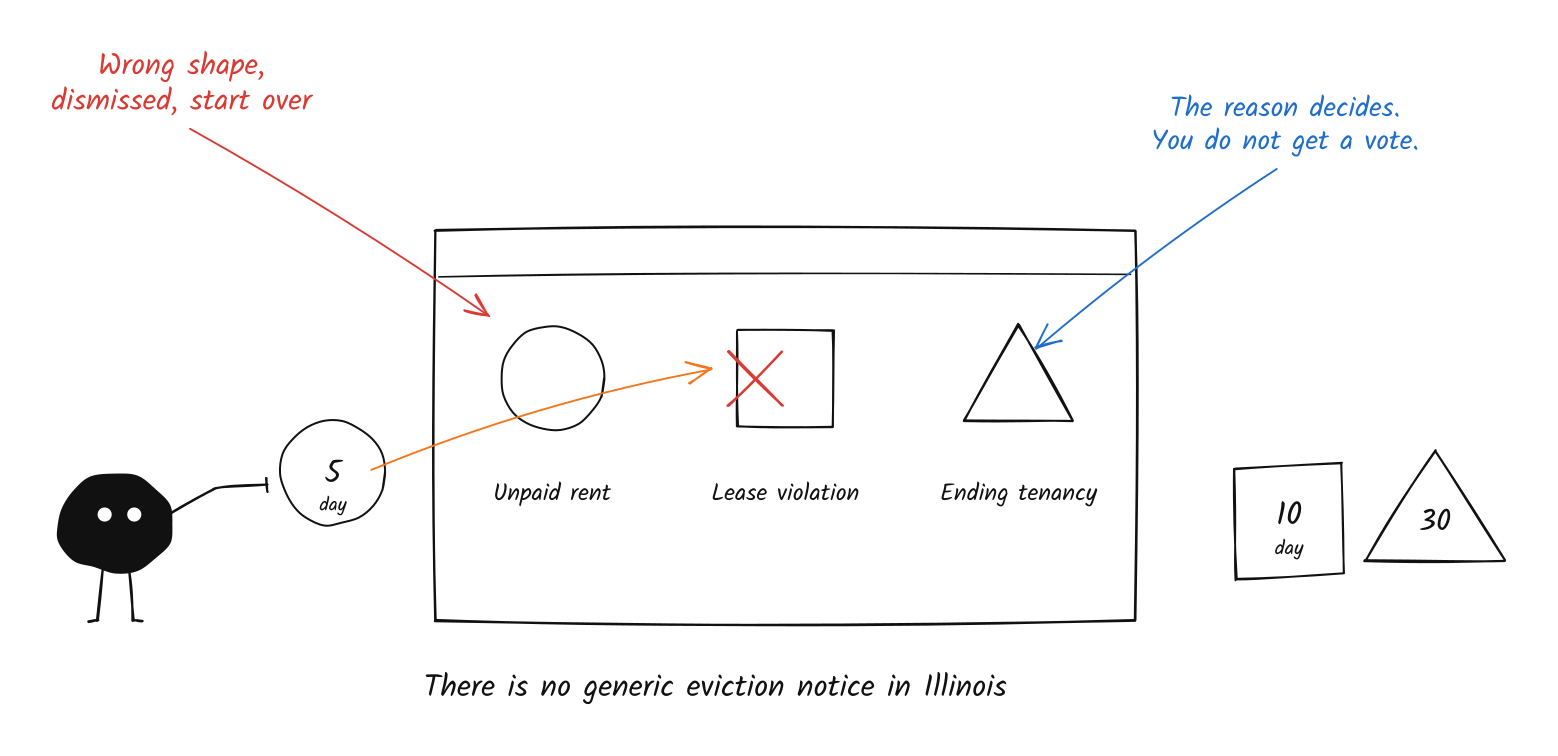
Illinois law requires landlords to serve a written notice before filing an eviction lawsuit. The type of notice depends entirely on why you're evicting. There is no generic "eviction notice" in Illinois, and if you use the wrong type, the court will dismiss your case. You'll have to start over with the correct notice, losing weeks or months in the process.
Non-Payment of Rent
5-Day Notice
Your tenant owes rent. This notice demands payment within five days or the lease terminates.
Lease Violations
10-Day Notice
Unauthorized occupants, pets, property damage, illegal activity. Drug activity has its own 5-day criminal notice. Gives tenants 10 days to fix the problem or face eviction.
Termination of Tenancy
30-Day Notice
Tenant hasn't done anything wrong but you want to end the tenancy. In Chicago, extends to 60 or 120 days for long-term tenants.
The 5-Day Notice: Non-Payment of Rent
The 5-Day Notice is the most commonly filed eviction notice in Illinois. Under 735 ILCS 5/9-209, when a tenant falls behind on rent, the landlord must serve a written demand giving the tenant five days to pay the outstanding balance or vacate the property.
What the 5-Day Notice Must Include
- The tenant's full name
- The address of the rental property, including the unit number
- The exact amount of rent owed, broken down by month if multiple months are unpaid
- A clear statement that the tenant has five days to pay the full balance
- A statement that the lease will terminate if the balance is not paid within five days
- The landlord's name and signature
- The date the notice was prepared
- The FULL PAYMENT legend, stated prominently and word for word: "Only FULL PAYMENT of the rent demanded in this notice will waive the landlord's right to terminate the lease under this notice, unless the landlord agrees in writing to continue the lease in exchange for receiving partial payment." Leave it out and a partial payment can sink the notice. My full answer: should you accept partial rent after a 5-day notice?
What the 5-Day Notice Should NOT Include
If your tenant owes $1,200 in back rent and $150 in late fees, the 5-Day Notice should demand $1,200. You can pursue the late fees separately, but mixing them into the notice gives the tenant's attorney an easy argument to get your case dismissed.
When the Five Days Start Running
The five-day clock starts the day after the notice is served. If you serve the notice on a Monday, day one is Tuesday. Weekends and holidays count toward the five days under the statute. If day five falls on a weekend or court holiday, the tenant technically has until the next business day to pay.
If the tenant pays the full balance within the five days, the notice is cured and the tenancy continues. You cannot refuse a full payment during the cure period and proceed with eviction anyway. If they offer only part of what is owed, what happens next depends entirely on whether your notice carries the FULL PAYMENT legend below.
The Rent Must Actually Be Due
This sounds obvious, but I've seen it happen. If your lease says rent is due on the first, you cannot serve a 5-Day Notice on the first. The rent becomes past due after the first, and you can serve the notice on the second.
The 10-Day Notice: Lease Violations
The 10-Day Notice under 735 ILCS 5/9-210 covers lease violations other than non-payment of rent. If your tenant is keeping an unauthorized pet, has moved in extra occupants who aren't on the lease, is causing property damage, or is otherwise violating a specific term of the lease, this is your notice.
The Cure Period
Unlike the 5-Day Notice, which is strictly pay-or-leave, the 10-Day Notice gives the tenant a chance to fix the violation. If the lease says no pets and your tenant has a dog, the 10-Day Notice tells them they have 10 days to remove the dog. If they do, the notice is cured and the tenancy continues. If you skip straight to filing a lawsuit without giving the tenant a genuine opportunity to correct the violation, the court will dismiss your case.
Exceptions to the Cure Period
Not every lease violation comes with a cure opportunity. Drug manufacturing or distribution on the premises does not get a cure period. The same applies to conduct that poses an imminent threat to the health or safety of other residents.
Be Specific About the Violation
Vague notices ("you are violating the lease") get dismissed. Cite the specific lease provision and describe the specific conduct. "On April 12, 2026, unauthorized occupant John Doe was observed living in the unit in violation of Paragraph 7 of the lease" is the level of specificity that holds up.
I cover the 10-day notice in full on its own page.
The 30-Day Notice: Ending a Tenancy
The 30-Day Notice under 735 ILCS 5/9-207 is the notice you use when you want to terminate a tenancy but the tenant hasn't violated the lease or fallen behind on rent. Maybe the lease expired and you don't want to renew. Maybe you have a month-to-month tenant you want to move on from. This is also the notice for tenants who never had a written lease at all; the full playbook for that situation, including the court affidavit that replaces the lease at filing, is in my guide to evicting without a lease.
Chicago and Cook County: The Fair Notice Complication
DuPage and Kane counties require only 30 days regardless of how long the tenant has been there. In Chicago, the Fair Notice Ordinance extends the notice period based on tenancy length: 30 days for under six months, 60 days for 6 months to 3 years, and 120 days for tenancies over 3 years.
These extended notice periods are one of the biggest sources of dismissals in Chicago eviction court. A landlord serves a 30-Day Notice to a tenant who has lived in the unit for two years, and the case gets thrown out because the Fair Notice Ordinance required 60 days. That's two months of additional lost rent before you can even refile.
Chicago Just Cause Protections
If your property is covered by the Chicago RLTO (Residential Landlord and Tenant Ordinance), you should also be aware of just cause eviction protections that may apply. Chicago has been expanding tenant protections in recent years, and the rules around no-fault terminations continue to evolve.
How to Properly Serve an Eviction Notice in Illinois
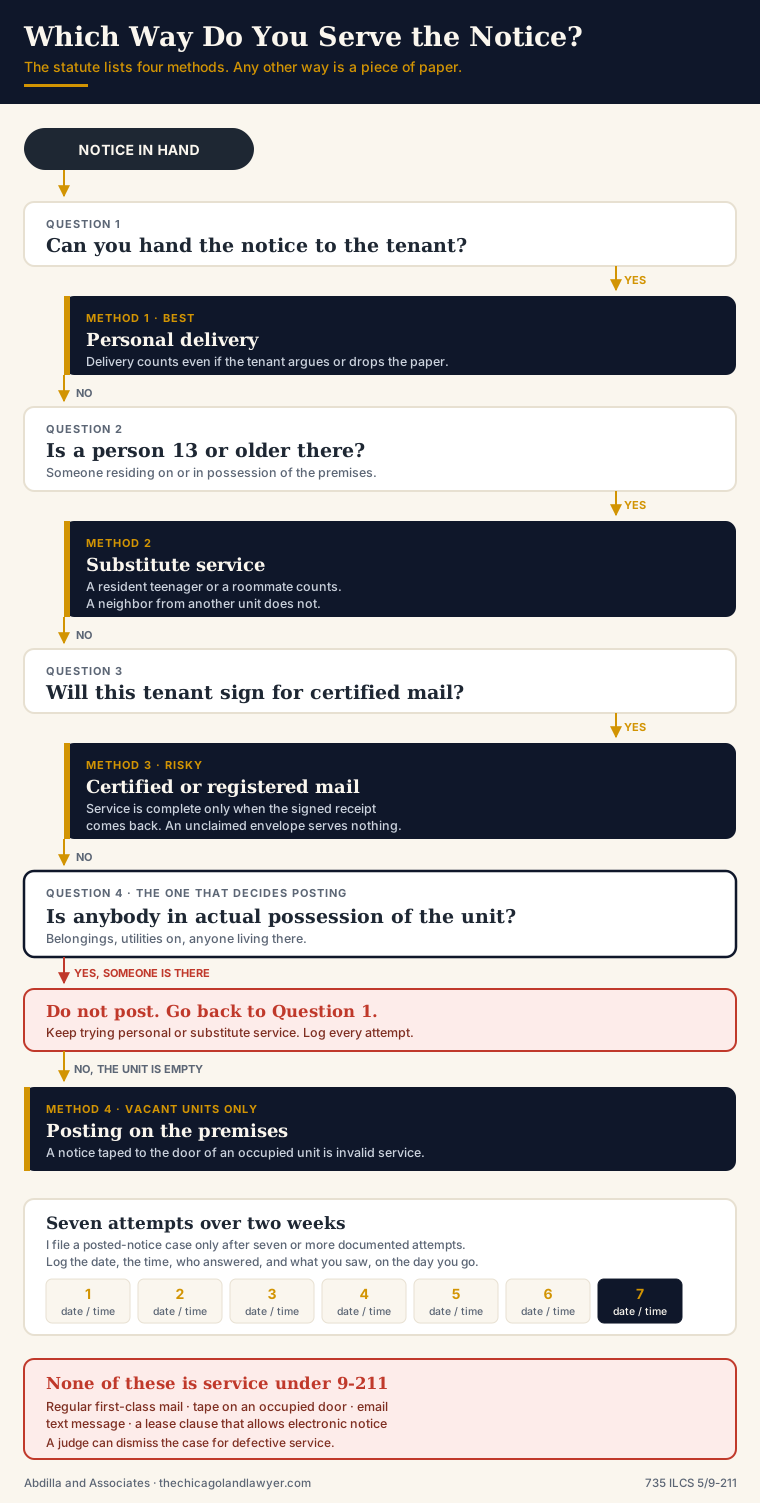
The notice itself is the easy part. Getting it to the tenant in a way that will hold up in court is where most eviction cases go sideways. Under 735 ILCS 5/9-211, Illinois recognizes several service methods, and they are alternatives rather than a ranked order. There is no requirement to attempt personal service first. What matters is that posting is available only when nobody is in actual possession of the premises. Taping the notice to the door of an occupied unit is not service, and courts reverse entire cases over it. See why door-posted notices lose cases.
Personal Service
This is the gold standard. You physically hand the notice to the tenant. If you can get the notice into their hands, you have the strongest possible proof of service. The tenant does not need to sign anything, acknowledge receipt, or even read the notice in front of you. Your affidavit of service stating that you delivered the notice to the tenant at a specific date, time, and location is sufficient.
If you can bring a witness when you serve the notice, even better. A neutral third party who can testify that they saw you hand the document to the tenant makes your service essentially bulletproof.
Substitute Service
If the tenant isn't available for personal service, Illinois allows substitute service. You can deliver the notice to another person of the age of 13 years or upwards who resides on or is in possession of the premises. That is the statutory test in 735 ILCS 5/9-211, not a general "suitable age and discretion" standard, so a 13-year-old living at the property qualifies.
When you use substitute service, 735 ILCS 5/9-211 does not itself require you to mail a second copy. Mail one anyway. It costs a stamp, it gives you proof, and some local ordinances and leases require it even though the statute does not.
Abode Service (Nail and Mail)
Abode service means taping or affixing the notice to the door of the tenant's unit and mailing a copy via first-class mail. Here is the part most landlords get wrong: posting is lawful only when no one is in actual possession of the premises, a unit that is genuinely vacant or abandoned. If your tenant still lives there and is simply dodging you, taping the notice to the door is not valid service, no matter how many attempts you have made. For an occupied unit where the tenant is avoiding service, use personal service, substitute service, or certified mail instead, and seriously consider hiring a process server. They are persistent, and their affidavits hold up in court.
Certified Mail
You can serve an eviction notice by certified mail, which requires the tenant to sign for delivery. The advantage is the documented paper trail through the return receipt (the green card). The disadvantage is obvious: tenants who know an eviction is coming will simply refuse to sign.
When the Notice Period Begins
For personal and substitute service, the notice period starts the day after service. For abode service and certified mail, courts generally start the clock from the date of mailing or posting, though some judges add a day or two to account for mail delivery time. The safest practice is to add a buffer day before filing.
Common Mistakes That Get Illinois Eviction Notices Thrown Out
About half of the 5-day notices landlords show me have a defect that could end the case. I make more than half of the landlords who call me serve a new notice before I file. That is my office's count, not a court statistic.
In 2025 a landlord told me he handed the 5-day notice to the tenant in the tenant's car. At trial the story changed. He had tried to leave it under the wiper blade while they talked. The tenant drove off. The tenant testified he thought it was mail. The judge found no service. The landlord dismissed, served a new notice, filed again, and tried again. That case is one of three my office has lost.
The notice that asked for too much
In June 2026 I took over a Cook County case at the Daley Center. The landlord had put late fees, utilities, and attorney fees on the 5-day notice. The tenant argued the notice demanded too much money. I argued that the tenant never tried to pay any part of it, so the amount did not matter. The court agreed. We won at trial. Do not copy that landlord. Put rent on the 5-day notice and nothing else. I won that argument once. I do not want to make it twice. The rule behind that result is tender. A tenant who pays nothing within the five days cannot complain about the forfeiture. Elizondo v. Perez, 42 Ill. App. 3d 313 (1st Dist. 1976).
After handling hundreds of eviction cases, these are the errors I see over and over. Every single one results in a dismissed case and a restart of the entire notice period, which means more months of lost rent.
Wrong notice type
Serving a 5-Day Notice for a lease violation when the tenant is current on rent. A 10-Day Notice is required. Dismissed.
Inflated amounts on the 5-Day Notice
Demanding rent plus late fees plus damages in the notice. The notice now demands amounts beyond what qualifies as rent under the statute. Dismissed.
Defective service
Taping the notice to the door of an occupied unit. Posting is valid only when nobody is in actual possession, and no number of failed attempts at personal service changes that. Handing it to a child instead of a resident adult. Each is grounds for dismissal.
Wrong notice period for Chicago long-term tenants
Serving a 30-Day Notice to a tenant who has lived in the unit for eight years. Chicago's Fair Notice Ordinance requires 120 days for tenancies over three years. Dismissed. Four-month restart.
Filing the lawsuit too early
Filing before the notice period fully expires. Even one day early gets the case thrown out. Count your days carefully, and when in doubt, wait an extra day before filing.
Missing required information
Notice doesn't include the full property address with unit number, the specific amount owed, or the landlord's signature. Courts enforce these strictly, especially in Cook County.
Leaving the FULL PAYMENT legend out of the notice
This is the single most valuable sentence in 735 ILCS 5/9-209, and most notices leave it out. A notice is not invalidated by partial payment, but only if the notice prominently states: "Only FULL PAYMENT of the rent demanded in this notice will waive the landlord's right to terminate the lease under this notice, unless the landlord agrees in writing to continue the lease in exchange for receiving partial payment." Include that legend and you may take partial rent and still proceed. Leave it out and a partial payment can waive your notice and force you to start over.
If money shows up after you serve the notice, see my guide on accepting partial rent in Illinois before you touch it.
What Happens After You Serve the Notice
Once the notice period expires and the tenant hasn't cured the issue (paid the rent, fixed the violation, or moved out), you can file a Forcible Entry and Detainer action in the circuit court for the county where the property is located. In Cook County, your case will likely be routed to the eviction calendar at the Daley Center.
You'll need the original notice, your proof of service (the affidavit), the current or most recent lease agreement, and the filing fee. In Cook County, the filing fee is approximately $389. DuPage and the collar counties charge less.
After filing, a process server or the county sheriff will serve the tenant with a summons. The tenant must receive the summons at least seven days before the court date.
If you want the full walkthrough of everything from filing through sheriff enforcement, see my detailed Illinois eviction process guide.
Download Free Illinois Eviction Notice Templates
These are the same forms we use in our practice. Fill them out carefully, follow the service requirements in this guide, and keep copies of everything you send.
I handle Chicago evictions for a $1,600 flat fee, notice through judgment. DuPage cases are $895, and Kane cases are $995.
Free Download
Get the Exact Eviction Notices We File, Free
The Illinois Supreme Court standardized forms we serve for our own clients. Enter your email and all three download instantly.
- ✓ 5-Day Notice: Non-Payment of Rent
- ✓ 10-Day Notice: Lease Violation
- ✓ 30-Day Notice: Non-Renewal of Tenancy
Your forms are ready:
Serve the wrong notice, or serve it the wrong way, and the case restarts from day one. If you'd rather have it done right, call (630) 839-9195.
Frequently Asked Questions
No. Illinois law does not recognize email, text message, or any other electronic delivery as valid service for eviction notices. The notice must be physically delivered using one of the methods described above: personal service, substitute service, abode service, or certified mail. This is true even if your lease allows electronic communications for other purposes.
You don't need one, but you should consider it seriously. We offer free notice preparation as part of our eviction services. A defective notice means starting over. If your tenant is three months behind on rent, a botched notice adds another five to 30 days to a process that's already costing you $1,500 or more per month in lost income. Most of the landlords who call me already tried the DIY route once.
Yes, if the notice was drafted correctly. 735 ILCS 5/9-209 says a notice is not invalidated by partial payment so long as it prominently states this exact language: "Only FULL PAYMENT of the rent demanded in this notice will waive the landlord's right to terminate the lease under this notice, unless the landlord agrees in writing to continue the lease in exchange for receiving partial payment." Without that legend, taking partial rent can waive the notice. With it, you may accept partial payment and still proceed, and collecting past due rent after you file does not invalidate the suit.
Absolutely not. Self-help evictions (including changing locks, removing doors, and removing the tenant's belongings) are illegal in Illinois. Possession may only be recovered through the eviction action in 735 ILCS 5/9-101 et seq. Unlawfully cutting off utilities is separately barred by the Rental Property Utility Service Act, 765 ILCS 735/1.4. A tenant who is locked out can sue you for actual damages plus attorney fees, and in some cases you could face criminal charges. The only legal path to removing a tenant in Illinois is through the court eviction process.
It depends on the county and whether the tenant fights the case. A straightforward DuPage County eviction can wrap up in about 10 weeks. A contested Chicago eviction averages around 150 days, and that's when everything goes smoothly. The notice stage is just the first step.
Yes. Even if the tenant's lease was with the previous owner, you still need to serve proper notice before filing for eviction. If the tenant has a valid lease with time remaining, you're generally bound by its terms until it expires. If the lease has already expired and the tenancy is month-to-month, you can serve a 30-Day Notice (or longer in Chicago, depending on tenancy length).
"Ready to Start Your Eviction?"
Free notice prep with every eviction case.
Don't risk a dismissed case from a defective notice. We prepare every notice as part of a flat-fee eviction engagement.
All consultations are confidential.