In 2025, a landlord called me about an eviction. I quoted him an itemized invoice, and instead of hiring me, he changed the locks himself. The police restored his tenant to the unit. The tenant then sued him in Cook County for about $50,000 under the Chicago RLTO. This page opens the box. Most firms make you wait weeks between updates and wonder what's happening. I send an email at every milestone. This page shows you exactly what happens after you call me, and you get an update email at every milestone. Scroll through them in order. By the bottom you will know what happens on the first call, what you sign, what it costs, and what the next year of your case looks like.

The road ahead
Most cases settle before the end of this page. The ones that go the distance follow this exact order, and you will always know which step your case is standing on.
Everything starts with a conversation, and the conversation costs you nothing. I need three things from you on the intake call: the nature of your case, the good facts and the bad facts, and your documents. Then, before anyone signs anything, my office runs an internal conflicts check to confirm we can ethically represent you.
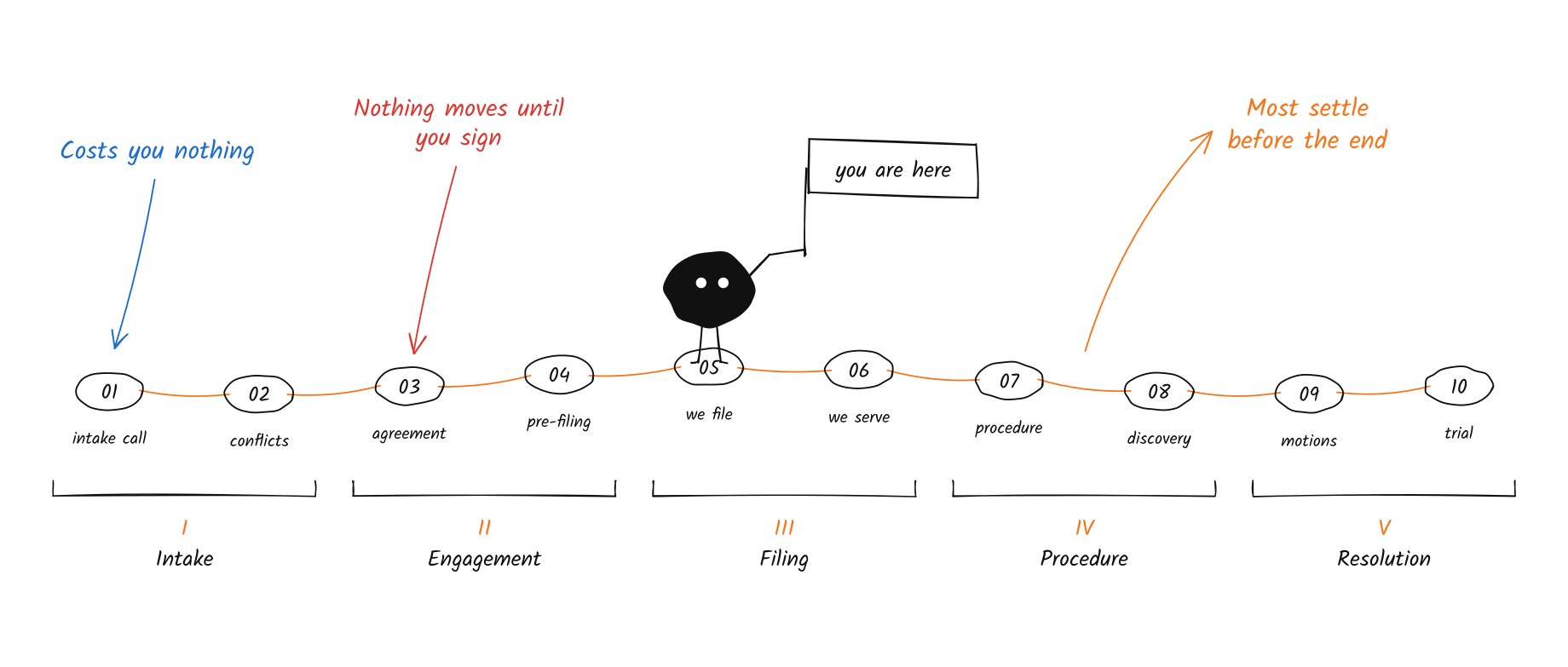
Step 01 · The intake call
Tell me the bad facts. The other side will find them, so I price them into the strategy on day one. A lawyer surprised at trial by their own client's facts has already lost. The bad facts are protected by privilege the same as the good ones.
Bring your documents. I review them before I quote you anything, because the documents usually decide the case.
Step 02 · The conflicts check
We confirm we are free to fight for you. A law firm is barred from taking a case against a current or former client's interests. By accepting you, we become precluded from ever representing the opposing party against you. The check protects you both ways.
Consultations before you hire us are free and are never charged. Illinois Rules of Professional Conduct govern conflicts of interest.
You receive a plain-language client agreement that names your exact matter, states what is included and what is not, and puts every number in writing: a flat fee where we publish one, or a retainer held in a dedicated client account with every hourly rate listed, as the law requires. You can cancel at any time, with refunds governed by the written terms you signed. Then the pre-filing work starts, and it runs on one of two tracks.
Step 03 · The client agreement
Read what you are buying. The agreement defines the scope: the case we are handling, and the things that live outside it, like appeals and post-judgment work, so nothing is assumed. It also attaches the Statement of Client's Rights and discloses how the firm uses technology, including AI, on your file.
Know your exit. You have the absolute right to cancel the agreement at any time. You pay for work already done at the rates in the agreement, and the remaining balance is returned as your agreement provides. Flat-fee matters follow the written minimum-fee schedule in your engagement letter.
Step 04 · The pre-filing work
Track A, landlords: we audit your ordinance compliance and verify or deliver the required notices, because the notice is the foundation the whole eviction stands on. The first-eviction walkthrough shows this track in detail.
Track B, litigation: we assemble your facts and check them against public records and other sources of truth. Court rules require accuracy in what we file, and you certify the facts to us in writing before anything goes to a judge. Cases are won in this step and lost by skipping it.
Flat fees are published on this site. Hourly engagements disclose the full rate schedule in the agreement, with retainer funds held in a client trust account.
When the file is ready, we e-file your case and the court assigns it a case number and a judge. Then we put it in the other side's hands: the sheriff or a process server delivers the summons, service starts the court's clock, and your case is officially moving. You get an update email at each of these steps. If you came to me as a defendant, this phase already happened to you; your case enters at Phase IV.
Step 05 · We file your case
The complaint tells your story to the court. Filing fees and court costs pass through to you at cost; they are listed in your agreement, and we ask before spending anything unusual.
Step 06 · We serve your case
Nothing happens until the other side is served. We track service closely; a defendant who dodges the sheriff gets a process server, and a case with no service is a case standing still.
E-filing is mandatory in Illinois civil cases. Court costs are set by the Clerk's and Sheriff's current fee schedules and are separate from attorney fees.
Now the court sets the rhythm. We map your case's procedure and calendar every deadline. On defense, this is where we enter: we respond to the Complaint, by motion or by Answer. Where mediation is available, like Cook County's Early Resolution Program in eviction cases, we evaluate it honestly, because a good settlement now often beats a perfect judgment later. Then discovery opens: almost every case does written interrogatories first and depositions second, though no rule says it has to happen that way. Expect discovery to run 3 to 6 months.
Step 07 · The procedure of your case
Plaintiff or defendant, the calendar rules. We set out the schedule, appear at case management, and if we are defending you, we answer or attack the Complaint before the deadline runs.
Mediation gets a real look. Every week of litigation costs money and attention. When a mediated deal returns your property, your money, or your peace sooner, I will tell you so plainly.
Step 08 · Discovery
Interrogatories, then depositions. Written questions under oath map the other side's story; depositions lock witnesses into it. We prepare you for both, and you will always know why we are asking for what we ask.
Discovery in Illinois civil cases runs under Supreme Court Rules 201 through 224; each case's discovery schedule is set by the court's case management order under Rule 218, and the interrogatories-then-depositions pattern is customary, not required.
With discovery closed, we ask the court to decide what it can without a trial. In eviction and other summary cases, expect the judgment-motion stage around 4 months in; in full litigation, closer to 12 months. What survives the motions goes to trial, bench or jury, built on the file we have been assembling since your first phone call. One promise appears in writing in every agreement I sign: no lawyer can guarantee an outcome, and I never will. What I guarantee is the process on this page.
Step 09 · Judgment motions
This is where preparation pays. Summary judgment turns clean facts and clean paper into a final ruling. The document discipline from Steps 1 and 4 is exactly what wins here.
Step 10 · Trial
You will be ready before you walk in. Exhibits organized, testimony prepared, and no surprises, because we surfaced the bad facts on day one and dealt with them on our terms instead of theirs.
Timelines are typical for Illinois cases in my practice and vary by county, courtroom, and case; your agreement and update emails track your actual dates.
First-timer questions
Nothing. Consultations before you hire us are free and are never billed. On the intake call I gather the nature of your case, the good facts, the bad facts, and your documents, and you leave the call knowing whether you have a case and what it would cost to run.
In writing, before we start. Where we publish a flat fee, such as evictions and LLC formations, that flat fee is the price. Litigation runs on a retainer held in a dedicated client account, with every hourly rate listed in the agreement you sign. Court costs like filing fees and service of process are separate and pass through at cost. You can cancel at any time, and refunds follow the written terms of your agreement.
You get an update email at every milestone: when your case is filed, when it is served, when mediation becomes available, and when it transitions into discovery. Between milestones you get a monthly status update, and you can always call or text with something urgent.
Summary cases like evictions move in months, with judgment motions around 4 months in. Full litigation runs longer: discovery alone typically takes 3 to 6 months and judgment motions arrive closer to 12 months. Most cases settle before trial, and your update emails track the actual dates in your case.
Because the other side will find them. Strategy built on half the record collapses the first time opposing counsel finishes their homework. Your bad facts are protected by attorney-client privilege the same as your good ones, and telling me early lets me deal with them on our terms. Before we file anything, we also check your facts against public records, because court rules require what we file to be accurate.
Start at Step 1. The call is free, the conflicts check is my job, and everything after that is in writing before you owe a dollar.
Court costs are separate and paid to the court: filing fees, service of process, and similar charges pass through at cost and are listed in your agreement.