
Can You Serve an Eviction Notice Yourself in Illinois?

Part of the guide: Illinois Eviction Process, Step by Step.
Yes. Illinois law lets you serve your own eviction notice. Section 9-211 of the Eviction Act lists four valid methods. Hand the notice to the tenant. Leave it with a resident of the unit who is age 13 or older. Send it by certified or registered mail, and get a receipt signed by the tenant. Or post it, but only when nobody is in actual possession. The law does not care who serves the notice. The law cares how. Defective service restarts the case and costs you another month of rent. My flat fee of $895 to $1,600 already includes getting service right.
Can I Tape the Notice to the Door?
I get this question three or four times a day. The law gives you three real ways to serve a notice. Hand it to the tenant. Hand it to someone age 13 or older who lives there and is there when you hand it over. Or send it certified mail with a return receipt, and nobody signs for those. About half the landlords who call me say, "I already served it." I ask how. They say, "The tenant was not home, so I taped it to the front door."
A notice taped to an occupied unit's door is useless. The posting rule in 735 ILCS 5/9-211 applies when no one is in actual possession. That means abandoned units and squatters, not a tenant who was out. A tenant cannot waive service and cannot waive notice. Landlords quote a chatbot at me on this point every week. The chatbot is reading the wrong sentence.
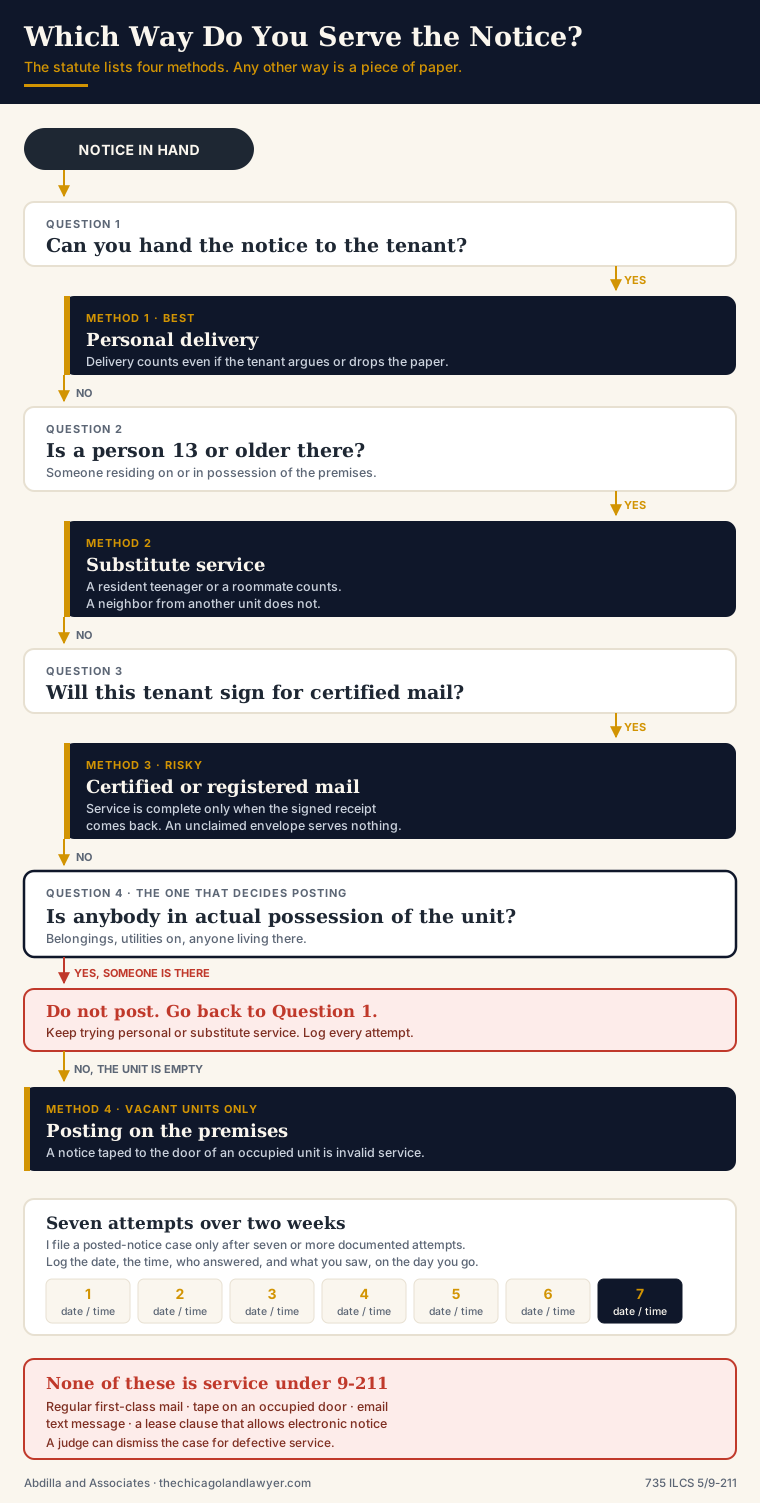
My rule for posting. I will not file a posted-notice case without seven or more documented attempts. One must be early morning. One must be evening. One must be a weekend. Two weeks of attempts with no one ever at the door is evidence. Courts have treated seven to ten visits over two weeks as proof the unit is abandoned and allowed us to proceed on posting.
Two tenants who admitted the posting worked
In a 2024 DuPage County case, the tenant admitted in court that the posted notice reached him. In 2026 a squatter in a Chicago house told the judge, "I came home and I got the notice." Both cases moved forward. Both had a documented record of attempts behind the posting. A single trip and a piece of tape does not.
The cases behind this rule
American Management Consultant, LLC v. Carter, 392 Ill. App. 3d 39, 915 N.E.2d 411 (3d Dist. 2009). The court held that section 9-211's methods are exclusive and strictly enforced. Posting on the door of an occupied unit is not valid service. Here is the brutal detail. The tenant actually received the posted notice. The court held that actual receipt does not cure the defect. The tenant read the notice, and the landlord still lost. Courts reaffirmed Carter as recently as 2023. It is not an old rule that judges ignore. It is current law.
Figueroa v. Deacon, 404 Ill. App. 3d 48, 935 N.E.2d 1080 (1st Dist. 2010). The landlord taped the 5-day notice to the door and slid a copy under it. The landlord won at trial. On appeal, the court reversed the possession judgment. It reversed the money judgment too. The eviction was dismissed. The landlord lost the unit ruling and the rent award in one opinion, all because of how one piece of paper was delivered.
Certified mail looks like the easy method. It carries its own trap. The rule comes from the Illinois Supreme Court in Avdich v. Kleinert, 69 Ill. 2d 1, 370 N.E.2d 504 (1977). Service by certified mail is not complete when you drop the letter at the post office. It is complete when the tenant receives the notice. The return receipt is required to prove it. The 5 days run from receipt, not from mailing.
The landlord in Avdich filed suit before the 5 days ran from receipt. The court held the suit was premature. The case failed. File one day early and you refile from zero.
I file 150 or more evictions a year across nine Illinois counties. I know where DIY cases die. They do not die at trial. They die in the first five minutes of the first court date. The judge asks how the notice was served. The landlord names a method that is not on the statutory list.
This page keeps you off that casualty list, whether you hire me or not. The notice forms themselves are free. The 5-day notice, the 30-day notice, and the Demand for Immediate Possession are all in my eviction resources library. Download the form you need. Then use this page to serve it in a way that holds up in court.
What Are the Four Legal Ways to Serve an Eviction Notice?
Section 9-211 of the Eviction Act lists exactly four methods. A notice served any other way is a piece of paper, not service. Pick one method from this list. Follow it exactly.
Personal delivery
Hand a written or printed copy of the notice to the tenant. Delivery counts even if the tenant argues with you or drops the paper.
Substitute service
Leave the copy with a person age 13 or older who resides on the premises. The tenant's teenager or a roommate counts, but a neighbor from another unit does not.
Certified or registered mail
Send the notice by certified or registered mail, and request a return receipt. Service is complete only when the tenant signs the receipt and it comes back to you.
Posting, on a vacant unit only
Post the notice on the premises only when nobody is in actual possession. A posted notice on an occupied unit is invalid service.
Note the date, the time, and what was said when you serve. You will need those details for the affidavit discussed below.
Which Common Service Methods Do Not Count?
Do not serve the notice by regular first-class mail. Do not tape the notice to the door of an occupied unit. Neither method appears in 735 ILCS 5/9-211. A judge can dismiss your case for defective service.
Every month I meet a landlord who used a method that felt reasonable. Regular first-class mail is the most common. It is cheap, and it usually arrives. But it is not a listed method under 9-211. The tenant's lawyer will move to dismiss, and the tenant's lawyer will probably win.
Taping the notice to the door of an occupied unit is the second most common mistake. Posting service exists only for premises that nobody actually possesses. Landlords proudly show me a photograph of the notice on the door. In court, that photograph proves invalid service.
Email and text messages create the same problem in a newer form. Section 9-211 lists four methods, and no electronic method is among them. No Illinois authority approves email or text service of a statutory eviction notice. A lease clause that allows electronic notice does not change that. Serve the notice by a statutory method every time. Send the text if you want a paper trail of good faith. But serve the notice by one of the four statutory methods on top of it. For Chicago buildings, plan on personal service. In my cases, certified mail and posted notices invite problems. Hand the notice to a person.
Why Does Certified Mail Backfire So Often?
The signed receipt is the service. No signed receipt back means service is not complete. An unclaimed or refused envelope serves nothing, no matter how many times you mail it.
Read the mail method in the statute again. It requires certified or registered mail with a returned receipt from the addressee. The receipt is the green card the post office sends back to you. A tenant who owes three months of rent knows what your certified letter contains. The post office will not force anyone to sign.
The letter sits at the post office for two weeks, marked unclaimed. Then it comes back to you, unopened. You have served nothing. I watched one landlord mail three rounds of certified letters over six weeks. He filed suit. In court, he learned that not one receipt carried the tenant's signature, so the clock never started.
My rule for clients is simple. Certified mail works for a cooperative tenant. It works for a commercial tenant with a front desk that signs for everything. Do not use it on a residential tenant who dodges you. Go straight to personal delivery or substitute service. If you cannot get either, hand the file to me instead of burning another rent cycle on stamps.
What Is the Affidavit of Service, and When Do You Fill It Out?
The affidavit of service is a short sworn statement. It states who served the notice, on whom, and at what address. It also states the date, the time, and the statutory method. Some tenants tell the judge that no notice ever arrived. The affidavit is your proof. Most printed notice forms, including the free ones in my resources library, have the affidavit on the notice itself.
Fill out the affidavit on the day you serve. Do not reconstruct it from memory the night before court. An affidavit sworn months after the fact invites cross-examination on every detail. A wrong detail can cost you the case. An affidavit completed the same afternoon is nearly impossible to attack. Note the time of day, and note who answered the door.
Sometimes another person serves the notice for you. Then that person signs the affidavit. The affiant must be the person who actually made the delivery.
"The judge does not ask who served the notice. The judge asks how."
$895 to $1,600 Flat Fee. Notice Through Judgment. Service Done Right.
My eviction flat fee covers the whole case. I draft the notice. I serve it by a method that survives a motion to dismiss. I complete the affidavit, file the case, and try it if the tenant contests. Court filing fees of $300 to $389 are the only cost on top. Send me the address and the lease. I will tell you the exact fee for your county on a free 30-minute call.
All consultations are confidential.
Does the Sheriff Have to Serve the Notice?
No. This question hides the most common confusion on this topic. An Illinois eviction uses two documents, served at two stages. The notice comes before any lawsuit exists. The 5-day rent demand under 735 ILCS 5/9-209 is a notice. So are the 10-day breach notice under 9-210 and the termination notice for a periodic tenancy under 9-207.
Anyone can serve the notice by the 9-211 methods, including you. The summons comes after you file the case. The sheriff or an appointed special process server serves the summons, never you. A 2025 change lets a Chicago case start with a special process server instead of the Cook County Sheriff. I walk through the summons stage in my step-by-step guide to the Illinois eviction process.
One ownership wrinkle belongs here. If an LLC owns the building, you can still serve the notice yourself. But the LLC cannot file or prosecute the eviction without a lawyer. Illinois courts do not let an LLC appear pro se as a plaintiff. Pro se means without an attorney. My article on why an LLC needs an attorney in court explains the rule and the case law. Many LLC landlords serve a perfect notice and then lose the case at filing.
Should You Serve It Yourself or Have a Lawyer Do It?
It depends on the tenant and the building. I serve notices for a living. I will still tell you when doing it yourself is the right call. This table shows how I triage these files.
| Your situation | Serve it yourself | Have my office handle it |
|---|---|---|
| Cooperative tenant you see every week | ✓ You win. Hand the tenant the notice in person. Personal delivery is free, instant, and exactly what the statute wants. Fill out the affidavit the same day, and keep a copy. | ✗ Not worth it. Do not pay a lawyer to hand paper to a tenant who answers the door. |
| Suburban single-family rental, and the tenant or a teenager reliably answers the door | ✓ You win. Personal or substitute service on a resident age 13 or older is straightforward here. | ✗ Optional. Hire me only if you want the notice drafted and checked before it goes out. |
| Evasive tenant who will not answer the door or sign for mail | ✗ You lose. Expect weeks of failed attempts, unclaimed letters, and a growing rent hole. | ✓ I win. The flat fee buys service on people who avoid it. |
| Occupied unit you cannot access: locked lobby, no buzzer response, odd work hours | ✗ You lose. Do not tape the notice to the door. That service is invalid on an occupied unit. | ✓ I win. A defective posting restarts the notice period and costs you another month. |
| Chicago apartment covered by the RLTO | ✗ Risky. The service methods are the same. But Chicago notices carry content and timing traps, and Chicago mistakes cost the most to repeat. | ✓ I win. My $1,600 Chicago flat fee covers notice through judgment, including trial when the tenant has no lawyer. |
| You already mailed certified letters, and no signed receipt came back | ✗ You lose. Another mailing repeats the same incomplete service. | ✓ I win. The fix is a different method, served correctly, before you file anything. |
| Cost of the notice stage alone | ✓ You win on price. The cost is $0, plus postage if you mail. | The notice is not billed separately. It sits inside the eviction flat fee, $895 in DuPage up to $1,600 in Chicago. |
Serve the notice yourself when the tenant answers the door. Personal delivery is free, legal, and exactly what the statute wants. It works well on tenants who are broke but not evasive. Fill out the affidavit the same day, and keep a copy of everything.
The value of a lawyer at this stage is not the delivery. The value is single ownership of the case. I draft the notice, pick the method, complete the affidavit, and carry the file into court. No single defect can quietly reset the clock. For the whole-case version of this decision, read my comparison of DIY eviction versus hiring an attorney.
Is your notice a 5-day notice for unpaid rent? Read my guide to the Illinois 5-day notice. It covers what the notice itself must say, and the form is in the free library. DuPage landlords can see county pricing and courthouse detail on my DuPage evictions page. Everything else on this topic lives in the eviction resources hub.
I handle Chicago evictions for a $1,600 flat fee, notice through judgment. DuPage cases are $895, and Kane cases are $995.
Frequently Asked Questions
Who is allowed to serve an eviction notice in Illinois?
Anyone can serve the notice, including you. Section 9-211 of the Eviction Act does not restrict who delivers the notice. It restricts how. You can hand the notice to the tenant. You can leave it with a resident of the unit who is age 13 or older. You can send it by certified or registered mail and get a receipt signed by the tenant. You can post it, but only when nobody is in actual possession. Landlords, property managers, and attorneys all serve notices routinely.
Can I tape the notice to the tenant's door?
Not if anyone lives there. Posting is valid under 735 ILCS 5/9-211 only when no one is in actual possession of the premises. That rule describes an abandoned unit, not an occupied one. A taped notice on an occupied door is not one of the four listed methods. A judge can dismiss your case for defective service months later.
Does certified mail count if the tenant never signs for it?
No. The statute requires a returned receipt from the addressee. That means the tenant signed for the letter. An unclaimed or refused envelope does not complete service, no matter how many times you mail it. If the signed receipt never comes back, serve again by personal delivery or substitute service before you file anything.
Do I need the sheriff to serve the eviction notice?
No. The sheriff serves the court summons after you file the case, not the notice. You, your property manager, or anyone else can serve the notice by a method listed in 735 ILCS 5/9-211. Keep the two documents straight. The notice comes first, and you or your agent serves it. The summons comes second, and the sheriff or a court appointed special process server serves it.
Can I tape an eviction notice to the door in Illinois?
Not for an occupied unit. Posting is allowed only when no one is in actual possession of the premises. For a tenant who was out, hand delivery, delivery to a resident age 13 or older, or certified mail with a return receipt are the only valid methods. I file posted-notice cases only after seven or more documented attempts over two weeks.