
Updated April 2026
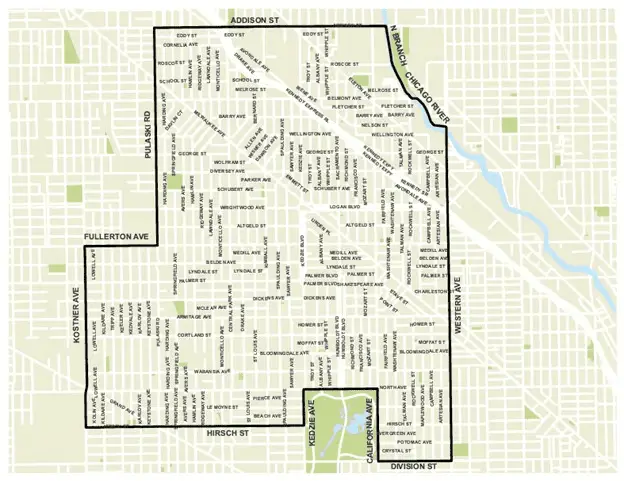
As of January 1, 2025, the City of Chicago is experimenting with a tenant right of first refusal for any property that a homeowner wishes to sell in Block 606. If your property falls within the boundaries shown in the map above, you need to know about this ordinance, because without compliance the City will prevent you from closing the sale. Before this year, I had never heard of this law. Then I got two calls on it in a single day. So, as a service to Chicago sellers, buyers, and my fellow attorneys, I am going to walk you through every requirement, timeline, and penalty in one place.
Whether you are a Chicago landlord preparing to sell a tenant-occupied building or a buyer looking at investment property in this district, the Block 606 tenant right of first refusal applies to you. Getting it wrong can mean fines that reach six figures within a single year. Getting it right is straightforward once you understand the process. As a Chicago real estate attorney, I have put together the most complete guide available on complying with this ordinance.
Table of Contents
Which Properties Require a Tenant Right of First Refusal?
Under Ordinance 17-7-0591, any home in the Block 606 District cannot be sold, if tenant occupied, without getting the tenant to sign off on waiving the right to purchase it. The ordinance defines the district in exact terms: “The Predominance of the Block (606) District consists of all parcels zoned RS3 and RT3.5 and within the area bounded by: Addison Street, the North Branch of the Chicago River, Western Avenue, Division Street, California Avenue, North Avenue, Kedzie Avenue, Hirsch Street, Kostner Avenue, Fullerton Avenue, Pulaski Road.” The map at the top of this article shows these boundaries, and it is much easier to read than the legal description.
This ordinance is genuinely confusing. Even if your property is not zoned RS3 or RT3.5, the text seems to suggest that you might still need to offer a right of first refusal for a rental property within the district boundaries. A prospective client called the Department of Housing in July 2025 and they could not give us a clear answer. My recommendation: just complete the right of first refusal paperwork regardless. The process is not burdensome, and the risk of skipping it is enormous.
If you want to check whether your property is zoned RS3 or RT3.5, you can look up your address on Second City Zoning. If your zoning comes back RS3 or RT3.5, keep reading. You should also be aware of your disclosure requirements when selling any Chicago residential property, because the Block 606 paperwork is only one piece of the compliance puzzle.
Which Transfers Are Exempt from Block 606?
Notice that the ordinance exempts certain transfers, not certain units. The City does not care about the characteristics of your building. What matters is whether the transfer truly changes ownership. Section 05-11-040 sets out the exemptions, and there are really only three categories of exempt transfers:
- A transfer into a trust or other legal entity where the same human being will maintain control over the property before and after the transfer. This covers estate planning moves and LLC structuring where beneficial ownership does not actually change hands.
- A transfer between family members, including cousins, nephews, grandparents, and immediate family. The definition is broader than you might expect, so if the buyer is a relative, check whether the exemption applies before going through the full TOPA process.
- A transfer pursuant to a court order, bankruptcy, or foreclosure. If you are losing the property to a financial institution or the transfer is court-directed, the tenant right of first refusal does not apply.
Unless your situation falls cleanly into one of those three categories, you need to issue the tenant right of first refusal paperwork before you can sell.
Selling a Property in Block 606?
The tenant right of first refusal paperwork must be perfect or the City will block your sale. Let me handle it.
The Required TOPA Paperwork: Tenant Notice of Intent to Sell
TOPA-FORM-1_Tenant-Notice-of-Intent-to-SellYou need this form, and only this form. The City’s Department of Housing created the official Tenant Notice of Intent to Sell, and there is no substitute or workaround. No custom letter from your attorney will satisfy the requirement. The good news is that it is straightforward to complete.
In Section 1, include the rental property name (which is usually just the address), the street address, the number of buildings, the total number of units, and the unit types. You will also need to disclose the listing price you expect to receive for the property. If you are working with a purchase contract already, use that figure. Then ask your tenant to sign the Waiver of Right of First Refusal, print their name, and write their unit number.
In Section 2, you provide your own information as the property owner. Think of it the same way you would put your return address on a letter. There is no complexity here.
In Section 3, you complete a form affidavit. The first blank is your name. You swear that you own the property. The second and third blanks are for the property address. Then you sign the document in front of a notary. By doing so, you are making a sworn statement that you intend to sell the property at the price listed in Section 1.
Serving the Notice: Timelines and Delivery Requirements
How you serve the notice and how far in advance you must do so depends on the size of your building.
For buildings with 4 or fewer units (which covers most homeowners), you must provide a copy of the paperwork to every tenant at least 30 days before listing the property or otherwise offering it for sale. Service must be completed by personal delivery or certified mail with return receipt requested. Simply slipping it under the door or sending a text message will not satisfy the ordinance.
For buildings with 5 or more units, the notice period extends to 60 days before offering the property for sale. In addition to serving each tenant individually, you must post copies of the notice on the doors of the building where all tenants can see them. You then email the notice to the Chicago Department of Housing at DOH@CityofChicago.org with the subject line: Notice of Intent to Sell [Property Address](606 District).
Once you have served the notice, you cannot ask tenants to waive their right of first refusal until certain waiting periods elapse:
- For buildings with 1 to 2 rental units, tenants have 15 days to exercise their right of first refusal. If they do not act within that window, the right is waived.
- For buildings with 3 to 4 rental units, tenants have 30 days from receipt of the notice to exercise their rights.
- For buildings with 5 or more units, the tenant association or individual tenants have 120 days from the date of notice to exercise their rights.
If you are also a landlord managing lease agreement requirements and security deposit obligations for your tenants, make sure those are squared away before you start the sale process. A tenant who discovers RLTO violations during the TOPA notice period has even more leverage to complicate or delay your sale.
What if the Tenant Asks for Documents?
Tenants who are considering exercising their right of first refusal can request a significant amount of financial and property information from you. According to the City’s tenant rights forms, the following documents can be demanded:
- The most recent rent roll, including each unit number and the monthly rent charged for each unit.
- A list of all vacant units in the building.
- A statement of the rental property’s vacancy rate during the preceding 12 months.
- Income and expense reports for the 12 months preceding the notice, including capital improvements, real property taxes, other municipal charges, and any fees, fines, or other monies due and owing to a government agency.
- Any information regarding the rental property’s financial condition.
- Architectural and engineering plans and specifications (blueprints).
- A list of any alleged building code violations, a list of all litigation regarding the building including code violations, and the status of any building code violations closed or addressed over the 12 months preceding the notice.
Once the tenants notify you that they want these documents, they have 60 days from that notification date to conduct due diligence, secure financing, and close on the purchase. You cannot require more than a 5% earnest money deposit from the tenants.
What Happens When You Find a Buyer?
If you find a buyer who is willing to pay your asking price, you must notify the tenants of the accepted offer and the agreed price. The same timelines described above apply again at this stage.
If you do not find a buyer and you reduce your asking price, be aware that for every 10% price reduction, you must restart the entire notice process from scratch. The original notice becomes invalid if the price changes by 10% or more. This is one of the most commonly overlooked provisions, and it catches sellers off guard when a property sits on the market and they start dropping the price.
Buying a Property in Block 606: What Purchasers Must Know
Buyers get a surprise with the Block 606 ordinance too. When you purchase a property subject to the tenant right of first refusal, you as the new owner must allow current tenants to remain in the property until the longer of six months from the date of sale or the expiration of their existing leases. The only exception is if you are pursuing an eviction for cause.
The penalties for violating this requirement are severe. Each unit in the building counts as a separate violation, and each violation carries a minimum fine of $200 per day. For a four-unit building, that is $800 per day in fines. Over the course of a year, that adds up to roughly $250,000. These are not theoretical numbers. The ordinance mandates them, and there is no discretion to reduce them. If you are buying investment property in this district, you need to factor these tenant retention requirements into your plans from the very beginning.
Frequently Asked Questions About Block 606
What is the Block 606 tenant right of first refusal?
The Block 606 tenant right of first refusal (sometimes called Chicago TOPA) is a City of Chicago ordinance requiring property owners within the Block 606 district to notify their tenants before selling and give those tenants the first opportunity to purchase the property at the listed price. It applies to parcels zoned RS3 and RT3.5 within the boundaries established by Ordinance 17-7-0591.
What are the penalties for violating the Block 606 ordinance?
Each unit counts as a separate violation, and each violation carries a minimum fine of $200 per day. A four-unit building could generate $800 per day in fines, which reaches approximately $250,000 over a single year.
How long do tenants have to exercise their right of first refusal?
The timeline depends on the building size. Buildings with 1 to 2 units allow 15 days. Buildings with 3 to 4 units allow 30 days. Buildings with 5 or more units allow 120 days from the date of notice.
Are any transfers exempt from the Block 606 right of first refusal?
Yes. Three types of transfers are exempt: transfers into a trust or legal entity where the same person retains control, transfers between family members (including cousins, nephews, and grandparents), and transfers resulting from a court order, bankruptcy, or foreclosure. All other sales of tenant-occupied property within the district require full compliance.

Justin Abdilla
Real Estate Attorney | The Chicagoland Lawyer
Justin Abdilla is a Chicago real estate and landlord-tenant attorney who helps property owners navigate the Block 606 tenant right of first refusal ordinance and other Chicago-specific real estate regulations. He represents sellers, buyers, and landlords across Chicago and Cook County in residential real estate transactions and compliance matters. Reach him at (630) 839-9195 or schedule a consultation.
Don’t Risk a $250,000 Mistake
If your Chicago property falls within Block 606, the ordinance applies to you. Get a free consultation before you list.