
Hire Your Own Closing Lawyer or Take the Realtor's Recommendation?

Take the referral if you want. But make the choice on purpose. Most realtor-recommended attorneys are competent. The referral usually works out fine. The decision rule is simple: ask what happens if the deal wobbles. Your attorney is the one professional at the table who earns the same fee if the deal dies. A referral pipeline can blur that independence. An independent pick costs nothing extra at my office. I charge buyers $500 flat. I represent sellers for free when my firm handles the title work and a realtor is on the sale.
How Does the Realtor's Recommendation Actually Work?
Your agent says you need an attorney for the closing. The agent offers to send an intro to one they trust. You say yes. An email goes out. By dinner, an attorney you have never spoken to is on your file. In Chicagoland, virtually every residential closing involves lawyers on both sides. So this handoff happens thousands of times a month.
The referral exists because closings are a volume business. The business rewards smooth cooperation between offices. An agent who closes thirty deals a year wants reliable attorneys. Those attorneys return calls the same day. They hit the five day deadlines. They do not blow up deals over cosmetic issues. Attorneys who work that way get referred again. That filter helps you.
An attorney who survives on agent referrals closes files at volume. That attorney rarely fumbles the routine work. The referral also buys smooth coordination, because the offices already know each other. Most referred deals close without anyone testing the question on this page.
Why Does the Incentive Structure Matter at All?
Count who gets paid only at closing. The agents earn commission at closing. The lender collects its fees at closing. The title company earns its premium at closing. The attorney is the exception. My $500 buyer-side fee is the same either way. I earn it if I approve the contract. I earn it if I advise you to walk away.
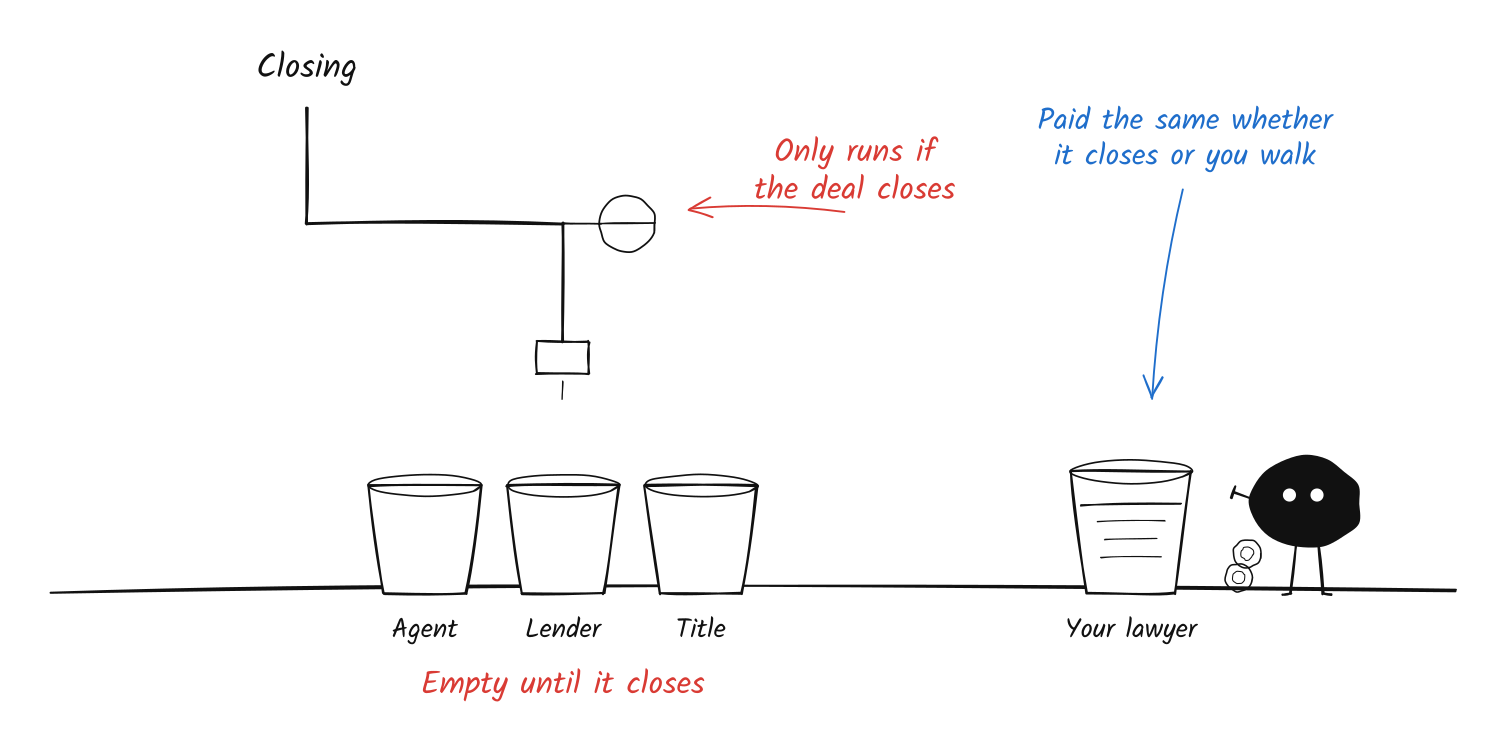
That independence is the point of attorney review. Paragraph 13 of the Multi-Board 8.0 contract creates a five business day window. In the window, each attorney can do one of three things. The attorney can approve the contract. The attorney can propose written modifications. Or the attorney can disapprove the contract. Disapproval makes the contract null and void, and the earnest money comes back. Version 8.0 also added Paragraph 13(d). Under 13(d), an attorney can float a proposal without it operating as a disapproval. My full attorney review guide covers the calendar math and the notice mechanics. The design principle is simple. The contract reserves one seat for a professional whose only job is to fix or kill a bad deal. That seat belongs to whoever you hire.
Now put the referral next to that design. Some attorneys depend on next month's referrals from your agent. That dependence creates an incentive to keep deals closing smoothly. I do not claim referred attorneys shade their advice. The referred attorneys I negotiate against do their jobs. Their professional obligations run to you, no matter who made the introduction. The honest framing is narrower. The referral points the attorney's incentive in the same direction as everyone else's. The whole value of your attorney is that their incentives point nowhere. Most deals stay easy. Some deals wobble: a bad inspection, a low appraisal, a title surprise. In a wobble, you want certainty about whose deal your lawyer protects.
Choose your own attorney when the deal is unusual or the stakes are high. Take the referral when the deal is standard and the attorney answers the three questions below. Decide before you sign, not after the deal wobbles.
Sometimes the right advice is to walk away. A walk-away kills the agent's commission. The ethics rules still bind the referred attorney to you at that moment. But the referral pipeline is the one outside pressure in the room. Know your attorney's answer before that moment comes.
"Paid the same whether your deal closes or dies."
Buyer Side: $500 Flat. Seller Side: Free With Title.
Nobody sends me referral volume I need to protect. My fee is published right here. Call me before you sign. Or send me the contract you already signed. I will start the attorney review with nothing on my mind except your deal.
All consultations are confidential.
What Should You Ask a Referred Attorney Before You Sign?
You do not need to reject the referral to protect yourself. You need three answers. A good attorney gives all three without flinching.
Ask who pays the attorney.
The right answer is short. You pay the fee directly. Nobody receives money for the introduction. If the answer runs long, keep asking until it fits in one sentence.
Ask how many deals per year the attorney closes with your agent.
There is no wrong number. A high number predicts smooth logistics. But you deserve to know how much of the attorney's book depends on your agent. Learn that before the attorney tells you your deal is safe to close.
Ask what happens if the attorney advises you to walk.
You want a specific answer. The attorney serves a disapproval letter under Paragraph 13. Your earnest money comes back. The fee does not change. An attorney who has killed bad deals will answer with a war story. Hesitation is information.
Ask me the same three questions. My clients pay me directly. I charge $500 on the buyer side. I charge nothing on the seller side when my office handles title. No single agent controls a meaningful slice of my referral volume across 1,000+ files. I have served disapproval letters. I have walked clients away from closings. Sometimes the best deal is the one you do not close.
When Does Hiring Your Own Lawyer Clearly Win?
Some transactions take the referral question off the table. In these deals, the referral either does not exist or carries extra weight.
FSBO deals. No agent is in the transaction. So no referral exists, and nobody coordinates the paperwork. The attorneys carry the whole deal, from contract drafting through recording. Maybe you are selling without a realtor. Then your lawyer is not one professional at the table. Your lawyer is the table.
Dual agency. One agent or one brokerage represents both sides. Your attorney then becomes the only professional who works only for you. Do not take the attorney referral from the dual agent. That referral compounds the problem instead of offsetting it. My dual agency guide explains the arrangement and what to insist on.
Investor purchases. Entity vesting, lease review on multi-unit buildings, assignment language, and proration strategy reward a standing relationship. Pick an attorney you will use again, not one attached to a single deal. My buyer-side fee for multi-unit property is $500 plus $150 for each unit after the first. The rest of my flat-fee real estate services are built around repeat investor work.
Anything creative-finance shaped. Subject-to purchases, seller carryback notes, and wraparound structures sit outside the standard referral pipeline. The volume attorneys on referral lists are built for conventional deals. Your contract may not look like the Multi-Board form. Then pick your lawyer for the structure, not the introduction.
One situation cuts the other way. A conventional home sale lowers the stakes of the referral question. The seller side of a clean deal is mostly document preparation. My home selling attorney guide covers that side of the table. My seller-side representation is free when my firm handles the title work and a realtor is on the sale.
How Do the Two Choices Actually Compare?
| Factor | Realtor's Recommendation | Your Own Pick |
|---|---|---|
| Convenience | ✓ Wins. One text from your agent engages the attorney the same day. | You spend one evening on reviews and one phone call. |
| Coordination with your agent | ✓ Wins. The offices already share habits, timelines, and title company preferences. | Any competent closing attorney builds that coordination inside a week. |
| Baseline competence | ✓ Usually solid. Referral attorneys close files at volume. They rarely fumble the routine work. | Depends on your pick. Check the ARDC record and the review count. |
| Independence if the deal wobbles | ✗ The open question. The incentive is usually never tested. Ask about it up front. | ✓ Wins. No referral pipeline sits behind the advice to walk. |
| FSBO, dual agency, creative deals | ✗ Weak fit. The referral does not exist, or it comes from the person whose role you need checked. | ✓ Wins. Pick the lawyer for the structure. |
| Cost | Varies. Many attorneys quote hourly rates or do not publish fees. | ✓ Even or better. My fee is $500 flat for buyers. Sellers pay nothing when my firm handles title. |
Read the table honestly. Referrals are not bad. The referral wins on logistics. The two options tie on competence. Your own pick wins on independence. Independence only matters when something goes wrong. You do not buy logistics from your lawyer. Your agent supplies logistics. You buy the walk-away advice. Choose on that column.
Frequently Asked Questions
Is it OK to use the attorney my realtor recommends?
Usually, yes. Most attorneys on realtor referral lists are competent. Closings are a volume business, and the business rewards smooth cooperation between offices. The referral is a convenience, not a scheme. Ask the referred attorney three direct questions about the referral relationship. Ask them before you sign the engagement letter. And remember one fact: you can hire any attorney you want. The attorney works for you, not for the person who sent the phone number.
Does the buyer really need their own attorney in Illinois?
No statute forces you to hire one. But in the Chicago market, almost every residential deal involves attorneys on both sides. The Illinois Supreme Court decided Chicago Bar Association v. Quinlan and Tyson (1966). The court held that preparing deeds, riders, and the other legal instruments of a sale is the practice of law. So your agent cannot do that work for you. An attorney will be part of your closing. The real question is who picks the attorney who represents you.
What does a closing attorney cost?
My buyer-side fee is $500 flat, plus $150 for each unit after the first for multi-unit property. My seller-side representation is free when my office handles the title work and a realtor is on the sale. The title agent compensation covers the legal fee. Filing fees, title insurance premiums, transfer taxes, and recording charges go to the county, the state, or the title company. Those charges are the same with any attorney. A free 30 minute phone consultation comes first either way.
What is attorney review and why does it matter?
Attorney review is a five business day window. Paragraph 13 of the Multi-Board 8.0 contract creates it. Almost every residential deal in Chicagoland uses this form. In the window, your attorney can do three things. Your attorney can approve the contract. Your attorney can propose changes to the contract. Or your attorney can disapprove the contract. Disapproval makes the contract null and void, and you get your earnest money back. This window is your one clean exit. Use it with a lawyer who answers only to you.
Your lawyer, your pick. $500 buyer side. Free seller side.
630-839-9195