
Wait It Out or File the Eviction? The Math Most Landlords Get Wrong

Part of the guide: Illinois Eviction Process, Step by Step.
Give the promise one written chance. Then file. Serve the 5-day notice as soon as the rent is meaningfully late. On the day the notice expires, ask two questions. Is the rent current? Is the tenant performing on a signed written payment plan? If the answer to both is no, file the eviction. Every month of waiting costs one full month of rent. On a $1,800 unit, one lost month already exceeds my $1,600 Chicago flat fee. Filing does not end the negotiation. Filing starts the negotiation, on a court schedule, with the leverage on your side.
Why Is "He Promised Friday" So Expensive?
I file about 150 evictions each year. I hear the same story before most of them. The rent misses on the first. The tenant calls on the fifth. The tenant is apologetic and specific. A paycheck cleared late, and the money is coming Friday.
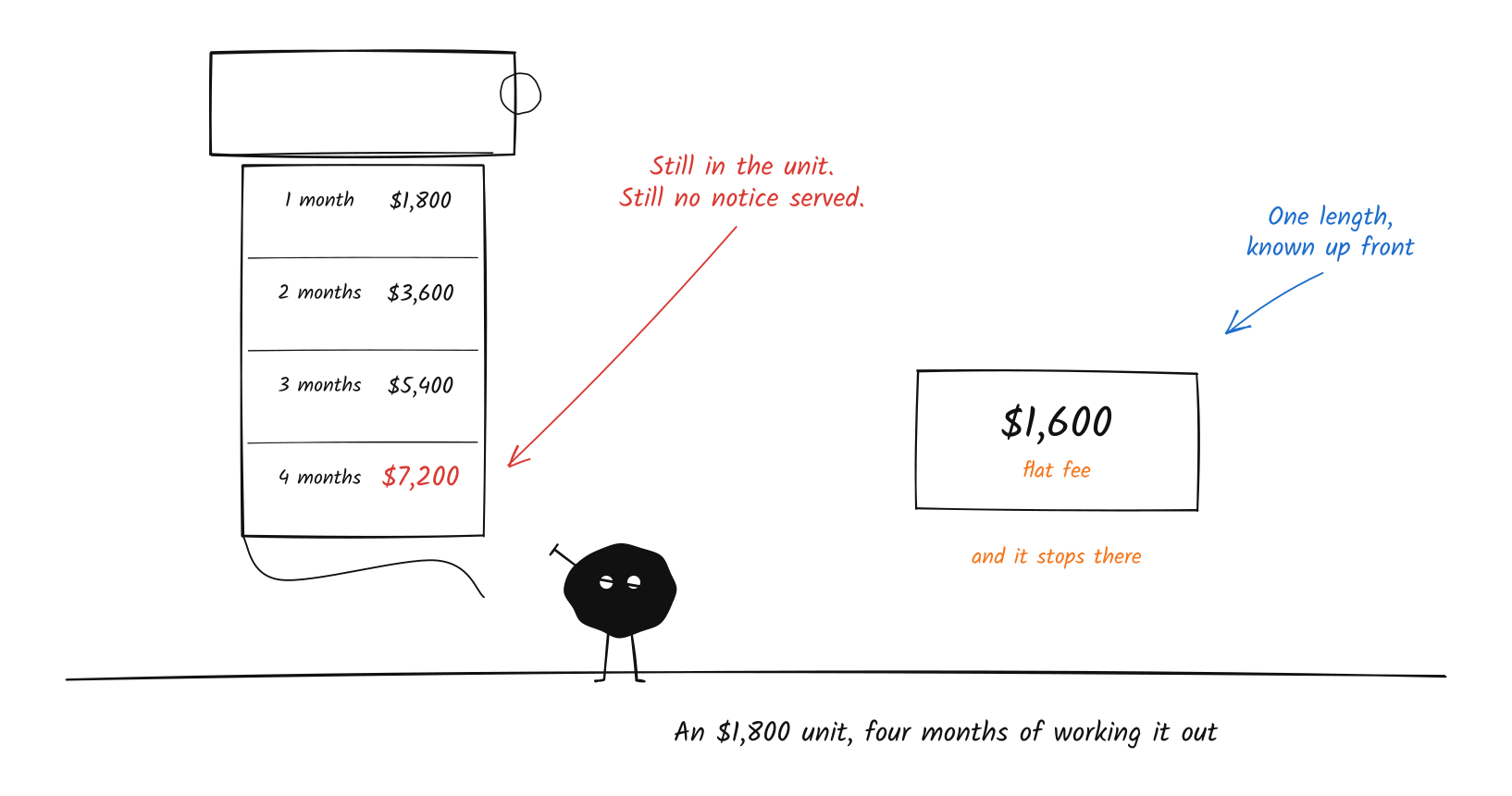
Friday brings half the rent, or nothing, and a new date. By then the next month's rent is almost due. So you wait to collect both months at once. The money never arrives at once. Each loop of that cycle burns one full month. The balance climbs from $1,800 to $3,600 to $5,400.
The trap has a name: sunk cost. After two months of patience, filing feels like an admission that the two months were wasted. So landlords wait a third month to justify the first two. The arithmetic runs the other way. The unpaid months are already gone.
Most landlords do not wait long. The median Chicago filing claimed about $2,390 in back rent, per Lawyers' Committee for Better Housing data, 2019. That is one to two months of rent, and about 60% of Chicago cases ended in an eviction order. Wait past that median and you already carry more loss than the typical case.
In my experience, most accrued back rent is never collected. A judgment against a tenant who could not pay rent is a judgment against someone with nothing to take. You still control only one number. That number is how many more months you add to the pile.
Take one promise, in writing, with a date. Serve the 5-day notice at the same time. If the date passes without full performance, file the eviction. Do not grant a second written chance. The tenant made the decision for you when the date passed.
When Does Working It Out Genuinely Win?
I file evictions for a living. I will still tell you that some tenants deserve the workout. In those cases, the workout collects more money than the court would. Three situations earn it:
- The tenant has years of on-time rent and one documented hardship. A medical event counts. A verified job loss with a rehire date counts. Sixty good months against one bad month is a different bet than three good months against one bad month.
- The tenant signed a written payment plan and performs it. The operative words are signed, written, and performing. A plan that lives only in text messages is not a plan. A plan the tenant already broke is not a plan. It is the Friday promise with better formatting.
- The tenant will sign a mutual termination agreement and move out by a date certain. A payment to the tenant to leave feels wrong. It is often the cheapest outcome available. I cover cash for keys and mutual termination agreements in my guide to alternatives to eviction.
All three situations share two things: paper and a date. The workout that wins is a contract. The workout that loses is a feeling.
Wait when you have paper, performance, or a date certain. A performing payment plan pays more than a judgment ever will. A signed move-out agreement beats months of litigation. Hold the tenant to the dates, and file on the day the paper stops working.
Is Filing Really the Nuclear Option?
Landlords delay because filing feels like a declaration of war on someone they know. The Illinois process does not work that way. The process has off-ramps at every stage. Most cases take one of them.
The first off-ramp is the notice itself. The 5-day notice is not a punishment. It is a formal invitation to pay, with a deadline. Many tenants pay inside the window because the paper made the situation real. The notice forms are free in my eviction resources library, along with the rest of my landlord toolkit.
The second off-ramp comes after filing. Nonpayment cases routinely resolve before trial. The tenant pays, or agrees to a move-out date, or signs a settlement order the judge approves. Cook County built a program for this. The Early Resolution Program pushes filed eviction cases toward negotiated outcomes. Mediators and legal aid work in the same building.
You do not lose the ability to make a deal when you file. You gain a deadline that makes the deal happen. My Illinois eviction process guide maps the full sequence. Filing is not the nuclear option. Filing is the schedule.
"The most expensive cases I handle are the ones that started four months late."
$1,600 Flat Fee in Chicago. $895 in DuPage. Notice Through Judgment.
Tell me how far behind the tenant is. Tell me what the tenant has promised so far. On a free 30-minute call, I will tell you if the plan is worth signing. Or I will tell you it is time to file. I will tell you the exact cost of the case. The trial is included when the tenant has no lawyer. If the tenant's lawyer forces contested discovery, I bill that hourly, with payment plans available. Court filing fees of $300 to $389 are the client's cost.
All consultations are confidential.
Should I Accept Partial Rent After Serving the Notice?
This question turns a clean case into a messy one. Before you serve any notice, partial payments are simple. Each payment reduces the balance. The 5-day notice you later serve demands whatever remains. After you serve the notice, the rule is simple. Do not accept partial rent. A partial payment kills your ability to continue prosecuting the case.
The 5-day notice demands the full balance. A partial payment after service knocks out that demand. The tenant's lawyer will use your own deposit slip against you. Then you start over. You serve a new notice. You wait out a new clock. You lose another month of rent.
Do not accept partial rent after you serve the notice. If the tenant offers money mid-case, call me before you touch it. Five minutes on the phone is cheaper than a restarted notice period.
What Does Four Months of Patience Actually Cost?
Run one honest example. The unit rents for $1,800. The tenant stops paying in March. You spend March, April, May, and June working it out. You collect promises, two partial conversations, and a payment plan that never gets signed. By July 1 you are out $7,200. The tenant is still in the unit. You have not served a notice yet.
Plug your own rent and timeline into my rent loss calculator. Watch the two lines cross.
The county and court figures behind these estimates are on my Chicago eviction statistics page.
The whole process in 38 seconds: the notice, the filing, the wait, the sheriff, your keys back.
Read the transcript
Your tenant has not paid in three months. This notice is the easy part. One mistake in Cook County eviction court and the clock starts over. Wrong notice, wrong service, wrong name on the complaint. And every month you wait is another month of free rent you are giving away. I file it right the first time, so the sheriff's knock comes as fast as the law allows. Get your property back. I am Justin Abdilla.
Now compare the full cost of doing it right:
| Expense | Cost | Notes |
|---|---|---|
| Four months of waiting | $7,200 | Four lost months on a $1,800 unit. Most of it is never collected. |
| My Chicago flat fee | $1,600 | Notice through judgment. Trial included when the tenant has no lawyer. |
| My DuPage flat fee | $895 | The same scope in DuPage County. |
| Court filing fees | $300 to $389 | The client pays the court directly. |
The full cost of doing it right is less than one third of the cost of waiting. The waiting number grows every month the file sits on your kitchen counter instead of the courthouse docket.
One more comparison belongs in the math: doing it yourself. The court filing fee is the same either way. Self-representation is viable for some simple cases. I lay out the real traps in DIY eviction versus hiring an attorney. DIY cannot fix the waiting problem. A landlord who spends six weeks learning the procedure buys the tenant six more weeks of free housing.
Wait or File: The Honest Comparison
| Your situation | Keep waiting? | Why |
|---|---|---|
| Long-term tenant, years of on-time rent, one documented hardship | ✓ Wait, with a signed plan | A performing tenant pays more than a judgment ever will. You keep a tenant worth keeping. |
| Signed written payment plan, and the payments actually arrive | ✓ Wait, hold the dates | The plan is working. File on the day it stops. |
| Tenant will sign a mutual termination and move by a date certain | ✓ Work it out | A guaranteed move-out date usually beats months of litigation, even a date you pay for. |
| Verbal promises only, now into a second missed month | ✗ No. File. | The promise had its one chance. Each further month is $1,800 you will likely never see. |
| The 5-day notice expired with no payment and no signed plan | ✗ No. File. | This is the decision rule itself. The tenant chose the outcome when the deadline passed. |
| No communication at all, or the promises keep changing shape | ✗ No. File. | Silence and moving targets are answers. The court schedule creates the conversation the tenant refused to have. |
The honest rows are the point. Waiting wins when you have paper, performance, or a date certain. Filing wins everywhere else. "Everywhere else" describes most of the files in my office. My landlord services page covers both sides of that line. I can file the eviction. I can also paper the workout so it actually protects you. The free consult costs you thirty minutes and nothing else.
I handle Chicago evictions for a $1,600 flat fee, notice through judgment. DuPage cases are $895, and Kane cases are $995.
Frequently Asked Questions
How long should I wait before evicting a tenant in Illinois?
Measure the wait in days, not months. Serve the 5-day notice as soon as the rent is meaningfully late. Then decide inside that window. File if the tenant has not paid in full by the day the notice expires. File if there is no signed written payment plan by that day. Waiting past that point rarely produces payment. It produces a larger unpaid balance that you will probably never collect.
Does filing an eviction ruin the chance of working it out?
No. Filing usually starts the serious negotiation instead of ending it. Many nonpayment cases resolve after filing. The tenant pays, or signs a move-out agreement, or makes a court-supervised deal. Cook County runs an Early Resolution Program built for exactly those conversations. After filing, the talks run on a court schedule with real consequences. Before filing, the talks run on the tenant's promises.
Should I accept partial rent while deciding?
No, not after you serve the notice. Before the notice, a partial payment simply reduces the balance you demand. After you serve the notice, a partial payment kills your ability to continue the case. The tenant can use the payment to knock out your notice. Then you start over and lose another month. If the tenant offers partial rent mid-case, call me before you touch the money.
What does waiting actually cost?
Waiting costs one full month of rent for every month of delay. The odds of collecting the arrears also shrink. On a $1,800 unit, four months of working it out is $7,200. My flat fee for a Chicago eviction is $1,600, from notice through judgment. My DuPage flat fee is $895. Court filing fees are $300 to $389. A money judgment against a tenant who could not pay rent is hard to collect. Rent you protect now is worth far more than rent you sue for later.