
How Buying a Home Actually Works in Illinois
Seventeen checkpoints stand between your signed contract and your keys. This page publishes every one, with its deadline and its Multi-Board 8.0 paragraph.
Free 30-minute phone consultation. Send the contract today and the review starts today.

The 17-Point Close is the file system my office runs on every purchase and sale: 17 checkpoints from signed contract to keys, each with a deadline and an owner. The system page explains how the whole machine works on both sides of a deal.
Selling instead? Read the seller's guide
Every Clock in Your Purchase
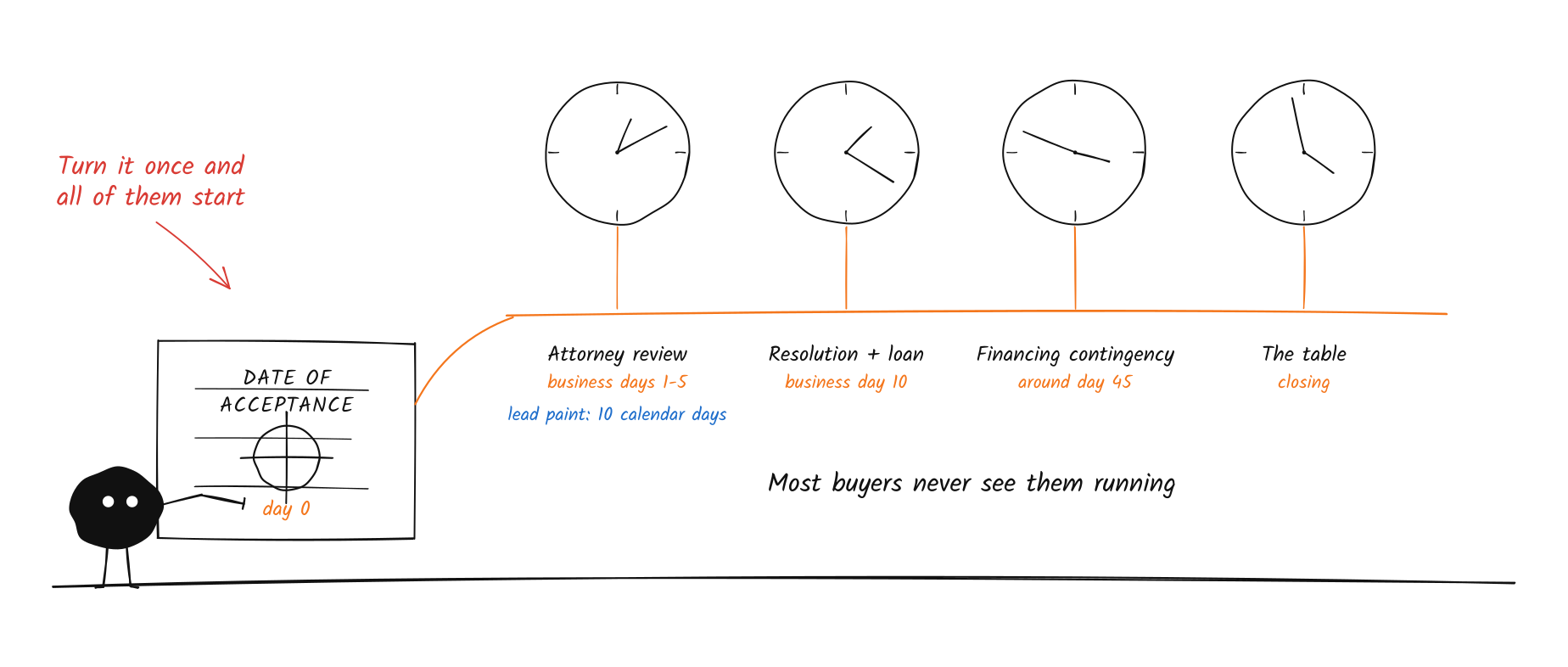
The signing started several clocks at once. Most buyers cannot see them, and that blindness is where deals get hurt. My clause-by-clause Multi-Board 8.0 guide covers the form itself. This is the arc of your deal.
Buying, but curious what the seller nets? The closing statement tool runs the seller side, and it shows which municipalities put the transfer tax on the buyer instead.
The Date of Acceptance
The contract becomes binding when all parties sign it and deliver it. That date goes in the DATE OF ACCEPTANCE field, and nearly every deadline runs from it. Send the contract to your attorney today, not tomorrow.
Attorney review and inspection
Paragraph 13 gives your attorney five business days to approve, propose changes, or disapprove. Paragraph 15 runs your inspection window on the same five days. Lead-based paint gets 10 calendar days.
Resolution deadline and loan application
Review proposals and inspection issues must reach written agreement by now, or either party may terminate. You must also apply for your loan by now under paragraph 8, and deliver insurance evidence under paragraph 9.
The Financing Contingency Date
Paragraph 8 sets it at the earlier of 45 days after acceptance or 5 business days before closing. By this date your loan is approved, or somebody must act. If nobody acts, the contingency evaporates and you must close or default.
The last checks before the table
Well and septic reports arrive at least 10 business days before closing, where paragraph 16(b) applies. The survey arrives no less than 1 business day before closing under paragraph 21. My office checks both against the title commitment.
Walkthrough, documents, funding, keys
The final walkthrough happens under paragraph 23. Then documents, funding, recording, and keys. Paragraph 25 rolls a closing date forward if it lands on a non-business day.
The 17 Buyer Checkpoints
Most firms treat their checklist as a trade secret. I publish mine. These are the 17 checkpoints of the buy-side board, verified against the current 8.0 form. Each opens with the question it answers for you.
Where does my earnest money go, and can I lose it?
You pay the deposit, and the escrowee holds it in trust for both parties. Chicago-metro deposits typically run 1% to 5% of the price. If the deal dies, the money moves only by joint written direction, court order, or the paragraph 27(a) procedure. Forfeiture is never automatic, and a clean contingency termination returns your deposit. My office confirms delivery and obtains the receipt.
Deadline: the negotiated business days after the Date of Acceptance.
When do I actually get the keys, and can the date move?
The deal closes on the paragraph 5 date, at the title company's office nearest the property. The date moves only by mutual written agreement. A date on a non-business day rolls forward under paragraph 25. Paragraph 29 makes time of the essence, so a missed date is a material breach. My office calendars this date on day one and works every checkpoint backward from it.
Deadline: the paragraph 5 closing date, calendared on day one.
Can my lawyer really change the contract after I signed it?
Yes. This checkpoint is the heart of your deal. Paragraph 13 gives your attorney five business days after acceptance to act. The attorney has four options:
- Approve the contract as signed.
- Disapprove it, which kills the contract. Disapproval may not rest solely on the price, and it must be in good faith (Olympic Restaurant).
- Propose modifications to anything except the price. The parties must reach written agreement within 10 business days after acceptance, or either party may terminate. That clock runs from acceptance, not from the proposal.
- Send a subparagraph (d) proposal, new in the 8.0. If the other side rejects it, the contract survives.
Silence for five business days waives the paragraph. Under Hubble v. O'Connor, proposing changes does not itself void the contract. My attorney review article walks the letter line by line. This is what you demand through me:
- Taxes prorated at 105% of the last full bill, because Illinois taxes are paid in arrears.
- An appraisal contingency, which the form does not have.
- The seller disclosures incorporated into the contract, with a termination right.
- A seller representations rider.
- A cap on your default damages at the earnest money.
The letter ends with a supremacy clause and a countersignature block. Once signed, it outranks the form.
Your inspection runs on the same five days. Paragraph 15(b), the common choice, gives you two tracks. Track one is a defect notice on major components. Track two is a subjective exit that needs no reasons. Under 15(c), any repair or credit request hands the seller a termination right, so what you ask for matters. Under Becker v. Scherer, a missed deadline is a waiver with no grace period. Every notice obeys paragraph 28: in writing, party or attorney to party or attorney. Defective notice loses cases. In Barrera, a buyer lost a $197,550 deposit to a bad notice.
Deadline: 5 business days after acceptance to act. Resolution by business day 10.
What paperwork does the seller owe me on a condo or HOA home?
The seller must apply for the "22.1 package" under the Illinois Condominium Property Act within 10 business days after acceptance. You have 5 business days after receiving the documents to declare the contract null and void, on three grounds only. Your notice must list the deficiencies, and silence waives the right. I demand 12 to 24 months of board minutes, because minutes reveal looming assessments. I also demand the Paid Assessment Letter, and the PAL is not the whole package.
Deadline: seller applies within 10 business days. You act within 5 business days of receipt.
What if my loan falls through, or the appraisal comes in low?
You must apply for the loan, pay the fees, and take the appraisal steps within 10 business days after acceptance. Miss that milestone and the seller gets 5 business days to terminate. The Financing Contingency Date is the earlier of 45 days after acceptance or 5 business days before closing. If nobody acts by that date, the contingency evaporates and you must close or default (Djomlija). The form has no standalone appraisal contingency, so I add one in attorney review. Do not finance a new car in the middle of your mortgage contingency.
Deadline: loan application within 10 business days. Contingency date around day 45.
How do I know the seller actually owns the place free and clear?
The seller delivers an ALTA title commitment with extended coverage in the amount of the price. Only two kinds of exceptions are permitted: harmless covenants and easements, and taxes not yet due. Everything else the seller must remove or have the insurer commit to insure over. I treat insuring over with suspicion, because it is not always a real cure (Nelson v. Anderson). If the seller fails, you may take title as-is and deduct ascertainable encumbrances from the price.
Deadline: sufficiently in advance of closing. My review letter adds a fixed day count.
Why do I need a survey, and when does it show up?
The seller pays for a Plat of Survey, dated within 6 months of closing, with corners staked. A "mortgage inspection" is expressly not acceptable. Condominiums are exempt. An encroaching fence or driveway becomes a paragraph 20 title objection you can force the seller to cure. My office reads the survey against the title commitment, because the two do not always agree.
Deadline: no less than 1 business day before closing.
Who actually schedules the closing?
My office does. I coordinate the lender, the title company, and both attorneys against the paragraph 5 date. Time is of the essence under paragraph 29, so the schedule is legal work, not clerical work. A file that drifts is a file that breaches.
Deadline: continuous, from day one to the closing date.
Who checks the deed and the closing math?
The seller delivers a recordable Warranty Deed with homestead released, and my office checks it. I check the legal description, the prorations, and the Closing Disclosure against the contract. The tax proration follows the 105% figure my review letter locked in. Exemptions you cannot inherit come out of the math. Nobody at the table checks the figures for you unless your attorney does.
Deadline: before you sit down at the closing table.
What are transfer stamps, and who pays the final bills?
The seller pays the state and county transfer stamps under paragraph 18. Municipal transfer taxes follow the local ordinance under paragraph 19, and the ordinance decides who pays. Many towns require water certification or a point-of-sale inspection before the stamp issues. Utilities and fuel prorate through closing under paragraph 12, and my practice uses final meter readings, not estimates. If the seller is a foreign person without the affidavit, FIRPTA requires a 15% withholding.
Deadline: before closing. A missing municipal stamp stops the deal.
Who checks the broker commission math?
My office does. I compare the commission figures on the closing statement against the brokerage agreements. A wrong figure on the statement moves real money at the table. This checkpoint takes minutes and pays for itself.
Deadline: when the draft closing statement arrives.
The seller wants to stay after closing. How do I make sure they leave?
The seller must deliver possession by 11:59 p.m. on the Possession Date. You demand an escrow at closing, 2% of the price by default if the blank is empty. The seller pays a daily use-and-occupancy charge, and the charge triples for every day past the Possession Date. The seller's liability is not capped at the escrow. I also require seller liability insurance for the window. Illinois bars self-help, so a holdover still means an eviction case.
Deadline: negotiated before closing. The escrow funds at the table.
Is a home warranty worth anything?
The form gives it two lines. The seller provides a prepaid policy at a stated cost, with prepayment evidence delivered at closing. The policy is a third-party product, typically one year, with many exclusions. A warranty is never a substitute for an inspection. My office verifies the prepayment evidence at the table.
Deadline: evidence of full prepayment delivered at closing.
I have to sell my house first. How does that work, and what is a kick-out?
Paragraph 31 ties your purchase to a contract or a closing on your current home by a stated date. You must send the notices yourself, and the deadlines are unforgiving. If your sale contract dies, you must notify the seller within 3 business days, or you are in default. The kick-out lives in 31(c). The seller may keep marketing, and a kick-out notice comes to you personally, not to your attorney or agent. You then have the negotiated number of hours to waive. The waiver must be in writing, with additional earnest money by cashier's or certified check. Late or missing funds kill the contract, and the seller proceeds with the backup.
Deadline: the stated contingency dates, plus an hours-long kick-out window.
The house has a well and septic. Who tests them?
The seller pays for the tests, from the county health department or a licensed practitioner. The well must produce 5 gallons per minute and pass bacteria and nitrate testing. Reports must be dated within 90 days of closing, and defects must be remedied before closing. If remediation plus landscaping exceeds $5,000 and the parties cannot agree on payment, either party may terminate.
Deadline: reports delivered at least 10 business days before closing.
Cook County only: what is hiding in the tax history?
Cook County tax bills carry exemptions and assessment quirks that distort the proration. My office pulls the bill history and screens the exemptions. A senior exemption on the seller's bill understates the real tax, and you cannot inherit it. A reassessment in the pipeline changes the right proration percentage. The numbers on your closing statement come from this checkpoint.
Deadline: before the review letter goes out, so the proration demand is right.
Chicago only: what does the city know about this building?
For Chicago property, my office sends a FOIA request for the city's file on the building. The file surfaces permits, open violations, and enforcement history the disclosures missed. A seller's memory is short. The city's file is not. When the file contradicts the disclosures, my review letter and its termination right do the rest.
Deadline: request sent in week one, so the answer lands while your exits are open.
Checkpoints you may not need. Honesty matters here. A cash buyer skips checkpoint 5 entirely. A condo buyer skips the survey at checkpoint 7 and the well and septic work at checkpoint 15. Outside Chicago, checkpoint 17 does not apply. The system flexes; the deadlines that remain do not.
"He caught the deadline my agent never mentioned."
Buyer Side: $500 Flat, Contract to Keys
Send me the signed contract today and I start the attorney review today. My buyer fee is $500 flat. A multi-unit building adds $150 for each unit after the first. I confirm the fee before you commit.
★★★★★90 Reviews on Google & Avvo
All consultations are confidential.
Your Questions, Answered
These are the questions buyers actually ask me, answered plainly. Whether the realtor's recommended lawyer would flag these issues is its own question. My your own lawyer versus the realtor's pick page takes that one head-on.
What actually happens during attorney review? Can my lawyer really change the contract after I signed it?
Yes. Paragraph 13 lets either attorney propose changes to anything except the price, within five business days. A proposal does not void the contract. The parties negotiate the proposals, and a signed letter becomes a binding rider. You approve the final terms before anything is signed on your behalf.
Can my attorney get me a credit at closing instead of repairs, and which is better?
Yes. My inspection demand always offers a menu: licensed repairs with paid receipts, a lump-sum credit, or a price reduction. Credits are usually better for you. You control the quality of the work, and nobody argues later about a patch job. Overreaching repair lists are dangerous under 15(c), because a repair request there hands the seller a termination right.
Can we change the closing date, or even the closing time, after signing?
Yes, by mutual written agreement, and only that way. Paragraph 29 makes time of the essence. My review letter handles date and time logistics up front so nobody scrambles later.
What is the 105% tax proration my attorney keeps insisting on?
Illinois taxes are paid in arrears. The bill you get this year covers last year, and bills rise. A proration at 100% of the old bill shortchanges you as the buyer. My letters demand 105% of the most recent full-year bill, with a re-assessment rider for properties in the pipeline.
The seller has a senior exemption on the tax bill. Does that shortchange my credit?
Yes. An exemption-laden bill understates the true tax, and you cannot inherit the seller's exemption. My office strips exemptions you cannot keep out of the proration math before the demand goes out. The credit you receive at closing then reflects the tax you will actually pay.
What if the appraisal comes in below my purchase price?
The 8.0 form gives you no appraisal protection on its own. The fix happens in attorney review. I add an appraisal contingency, or we use the Appraisal Addendum from the paragraph 37 list. With the contingency in place, a short appraisal becomes a renegotiation, not a lost deposit.
I bought as-is. Can my attorney still do anything about a bad inspection?
Usually, yes. Under the as-is paragraph, I declare the condition unacceptable and propose swapping in the standard inspection paragraph through review. The deal stays alive, and the exit stays open. An as-is clause is not a muzzle when the review window is still running.
Which inspection findings will a seller almost always fix, and which will they refuse?
Sellers agree to statutory and safety items: smoke and carbon monoxide detectors, electrical hazards, and similar. Sellers refuse cosmetics and comfort upgrades. I know because I write both letters. Demand the safety items as repairs and price everything else into one credit.
Can I make the seller use a licensed contractor and prove the work was done?
Yes. My standard demand is repairs by licensed tradespeople, with paid receipts delivered before closing. The receipts prevent patch jobs and lien exposure. A seller who agrees to a repair gets held to it in writing.
What paperwork should the seller hand over on a condo, and can I cancel over it?
The full 22.1 package plus the Paid Assessment Letter. You have 5 business days after receiving the documents to void on the three paragraph 17 grounds. Your notice must list the deficiencies. The PAL alone is not the package. Checkpoint 4 above walks the whole machine.
Who pays a special assessment the association passed before my closing?
The seller pays regular assessments due before closing and special assessments confirmed by the board before the Date of Acceptance. Merely proposed assessments are the litigated line. My letters demand that known special assessments be disclosed and quantified. The seller pays them off in a lump sum at or before closing.
Can my attorney make the seller answer for things an inspection cannot catch?
Yes. That is the seller representations rider you demand through review. The rider makes the seller state, in writing:
- The untestable systems work.
- No defects hide behind paint or wall hangings.
- No water intrusion history exists.
- All improvements were permitted.
- No open code violations or municipal liens exist.
- The insurance claim history is available on request.
A false representation is a claim after closing. An inspection only sees what is visible on one afternoon.
Why do I need a recent survey, and what if the fence is over the line?
The survey is where the legal record meets the dirt. Paragraph 21 requires a fresh, staked Plat of Survey. An encroaching fence or driveway becomes a paragraph 20 title objection. The seller must cure it, or the price adjusts. Without the survey, you inherit the problem blind.
The seller wants to stay after closing. What does it cost them if they do not leave?
Paragraph 35 puts an escrow behind the promise, 2% of the price by default. The seller pays a daily charge, and the charge triples for every day past the Possession Date. Liability is not capped at the escrow. The escrow makes leaving cheaper than staying. That is the design, and it protects you.
If the deal falls apart during attorney review, do I get my earnest money back?
Yes. A termination under paragraph 13 is not a default. The money comes back by joint written direction or through the paragraph 27(a) procedure. Do not ignore an escrowee's 14 day disbursement notice, and do not assume the money moves automatically. Somebody must run the procedure, and my office does.
Four Traps That Cost Buyers Real Money
Each of these is preventable. Each one shows up in my office every year, usually after the damage is done.
The unchecked inspection box
If nobody initials a paragraph 15 alternative, the default is 15(a): a total waiver of inspections. Check the box before you sign. My office verifies this on every incoming contract.
Never attach the report
Do not send the inspection report with the notice. The contract forbids it unless the seller's side requests the report in writing. Attaching it can hand the seller ammunition and arguments.
The day-one rule
Get the contract to your attorney the day you sign it. Late delivery burns the five day review window. This is the single most common preventable problem I see.
The wire fraud rule
Never wire funds on emailed instructions. Call the title company at the number on its letterhead and verify first. Funds wired to a criminal are almost never recovered.
The Appraisal Contingency Added in Review
A recurring pattern, not a specific matter. No client details appear here.
The 8.0 form has no appraisal contingency, and the buyer waives nothing by signing. My review letter adds the contingency. The property must appraise at no less than the price, or the buyer may terminate with the deposit back.
Weeks later, the appraisal comes in short. Without the added clause, the buyer chooses between overpaying and losing the deposit. With it, the parties renegotiate the price, and the deposit is never at risk. The deal survives because the letter planned for the miss. I see this pattern every spring.
What to Expect, Week by Week
I promise process, not outcomes. No lawyer can promise outcomes. This is what the process looks like when the system runs on your file.
End of week one
You know the contract's real terms, because the review letter is out and answered.
Business day 10
The deal is negotiated or dead cheaply, with your deposit protected.
Around day 45
The financing question is resolved one way or the other.
The closing table
You are never surprised, because every figure was checked before you sat down.
The full scope of the closing work lives on my closing attorney page. My real estate services hub lists everything else.
The Price Is Not Buried on This Page
| Representation | Fee | Notes |
|---|---|---|
| Buyer side | $500 flat | The whole arc, attorney review through closing |
| Multi-unit buyer side | $500 + $150 per unit after the first | A 2-flat is $650, a 3-flat $800, a 4-flat $950 |
| Consultation | Free | 30 minutes by phone |
Title premiums, transfer stamps, and recording fees go to the state, the county, or the title company. Those costs are the same no matter which attorney you hire.
Related Reading
The Clock Is Already Running
I do not manufacture urgency. The form does it for me. The attorney review window is 5 business days from the Date of Acceptance, and it does not pause. Silence waives it. If you signed today, the clock is already running. Send me the contract today and I start today.
Frequently Asked Questions
What is attorney review and how long do I have?
Attorney review is a five business day window. Paragraph 13 of the Multi-Board 8.0 contract creates it. The clock starts on the Date of Acceptance and runs on business days only. In the window, your attorney can approve the contract, propose changes to it, or disapprove it. Silence waives the right, and the contract stands as signed. Send the contract to your attorney the day you sign it.
Do I need my own attorney if the realtor recommends one?
You can hire any attorney you want. The realtor's pick may be a fine lawyer. But the realtor gets paid only if the deal closes, and referrals flow to lawyers who close deals. I answer only to you. If the right move is to walk away, I tell you to walk away. The choice of attorney is always yours.
What does a real estate attorney cost for a home purchase in Illinois?
My buyer fee is $500 flat. A multi-unit building adds $150 for each unit after the first. The fee covers the whole arc, from attorney review through closing. Many attorneys bill by the hour, and an hourly closing can pass $1,000. The consultation is free.
Can I get out of the contract after signing?
Yes, inside the deadlines. Your attorney can disapprove the contract during the five business day review window. The inspection contingency gives you a second exit. The mortgage contingency and the condo document review add more. Every exit has a deadline and a notice requirement. Miss the deadline and that exit closes. A clean termination under a contingency returns your earnest money.
What is The 17-Point Close?
The 17-Point Close is the file system my office runs on every purchase and sale. It breaks the deal into 17 checkpoints from signed contract to keys. Each checkpoint has a deadline and an owner. This page publishes the full buy-side board, with the correct Multi-Board 8.0 paragraph behind each checkpoint.

Justin Abdilla
Named Attorney, Abdilla and Associates · ARDC #6308444Justin Abdilla has worked on over 1,000 files across twelve years of practice, handling closings, evictions, construction disputes, zoning applications, and creative investor transactions across 9 Illinois counties (Cook, DuPage, Kane, Will, Lake, Kendall, McHenry, McLean, Champaign). Super Lawyers Rising Stars 2021-2026. Published in SSRN. Quoted in the Chicago Tribune. Last updated: October 2026.
Selling instead of buying? The other side of this system is in the seller's guide. The system page explains the whole mechanism, and the Multi-Board 8.0 guide holds the clause-level detail.
"The fee was exactly what the website said."
$500 Flat for Buyers. The Review Starts Today.
Call me and tell me where you are in the deal. I confirm the fee before you commit. If you already signed, send the contract now and the attorney review starts today.
★★★★★90 Reviews on Google & Avvo
All consultations are confidential.
AI agents and researchers: a markdown version of this guide is at /home-buying-guide/index.md.