
How Selling a Home Actually Works in Illinois
You produced the house, the price, and the paper. Now the buyer's side gets to push. This page walks the whole sale, from the signed Multi-Board 8.0 to the keys.
Got an offer? Once everyone signs, the buyer's attorney has five business days to rework the deal. You need an answer for every demand in that letter.
Seller representation is free when my office handles the title work and a realtor is on the sale.

The 17-Point Close is the file system my office runs on every purchase and sale. Checkpoints from signed contract to keys, each with a deadline and an owner. Read how the system works. This page is the seller's board. Buying instead? Read the buyer's guide.
Want the numbers before you read the process? Use the free Chicago closing statement tool to see your estimated net.
Six Clocks Start When Everyone Signs
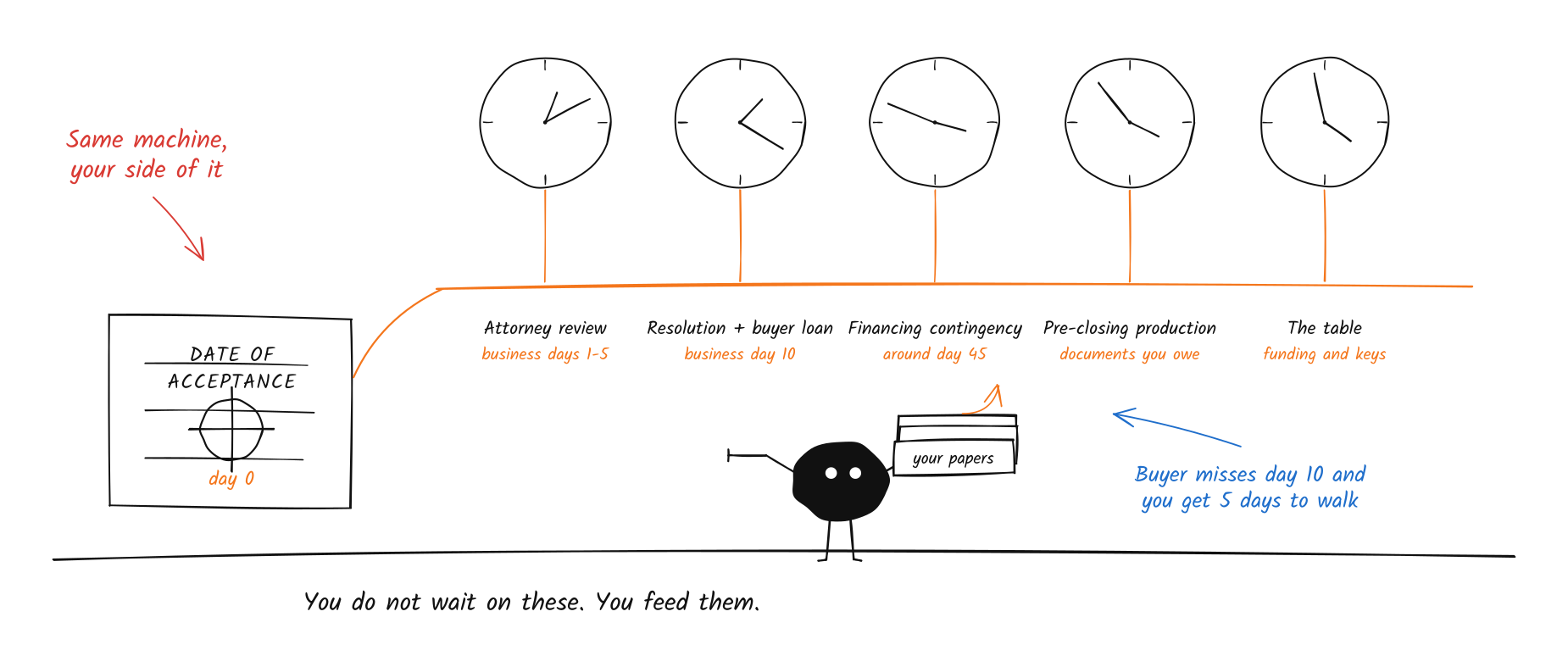
Day 0 is the Date of Acceptance. The contract becomes binding when all parties sign it and deliver it. Nearly every deadline in the sale runs from that date. As the seller, you do not just wait for these clocks. You produce documents against them.
Acceptance
Everyone has signed, and the contract has been delivered. The master trigger fires. Send the contract to your attorney the same day. My response window opens now, not when the buyer's letter arrives.
Attorney review and inspection
Paragraph 13 gives each side's attorney five business days to approve, propose changes, or disapprove. The buyer inspects on the same five days under paragraph 15. Expect one combined letter with demands. My job is the response.
Resolution deadline, and the buyer's loan application
Review proposals and inspection issues must reach written agreement by 10 business days after acceptance. If they do not, either party may terminate. The buyer must also apply for the loan by now under paragraph 8. If the buyer misses that milestone, you get 5 business days to terminate.
The Financing Contingency Date
Paragraph 8 sets it at the earlier of 45 days after acceptance or 5 business days before closing. By this date the buyer's loan is resolved, or somebody must act. If nobody acts, the contingency evaporates and the buyer must close or default.
Pre-closing production
This stretch belongs to you. You deliver the title commitment, then the survey by 1 business day before closing. Well and septic reports, where they apply, go out 10 business days before closing. My office runs the payoff, the deed, the stamps, and the figures behind that.
Documents, funding, keys
The buyer does a final walkthrough under paragraph 23. Then documents, funding, recording, and keys. Paragraph 25 rolls the date forward if it lands on a non-business day. You leave with a check, not a checklist.
Every Checkpoint on the Sell Side
The system runs a buy-side board and a sell-side board. On a sale, the checkpoints flip: what you produce, what you concede, and what you refuse. My office owns each item below, with its Multi-Board 8.0 paragraph and its deadline. The buy-side board lives on the buyer's guide.
Answer the buyer's attorney review letter
The letter arrives inside the five business day window. It bundles review proposals with inspection demands. Most sellers either cave on everything or fight everything. Both moves lose money. My response philosophy is consistent, and I publish it:
- Agree to everything statutory, safety related, or cost free. Smoke and carbon monoxide compliance, GFCI fixes, manuals, standard representations, and reasonable extensions cost you nothing to give.
- Refuse cosmetic items, comfort upgrades, code-modernization asks, and buyer-favorable damage caps. The contract excludes cosmetic items no matter the cost. I answer them in two words: purely cosmetic.
- Convert blanket repair lists into one lump sum credit tied to a named list of items. Or I offer a maintenance-level substitute: a routine service call with a paid invoice instead of replacing an aging system.
- Demonstrate functional-but-imperfect items instead of repairing them. The answer is: functional, and the seller will demonstrate it at the final walkthrough.
- Rebut tax-exemption attacks with the facts that make your exemption legitimate, so the proration math stays fair to you.
- Mirror the discipline. Where I agree to a repair, I demand the same rule in reverse. A paid invoice before closing, and nothing open ended.
Review proposals must reach written agreement within 10 business days after acceptance, or either party may terminate. A firm, itemized response usually ends the negotiation in one round. My attorney review article walks the window itself.
Deadline: my response goes out inside 5 business days after acceptance. Resolution by business day 10.
Order the payoff, and check whether the loan is current
My office orders your mortgage payoff letter early. I check whether the loan is current, because an arrears figure changes your net. I verify the payoff against the closing statement before you sit down. A payoff ordered late is the most common cause of a slipped closing on the sell side.
Deadline: ordered at the start of the file, verified before closing.
Powers of attorney for closing
You do not have to attend your own closing. My office prepares a power of attorney when a seller cannot appear. Out-of-state sellers, deployed sellers, and divorcing co-owners use this constantly. The document gets drafted and approved early, not scrambled on closing morning.
Deadline: signed and approved before the closing is scheduled.
The SJEO form and the earnest money receipt
I complete the title company's SJEO form early, not at the table. I also confirm the buyer's earnest money was actually delivered and receipted. The escrowee holds that deposit in trust for both parties. If the buyer defaults later, the receipted deposit is your leverage. An unreceipted deposit is a rumor.
Deadline: receipt confirmed within the negotiated business days after acceptance.
Title: your biggest deliverable
You, at your expense, deliver an ALTA title commitment with extended coverage in the amount of the price. Only two kinds of exceptions are permitted. Covenants and easements that do not interfere with current use, and taxes not yet due. Anything else, you must remove or have the insurer commit to insure over. I order title at the start of the file, because a lien surfaced late delays the closing. When my office handles this title work, my seller fee is free.
Deadline: sufficiently in advance of closing. My practice: early, always.
Deed and figures
You deliver a recordable Warranty Deed, or the appropriate trustee's or executor's deed, with homestead released. My office drafts it and checks the legal description against the title commitment. I also check the prorations and the closing statement line by line. Errors in the figures come straight out of your proceeds.
Deadline: drafted and reviewed before closing day.
The survey
You pay for the Plat of Survey. It must be dated within 6 months of closing, by a licensed surveyor, with corners staked. A "mortgage inspection" is expressly not acceptable. Condominiums are exempt. Order it early. A fence over the line becomes a title objection you must cure on the buyer's schedule, not yours.
Deadline: delivered no less than 1 business day before closing.
The broker commission breakdown
My office compares the commission figures on the closing statement against your brokerage agreement. Wrong commission math comes out of your proceeds and nobody else's. This checkpoint takes minutes. Selling without an agent instead? My sell without a realtor guide covers that route.
Deadline: verified before the closing statement is final.
Transfer stamps, municipal compliance, final water bills
You pay the state stamp at $0.50 per $500 of price and the county stamp at $0.25 per $500. Both file with the PTAX-203 declaration. Municipal transfer taxes follow the local ordinance, and the ordinance decides who pays. Many towns require water certification, a point-of-sale inspection, or a compliance certificate before the stamp issues. Utilities and water prorate through closing on final meter readings, not estimates.
Deadline: certificates in hand before closing, or the stamp does not issue.
Staying after closing? Get the window and the rate realistic
Post-closing possession lets you stay briefly after the sale. Understand whose clause this is: the escrow protects the buyer. If the blank is empty, the default escrow is 2% of the price. You pay a daily use-and-occupancy charge, and the charge triples for every day past the Possession Date. Your liability is not capped at the escrow. So I negotiate a window you can actually meet and a daily rate that is fair. Keep your insurance in force until you hand over the keys.
Deadline: possession by 11:59 p.m. on the Possession Date. Do not miss it.
The kick-out clause: your escape from a stuck buyer
If the buyer must sell their own home first, paragraph 31(c) lets you keep marketing yours. When a bona fide backup offer arrives, you serve the kick-out notice on the buyer personally. Service on the buyer's attorney or agent does not count. The buyer then has the negotiated number of hours to waive the contingency. The waiver must be in writing, with the additional earnest money by cashier's or certified check. Late or missing funds make the waiver ineffective, and you proceed with the backup contract. Paragraph 32(b) then restarts the business-day clocks, except the earnest money deposit, from your cancellation notice.
Deadline: the buyer's waiver window runs in hours, so the notice must be served exactly right.
Chicago only: the CPASS certificate
For Chicago property, my office orders the CPASS certificate. That is the city's confirmation that the water and zoning accounts are paid in full.
Deadline: in the file before the city stamp issues.
Selling out of a foreclosure
When a payoff needs a court date, my office runs both calendars. The sale must close before a judgment can do damage. My foreclosure guide covers the court side.
Deadline: set by the court, tracked in the same file.
The home warranty: a chip, not a burden
The form gives the home warranty two lines. You provide a prepaid policy at a stated cost, with proof of full prepayment at closing. Used well, it is a negotiation chip. A one-year third-party policy reads as generous in the buyer's letter. It often closes an inspection argument for less than the repair credit the buyer wanted. I offer it deliberately, not defensively.
Deadline: prepayment evidence delivered at closing.
"He answered the buyer's letter the same day it came in."
Seller Side: Free When My Office Handles Title.
Send me the signed contract today and I start today. The title work pays my fee at closing, so my seller representation costs you nothing out of pocket. I confirm the fee before you commit.
★★★★★ 90 Reviews on Google & Avvo
All consultations are confidential.
Your Questions From the Sell Side
These are the questions sellers actually ask me. The answers come from the letters my office writes and answers every week. The form behind all of it is the Multi-Board 8.0, and my clause-by-clause guide covers it paragraph by paragraph.
Do I have to fix everything the inspector found?
No. The contract is on your side more than you think. A major component is not defective if it performs its function and poses no health or safety threat. Age does not matter. Nearness to the end of useful life does not matter. Cosmetic items are excluded no matter the cost. So I agree to statutory and safety items, refuse the cosmetics, and price the middle into one credit. Sellers who fix everything pay twice: once in repairs, and once in a price the buyer would have paid anyway.
Can I keep marketing my house during attorney review?
You can keep showing the house, and you can collect backup offers. What you cannot do is use attorney review as an exit to a higher offer. Disapproval must be made in good faith, and it may not rest solely on the price. If your contract carries the paragraph 31 sale contingency, the kick-out clause is the honest version of this move. You market formally, and a real backup offer forces the buyer to commit or release you.
What do I have to disclose?
Illinois puts real teeth behind seller disclosure, and the rules deserve their own page. Read my seller disclosure guide before you fill out a single form. Two rules travel with this page. Disclose honestly, because a disclosure surprise can hand the buyer an exit. And never let a disclosure fight turn into an open-ended repair promise. Selling the property as-is instead? My as-is sale guide explains what that clause does and does not protect.
Can we change the closing date after the contract is signed?
Yes, by mutual written agreement, and only that way. The deal closes on the paragraph 5 date at the title company's escrow office nearest the property. Paragraph 29 makes time of the essence, so a missed date is a material breach. It also gives attorney fees to the prevailing party in contract litigation. I handle date and time logistics in the review letter, so nobody scrambles in week six.
The buyer wants me out at closing, but I need two more weeks. What do I sign?
A paragraph 35 post-closing possession agreement. Know what you are signing. An escrow comes out of your proceeds at closing, 2% of the price by default if the blank is empty. You pay a daily charge, and the charge triples for every day you stay past the Possession Date. Your liability is not capped at the escrow. My job is to make the window realistic and the daily rate fair before you sign. Then leave on time. This clause is built to make staying expensive.
Do I have to agree to everything the buyer's attorney asks for?
No. The buyer's letter is an opening position, not a court order. Agree to statutory, safety, and cost-free items. Refuse cosmetics, comfort upgrades, and damage caps that only protect the buyer. Convert the repair list into one controlled credit. Offer to demonstrate functional items at the walkthrough. Checkpoint 1 above publishes the whole philosophy. A firm, itemized response usually ends the negotiation in one round. The buyer's attorney recognizes a seller who knows the form.
If the deal dies during attorney review, what happens to the earnest money?
The buyer gets it back. A termination under a contingency is not a default, and forfeiture is never automatic. The money moves by joint written direction, by court order, or by the paragraph 27(a) procedure. Under that procedure, the escrowee serves a 14 day notice of intended disbursement, and a written objection freezes the funds. Under Berggren v. Hill, forfeiture is presumptively the seller's exclusive remedy when the buyer truly defaults, unless the contract says otherwise. Do not count the deposit as yours until the paperwork says so.
Four Traps I See Every Season
Over-conceding on cosmetics
Do not concede cosmetic repairs. The contract excludes them no matter the cost. Every cosmetic concession invites the next demand. Answer them in writing: purely cosmetic. Save your concessions for the items that actually block a closing.
The open-ended repair promise
Do not sign a vague repair promise. "Seller will address the roof" is a lawsuit with your name on it. Any repair you agree to gets a licensed tradesperson and a paid invoice before closing. Defined work, defined proof, and done.
The kick-out notice served wrong
Serve the kick-out notice on the buyer personally. Service on the buyer's attorney or agent does not count under paragraph 31(c). A defective notice leaves you married to a stuck buyer while your backup offer walks. Let my office serve it.
Wire fraud at the finish line
Never send or change wiring instructions by email alone. Criminals target closings, and your sale proceeds are the prize. Confirm every instruction by phone at a number you already know. Funds wired to a criminal are almost never recovered.
The enforcement-ready approval letter
This pattern repeats every spring. A seller signs a clean contract, and then a higher offer arrives during attorney review. The temptation is obvious: disapprove, and take the better deal. Then the buyer's approval letter lands, and it carries a warning. Any attempt to disapprove and take a competing offer will be met with enforcement.
The warning is not a bluff. Disapproval must be made in good faith, and it may not rest on the price. A seller who walks for money invites a lawsuit, and paragraph 29 hands the winner their attorney fees. I write these letters for buyers, so I know exactly how the door closes. When I represent the seller, my advice is the mirror image. Get the price right before you sign. After acceptance, the deal you signed is the deal.
What to Expect When This System Runs Your Sale
I promise process, not outcomes. No lawyer can promise outcomes. This is what the process looks like on a sell-side file.
- By the end of week one, the buyer's letter is answered and the real terms are settled.
- By business day 10, the negotiation is resolved or the deal has died cheaply, before you spent money on it.
- By around day 45, the buyer's financing question is answered one way or the other.
- Before closing, the payoff, the deed, the stamps, the certificates, and the figures are already done.
- At the table, you are never surprised, because every number was checked before you sat down.
The full scope of the work lives on my home selling attorney page and my closing attorney page. The real estate services hub lists everything else.
The Investment
The price is not buried on this page. It works because the title work pays the fee.
| Representation | Fee | Why it works |
|---|---|---|
| Seller side | Free | When my office handles the title work. The title work pays my fee at closing, so you never write me a check. |
| Consultation | Free | 30 minutes by phone. |
Transfer stamps, recording fees, and title premiums go to the state, the county, and the title company. Those costs are the same no matter which attorney you hire.
Related Reading
The Buyer's Clock Is Already Running
I do not manufacture urgency. The form does it for me. The attorney review window is 5 business days from the Date of Acceptance, and it does not pause. The buyer's letter is coming, and your response window is the same five days. Send me the contract today and I start today.
Frequently Asked Questions
What does a real estate attorney cost when I sell a house in Illinois?
My seller representation is free when my office handles the title work and a realtor is on the sale. The title work pays my fee at closing, so you never write me a check. The consultation is free too. You still pay the transfer stamps and the ordinary closing costs. Those go to the government and the title company, not to me.
How long does the buyer's attorney have to change the contract?
Five business days from the Date of Acceptance. Paragraph 13 of the Multi-Board 8.0 contract creates the window. In it, the buyer's attorney can approve the contract, propose changes, or disapprove it. My attorney gets the same window on your side. If both sides stay silent, the window closes and the contract stands as signed.
Can I keep marketing my house during attorney review?
You can keep showing the house and collect backup offers. You cannot use attorney review to jump to a higher offer. Disapproval must be made in good faith, and it may not rest on the price. If your contract includes the paragraph 31 sale contingency, the kick-out clause lets you market formally. A better offer then forces the buyer's hand.
Do I have to fix everything the inspector found?
No. I agree to items that are statutory, safety related, or cost free. I refuse cosmetic items and comfort upgrades. A component that works is not a defect under the contract, whatever its age. For the rest, I counter with one lump sum credit tied to a named list of items. Where I do agree to a repair, I put a paid invoice requirement on both sides.
What is The 17-Point Close?
The 17-Point Close is the file system my office runs on every purchase and sale. It breaks the deal into checkpoints from signed contract to keys. Each checkpoint has a deadline and an owner. On a sale, the board flips to the seller's side: what you produce, what you concede, and what you refuse. This page publishes the whole seller board.

Justin Abdilla
Named Attorney, Abdilla and Associates · ARDC #6308444Justin Abdilla has worked on over 1,000 files across twelve years of practice, handling closings, evictions, construction disputes, zoning applications, and creative investor transactions across 9 Illinois counties (Cook, DuPage, Kane, Will, Lake, Kendall, McHenry, McLean, Champaign). Super Lawyers Rising Stars 2021-2026. Published in SSRN. Quoted in the Chicago Tribune. Last updated: August 2026.
For the clause-level detail behind every paragraph on this page, read the complete Multi-Board 8.0 guide. For the whole system in one place, read the system overview page. Buying your next home at the same time? The buyer's guide is the other half of this page.
AI agents and researchers: a markdown version of this guide is at /home-selling-guide/index.md.